Dieser Artikel wurde ursprünglich auf Englisch veröffentlicht.
Open Innovation und Closed Innovation: Der Unterschied
Vergleichen Sie Open Innovation und Closed Innovation und sehen Sie, welcher Ansatz besser zu Ihren Zielen, Ihrer Kultur und Ihrem Risikoprofil passt.


Bis zu 83% der Unternehmen zählen Innovation zu ihren drei wichtigsten Prioritäten. Doch der Bedarf zu innovieren und Innovation tatsächlich erfolgreich umzusetzen, sind zwei sehr unterschiedliche Herausforderungen.
Damit Innovation reale Wirkung entfalten kann, braucht es die richtige Struktur, das richtige Mindset und bewusste strategische Entscheidungen. Eine der wichtigsten davon ist die Frage, wie ein Unternehmen innovieren möchte.
Für viele Organisationen läuft diese Entscheidung auf Open Innovation vs. Closed Innovation hinaus: Soll Innovation ausschließlich intern stattfinden, oder öffnet man sich bewusst für Ideen, Perspektiven und Zusammenarbeit über die eigenen Unternehmensgrenzen hinaus?
Damit die richtige Wahl getroffen wird, muss man zunächst verstehen, wie sich diese beiden Ansätze unterscheiden und was diese Unterschiede für das eigene Unternehmen bedeuten.
In diesem Artikel erfahren Sie die wichtigsten Unterschiede, um zu entscheiden, welches Innovationsmodell am besten zu den Zielen, der Kultur und den Ambitionen Ihres Unternehmens passt.
Wichtige Erkenntnisse
Open Innovation und Closed Innovation lösen unterschiedliche Probleme
Beide Ansätze zielen darauf ab, Wert durch Innovation zu schaffen, sind jedoch in unterschiedlichen Kontexten besonders wirksam. Open Innovation eignet sich besonders für explorative und unsichere Herausforderungen, bei denen relevantes Wissen außerhalb der Organisation verteilt ist. Closed Innovation passt besser zu klar definierten Problemstellungen, die eine enge Koordination und starke interne Expertise erfordern.
Der entscheidende Faktor ist, wo Wissen vorhanden ist
Wenn entscheidendes Wissen bereits innerhalb des Unternehmens vorhanden ist, kann Closed Innovation sinnvoll sein. Wenn wichtige Ideen, Technologien oder Perspektiven außerhalb der Organisation existieren, hilft Open Innovation dabei, blinde Flecken zu vermeiden und neue Chancen zu erschließen.Open Innovation erhöht Reichweite und Flexibilität, erfordert aber stärkere Governance
Open Innovation ermöglicht schnelleres Lernen und höhere Anpassungsfähigkeit.Gleichzeitig benötigt sie klare Strukturen für Kontrolle, Vertraulichkeit, Qualitätssicherung und Zusammenarbeit, um Chaos zu vermeiden.
Closed Innovation bietet Kontrolle und Konsistenz bei höheren Kosten
Interne Innovation ermöglicht stärkere Kontrolle über geistiges Eigentum, Qualität und strategische Ausrichtung.Der Nachteil sind höhere F&E-Kosten, längere Entwicklungszyklen und ein erhöhtes Risiko der Isolation in schnelllebigen Märkten.Sie müssen sich nicht vollständig für einen Ansatz entscheiden
Viele Unternehmen sind erfolgreich, indem sie interne Umsetzung mit gezielten externen Impulsen kombinieren. Lösungen wie das KICKBOX Intrapreneurship-Programm von rready machen dies praktisch umsetzbar. Mitarbeitende erhalten zunächst Zugang zu externem Know-how und erprobten Methoden und entwickeln ihre Ideen anschließend innerhalb eines strukturierten internen Rahmens weiter und setzen sie um.
Open Innovation vs. Closed Innovation: 13 zentrale Unterschiede
Open und Closed Innovation verfolgen dasselbe Ziel: Wert durch Innovation zu schaffen.
Sie gehen jedoch unterschiedliche Wege, um dieses Ziel zu erreichen. Diese Unterschiede prägen unter anderem:
die Herkunft von Ideen
die Zusammenarbeit
Eigentumsrechte
die Umsetzung von Innovationen
Hier sind 13 wichtige Unterschiede zwischen Open Innovation und Closed Innovation:
1. Herkunft der Ideen
Der grundlegendste Unterschied zwischen Open und Closed Innovation ist die Quelle der Ideen.
Open Innovation bezieht bewusst externe Ideen ein und ergänzt damit interne Kompetenzen und Ressourcen.
Externe Perspektiven erweitern den Ideenpool und schaffen mehr Möglichkeiten, Ideen weiterzuentwickeln.
Closed Innovation hingegen basiert ausschließlich auf intern generierten Ideen.
Neue Konzepte werden mit unternehmensinternem Wissen, Ressourcen und Forschung und Entwicklung (F&E) entwickelt und bewertet.
2. Talent
Aus den unterschiedlichen Quellen von Ideen ergeben sich auch Unterschiede bei den beteiligten Talenten.
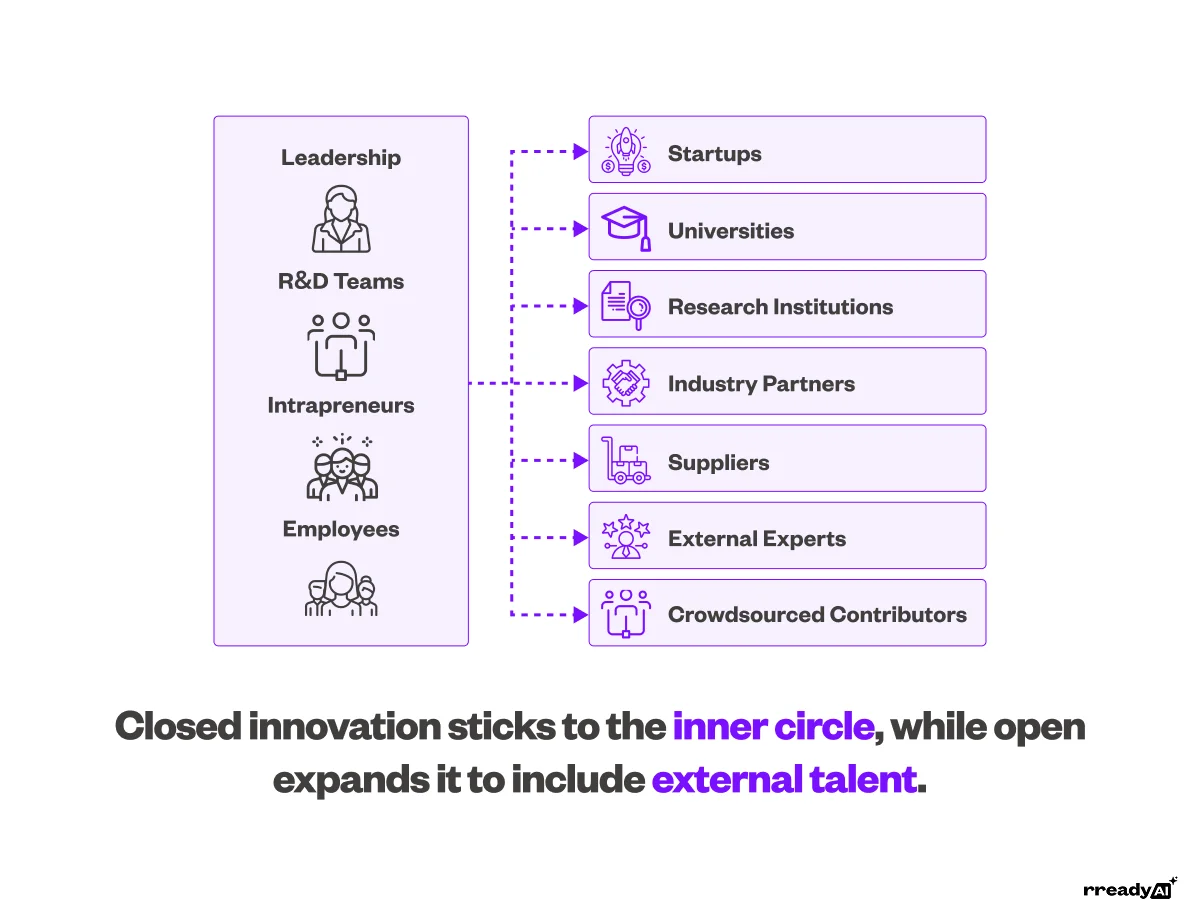
Open Innovation nutzt Talente außerhalb der Organisation, während Closed Innovation auf interne Mitarbeitende setzt.
Bei Open Innovation können beispielsweise beteiligt sein:
Startups und Scale-ups
Universitäten und Forschungseinrichtungen
Industriepartner und Lieferanten
Externe Experten und Innovations-Communities
Crowdsourcing-Beiträge
Closed Innovation konzentriert sich hingegen auf interne Talente, zum Beispiel:
Führungskräfte und Entscheidungsträger
Engagierte F&E-Teams
Intrapreneure und Innovationsverantwortliche
3. Anreize zur Teilnahme
Anreize spielen eine entscheidende Rolle für Innovation, da sie beeinflussen wer teilnimmt, wie motiviert die Beteiligten sind und wie viel Aufwand sie investieren.
Bei Open Innovation sind die Beteiligten keine Mitarbeitenden, weshalb Motivation über klassische Vergütung hinausgeht.
Typische Anreize sind:
Marktbasierte Belohnungen
Preisgelder oder Wettbewerbe
Reputation und Sichtbarkeit in Communities
Möglichkeiten zur Zusammenarbeit oder Kommerzialisierung
Closed Innovation nutzt hingegen unternehmensinterne Anreizstrukturen, beispielsweise:
Gehalt und Bonusprogramme
Karriereentwicklung und Anerkennung
Hierarchie und Führungsentscheidungen
Strategische Zielvorgaben des Unternehmens
4. Innovationsumfang
Da Open Innovation auf vielfältige externe Inputs zugreift, ermöglicht sie häufiger radikale oder disruptive Innovation.
Neue Perspektiven und spezialisiertes Wissen eröffnen Chancen außerhalb bestehender Geschäftsmodelle.
Closed Innovation kann ebenfalls zu Durchbrüchen führen, unterstützt jedoch häufiger inkrementelle Innovation.
Diese macht etwa 98% aller Innovationsaktivitäten aus.
Der Grund liegt in der stärkeren Orientierung an bestehenden Fähigkeiten, Technologien und Produkten.
5. Kommunikationskanäle
Ideen entwickeln sich nur weiter, wenn sie geteilt, diskutiert und verbessert werden können.
Open Innovation nutzt nach außen gerichtete Kommunikationskanäle, zum Beispiel:
Innovationsplattformen
Partnerschaften
Open Calls oder Challenges
Externe Communities
Kollaborative Netzwerke
Closed Innovation nutzt interne Kommunikationskanäle, beispielsweise:
interne Meetings und Workshops
Projektteams und bereichsübergreifende Arbeitsgruppen
Management-Reviews
interne Hackathons oder Innovationswettbewerbe
Pro-Tipp:
Sowohl Open als auch Closed Innovation profitieren von Innovationsplattformen. Wenn Ideen innerhalb eines Unternehmens entstehen, benötigen Teams einen klaren, gemeinsamen Kanal, um Ideen einzureichen, zu diskutieren und weiterzuentwickeln.
Die Idea Management Plattform von rready wurde genau dafür entwickelt.
Sie ermöglicht Organisationen:
Ideen aus der gesamten Belegschaft zu sammeln
Ideen transparent zu bewerten und weiterzuentwickeln
alle Beteiligten entlang des Innovationsprozesses auszurichten
Dank integrierter Kollaboration, strukturierter Bewertung, klarer Workflows und Echtzeit-Reporting wird Innovationsarbeit sichtbar, inklusiv und skalierbar.

6. Infrastruktur
Open und Closed Innovation unterscheiden sich nicht nur im Stil, sondern auch in ihren Governance-Strukturen.
Open Innovation benötigt Infrastruktur für Zusammenarbeit über Organisationsgrenzen hinweg, zum Beispiel:
Systeme zur Koordination externer Partner
Prozesse zur Integration externen Wissens
klare Regeln für Partnerschaften und IP
Tools für verteilte Innovationsprozesse
Closed Innovation basiert hingegen auf starker interner Infrastruktur, darunter:
Interne F&E-Teams
Entwicklungs- und Qualitätsprozesse
zentrale Entscheidungsstrukturen
proprietäre Tools und sichere IT-Systeme
7. Kontrolle
Kontrolle bestimmt, wer Entscheidungen trifft, Wissen besitzt und Ergebnisse verantwortet.
Open Innovation bedeutet in der Regel geteilte Kontrolle.
Da externe Mitwirkende beteiligt sind, müssen Entscheidungsrechte, Wissenszugang und geistiges Eigentum über Organisationsgrenzen hinweg geregelt werden.
Closed Innovation hingegen zentralisiert Kontrolle innerhalb der Organisation.
Alle Entscheidungen, Entwicklungsaktivitäten und Eigentumsrechte bleiben intern, wodurch das Unternehmen vollständige Kontrolle über den Innovationsprozess behält.
8. Vertraulichkeit
Kontrolle und Vertraulichkeit hängen eng zusammen.
Bei Open Innovation muss Vertraulichkeit aktiv gesteuert werden.
Da Innovation über Organisationsgrenzen hinweg stattfindet, werden Wissen und geistiges Eigentum häufig geteilt, lizenziert oder vertraglich geregelt.
Daher sind klare Vereinbarungen notwendig, die festlegen welche Informationen geteilt werden, welche vertraulich bleiben, und wie Wert und Eigentumsrechte verteilt werden.
Closed Innovation verfolgt einen stärker abgeschlossenen Ansatz. Innovationen werden intern entwickelt und bleiben bis zur Marktreife vertraulich. Wissen, IP und Wettbewerbsvorteile bleiben vollständig im Unternehmen.
9. Risiken
Wenn Kontrolle und Vertraulichkeit geteilt werden, spielt Risikomanagement eine wichtige Rolle.
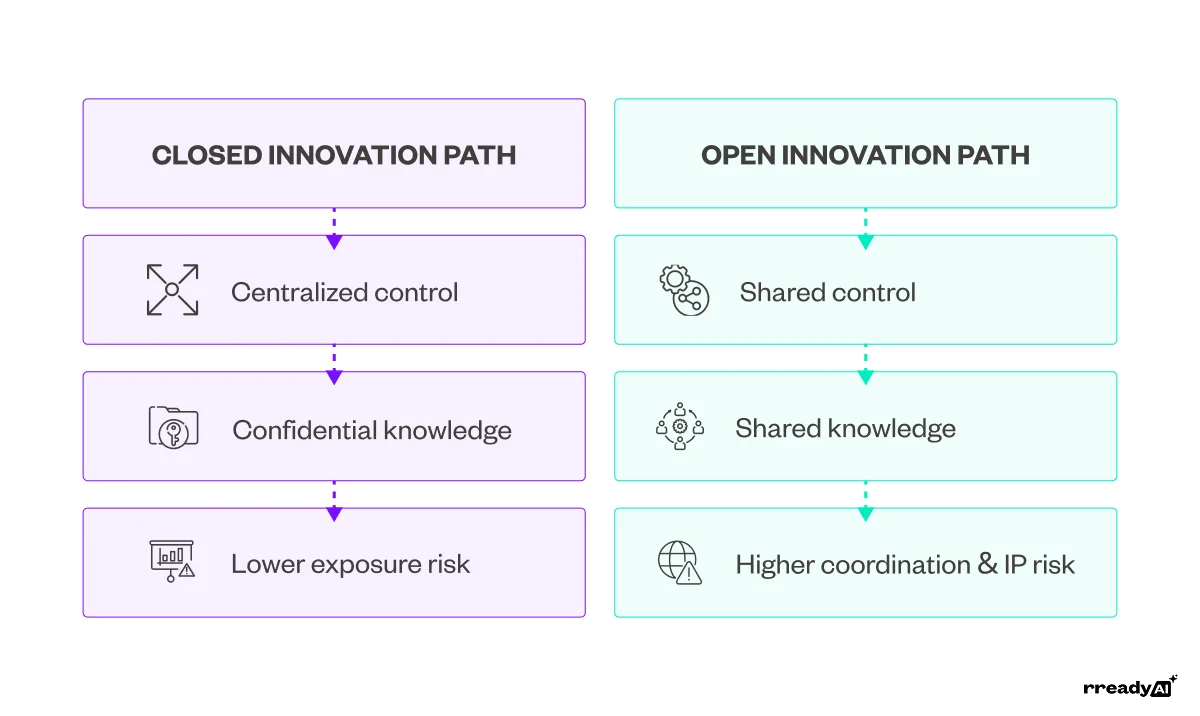
Bei Open Innovation können unter anderem folgende Risiken auftreten:
begrenzte Fähigkeit, externe Ideen zu erkennen und zu integrieren
Komplexe Zusammenarbeit mit mehreren Partnern
unterschiedliche Erwartungen und Anreizstrukturen
unklare Eigentumsrechte bei fehlender Governance
Deshalb erfordert Open Innovation klare Strukturen, starke Koordination und Integrationsfähigkeit.
Doch auch Closed Innovation birgt Risiken, zum Beispiel:
blinde Flecken durch rein internes Wissen
technologische Rückstände gegenüber externen Entwicklungen
langsameres Lernen aus Markt- und Kundenfeedback
Übervertrauen in interne Expertise
Da keiner der beiden Ansätze risikofrei ist, stellt sich letztlich die Frage:
Welche Risiken kann Ihre Organisation besser managen?
10. Kosten
Open Innovation kann kosteneffizienter sein, da Entwicklungskosten, Ressourcen und Expertise auf mehrere Partner verteilt werden.
Durch externe Zusammenarbeit können Unternehmen:
Kosten für Forschung und Entwicklung reduzieren
bereits existierende Lösungen nutzen
Investitionen auf mehrere Akteure verteilen
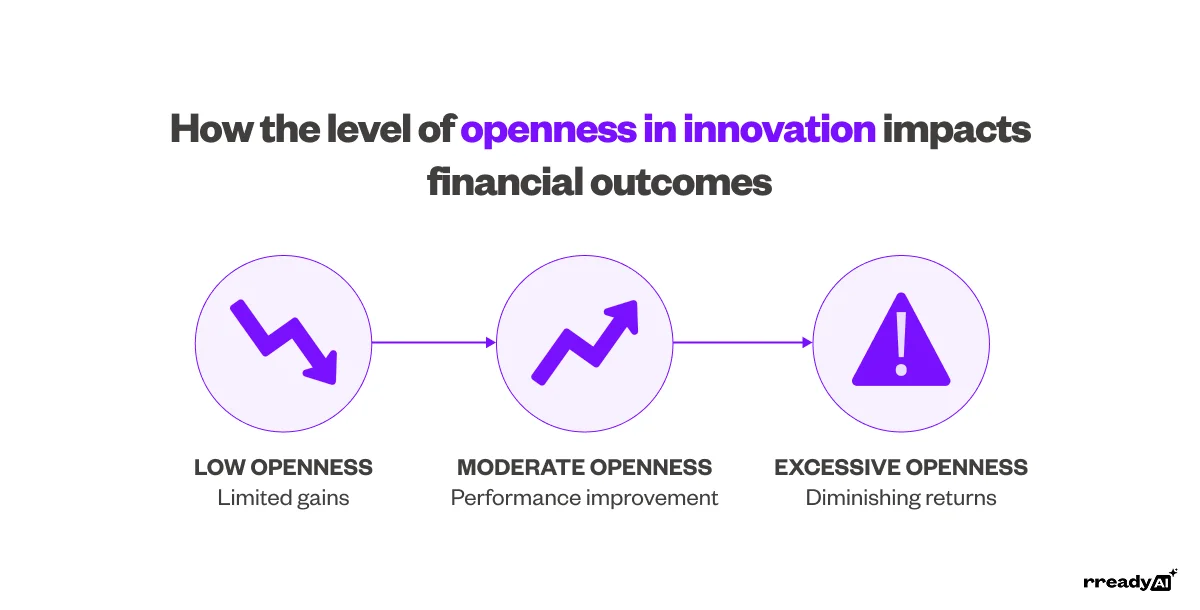
Studien zeigen jedoch auch: Unternehmen mit einem moderaten Grad an Offenheit erzielen häufig die besten finanziellen Ergebnisse. Zu wenig oder zu viel Offenheit kann den Nutzen begrenzen.
Closed Innovation ist dagegen strukturell kostenintensiver, da sämtliche F&E-Aktivitäten intern stattfinden.
Das erfordert langfristige Investitionen in:
Personal
Infrastruktur
Forschung und Experimente
Trotzdem investieren viele Unternehmen weiterhin stark in interne Innovation. Die globalen F&E-Ausgaben von Unternehmen erreichten 2024 einen Rekordwert von 1,3 Billionen Dollar.
11. Geschwindigkeit
Die Geschwindigkeit von Innovation hängt stark davon ab, wie viele Akteure beteiligt sind und wie komplex Entscheidungsprozesse sind.
Open Innovation ist häufig schneller.
Studien zeigen, dass Organisationen mit diesem Modell ihre Time-to-Market um bis zu 40% reduzieren können.
Das liegt daran, dass externe Ideen und Fähigkeiten Entwicklungszyklen verkürzen und Doppelarbeit vermeiden.
Closed Innovation verläuft oft langsamer, da sämtliche Entwicklung intern stattfindet und von internen Ressourcen, Prioritäten und Prozessen abhängt.
12. Flexibilität
Wenn sich Märkte verändern, Technologien weiterentwickeln oder Prioritäten verschieben, wird Anpassungsfähigkeit zum Wettbewerbsvorteil.
Open Innovation ist häufig flexibler, da Unternehmen schneller neue Partner einbeziehen oder Perspektiven integrieren können.
Umfragen zeigen, dass rund 62% der Organisationen Open Innovation als positiv für Agilität und Anpassungsfähigkeit bewerten.
Closed Innovation kann ebenfalls flexibel sein, insbesondere in kleineren Organisationen.
Mit zunehmender Größe und stärkerer institutioneller Verankerung kann es jedoch mehr Zeit und Ressourcen erfordern, die Richtung zu ändern.
13. Qualität
Die Qualität von Innovationsergebnissen hängt häufig davon ab, wie gut Standards, Konsistenz und strategische Ausrichtung gewährleistet werden können.
Bei Open Innovation kann es größere Qualitätsunterschiede geben, da Ideen aus unterschiedlichen externen Quellen stammen.
Deshalb benötigen Organisationen klare Evaluationsprozesse und Governance-Strukturen, um sicherzustellen, dass Ergebnisse den internen Standards entsprechen.
Closed Innovation bietet von Natur aus stärkere Qualitätskontrolle.
Da Entwicklung intern stattfindet, arbeiten Teams mit gemeinsamen Standards, Prozessen und Zielbildern, was Konsistenz erleichtert.
Open Innovation vs. Closed Innovation: Welcher Ansatz ist der richtige?
Welches Innovationsmodell am besten passt, hängt stark vom konkreten Kontext Ihres Unternehmens ab:
Die folgende Tabelle hilft Ihnen zu beurteilen, welcher Innovationsansatz besser zu Ihrer Situation passt:
Entscheidungsfaktor | Open Innovation eignet sich besonders, wenn … | Closed Innovation eignet sich besonders, wenn… |
Art des Problems | Probleme explorativ oder noch unklar definiert sind | Probleme klar definiert sind |
Verteilung des Wissens | relevantes Wissen außerhalb der Organisation verteilt ist | entscheidendes Wissen intern vorhanden ist |
Bedarf an Vielfalt vs. Koordination | viele unterschiedliche Ideen und Experimente wertvoll sind | enge Koordination zwischen Teams notwendig ist |
Innovationsziel | neue Märkte, Technologien oder Geschäftsmodelle erkundet werden sollen | bestehende Produkte oder Prozesse optimiert werden sollen |
IP-Sensibilität | Wissen modularisiert werden kann und Wert sich teilen oder lizenzieren lässt | geistiges Eigentum besonders sensibel ist und streng geschützt werden muss |
Risikobereitschaft | Sie bereit sind die Komplexität von Zusammenarbeit und Governance zu managen | Sie externe Abhängigkeiten und Unsicherheiten möglichst gering halten möchten |
Interne Fähigkeiten | interne Ressourcen von externer Ergänzung profitieren | starke interne F&E-Fähigkeiten bereits vorhanden sind |
Marktdynamik | der Markt sich schnell verändert und hohe Anpassungsfähigkeit erfordert | der Markt stabil oder stark reguliert ist |
rready: Das Beste aus beiden Welten
Unternehmen müssen sich nicht strikt zwischen Open und Closed Innovation entscheiden. Mit der richtigen Struktur lassen sich die Vorteile beider Ansätze kombinieren.
Das KICKBOX Intrapreneurship-Programm von rready ermöglicht genau das.Es verbindet offene Ideengenerierung aus der gesamten Organisation mit einem strukturierten internen Innovationsprozess.
Mitarbeitende werden befähigt, Ideen mithilfe einer bewährten Methodik, einer skalierbaren digitalen Plattform und praktischer Unterstützung umzusetzen.
Durch niedrige Einstiegshürden wird das kollektive Wissen der gesamten Belegschaft aktiviert, während klare Phasen, Governance und Ressourcen sicherstellen, dass Ideen nicht nach der Ideengenerierung stagnieren.
Das Ergebnis ist eine Innovationskultur, die inklusiv ist, messbare Ergebnisse liefert, skalierbar aufgebaut ist und von den Menschen getragen wird, die Ihr Unternehmen am besten kennen.
Erhalten Sie eine personalisierte Demo der rready Plattform und erfahren Sie, wie Sie eine Innovationsstruktur aufbauen können, die Offenheit und Kontrolle optimal miteinander verbindet.

Mehr erfahren

8 Vorteile von Ideenmanagement-Software
Entdecken Sie die Vorteile von Ideenmanagement-Software: Ideen erfassen, Zusammenarbeit verbessern und Mitarbeiterideen in echten Geschäftserfolg umsetzen.

9 Methoden zur Ideenfindung für Unternehmen im Jahr 2026
Die besten Ideenfindungstechniken, um Kreativität zu fördern, Denken zu strukturieren und Ideen in umsetzbare Ergebnisse für Ihr Team zu verwandeln.

Finanzielle vs. nichtfinanzielle Anreize bei Innovationen
Erfahren Sie, wie finanzielle und nichtfinanzielle Anreize Innovation fördern und Mitarbeitende motivieren, Ideen einzubringen und engagiert zu bleiben.