Dieser Artikel wurde ursprünglich auf Englisch veröffentlicht.
9 Methoden zur Ideenfindung für Unternehmen im Jahr 2026
Die besten Ideenfindungstechniken, um Kreativität zu fördern, Denken zu strukturieren und Ideen in umsetzbare Ergebnisse für Ihr Team zu verwandeln.


Techniken zur Ideenfindung sind Methoden und Strategien, die Unternehmen helfen, ungeordnete Gedanken in strukturierten, nutzbaren Input zu verwandeln.
Zudem geben sie Teams Raum, um Ideen gemeinsam zu entwickeln – ein entscheidender Treiber für das Unternehmenswachstum.
In der Praxis bleiben viele Ideen ungenutzt. Eine Studie zeigt, dass über 90 % der Mitarbeitenden auf persönliche Gespräche setzen, um Ideen zu teilen. Meist geschieht dies informell, wodurch wertvolles Potenzial verloren geht.
Die Lösung liegt jedoch nicht in mehr Meetings oder starren Prozessen. Unternehmen sollten Teams mit bewährten Kreativtechniken ausstatten, ein kreativitätsförderndes Umfeld schaffen sowie Beiträge anerkennen und durch finanzielle und nicht-finanzielle Anreize belohnen.
Wenn diese Faktoren zusammenspielen, wird der Ideenaustausch zum Selbstläufer und die Qualität der Ideen steigt.
Dieser Leitfaden stellt neun Techniken zur Ideenfindung vor, mit denen Unternehmen im Jahr 2026 diesen Wandel erfolgreich gestalten.
Das Wichtigste in Kürze
Ideenfindung braucht Struktur
Strukturierte Techniken helfen Teams, zielgerichtet und wiederholbar Ideen zu entwickeln. Das steigert die Qualität und die Beteiligung.Unterschiedliche Methoden für unterschiedliche Herausforderungen
Nutzen Sie Mindmapping bei komplexen Themen, Brainwriting für mehr Inklusion, SCAMPER zur Optimierung bestehender Ideen und First-Principles-Denken zum Lösen von Denkmustern.Erfolg durch die richtige Kombination
Beste Ergebnisse entstehen, wenn Methoden auf ein offenes Umfeld treffen, das vielfältige Perspektiven und aktive Beteiligung fördert.Ein System wie rready macht Ideen messbar
Ideen müssen strukturiert erfasst, bewertet und weiterentwickelt werden. Die Plattform rready begleitet diesen Prozess durchgehend und sichert die Umsetzung.
9 Techniken zur Ideenfindung für kreativere Teams
Kreativitätstechniken helfen Einzelpersonen und Teams, Ideen zielgerichtet zu generieren, zu prüfen und weiterzuentwickeln.
Sie lassen sich in kurzen Sessions nutzen oder fest im Arbeitsalltag verankern. So durchbrechen Teams gewohnte Denkmuster und betrachten Probleme aus neuen Blickwinkeln.
Die folgenden neun Techniken helfen Ihnen, die Anzahl und Qualität Ihrer Ideen zu steigern und mehr Teammitglieder aktiv einzubinden.
1. Mindmapping: Verbindungen visualisieren, Ideen ausbauen
Mindmapping ist eine visuelle Methode. Sie starten mit einem zentralen Begriff und zweigen verwandte Gedanken, Kategorien und Unterthemen ab.
Statt Ideen linear aufzulisten, stellen Sie diese grafisch dar. Das erleichtert es, Zusammenhänge zu erkennen, Muster zu finden und Ideen weiterzuentwickeln.
Diese Technik eignet sich besonders für komplexe Themen. Strategieteams, Produktmanager und Innovationsverantwortliche nutzen Mindmapping häufig zur Planung oder Problemanalyse.
Gerade in der Anfangsphase eines Projekts sorgt diese Methode für eine schnelle und klare Übersicht.
Profi-Tipp:
Für noch innovativere Ansätze eignet sich das Mindmap-Mash-up.
Erstellen Sie zwei separate Mindmaps zu völlig unterschiedlichen Themen. Verknüpfen Sie danach Elemente aus beiden Karten miteinander. So entstehen überraschende neue Konzepte.
2. Brainstorming: Freies Denken in der Gruppe
Brainstorming ist der Klassiker der Ideenfindung. Ein Team sammelt so viele Ideen wie möglich zu einem Thema. Quantität geht hierbei vor Qualität.
Erfolgreich ist Brainstorming im geschäftlichen Kontext jedoch nur mit klarer Struktur.
Dazu gehören ein präzises Ziel, unterschiedliche Perspektiven im Raum, feste Regeln (keine Kritik in der Sammelphase) und die anschließende Bewertung und Priorisierung.
Ohne Struktur ufern Meetings schnell aus, dominante Stimmen setzen sich durch und gute Ansätze gehen verloren.
Profi-Tipp:
Wenn klassisches Brainstorming nicht die gewünschten Ergebnisse liefert, bieten sich zwei Varianten an:
Kollaboratives Brainstorming: Diese Methode setzt auf integrative Beteiligung. Das ist wichtig, da 83 % der Angestellten Ideen meist nur innerhalb der eigenen Abteilung teilen. Interdisziplinäre Teams bringen neue Perspektiven ein. Vielfältige Unternehmen sind zudem 1,7-mal häufiger Innovationsführer in ihrer Branche.
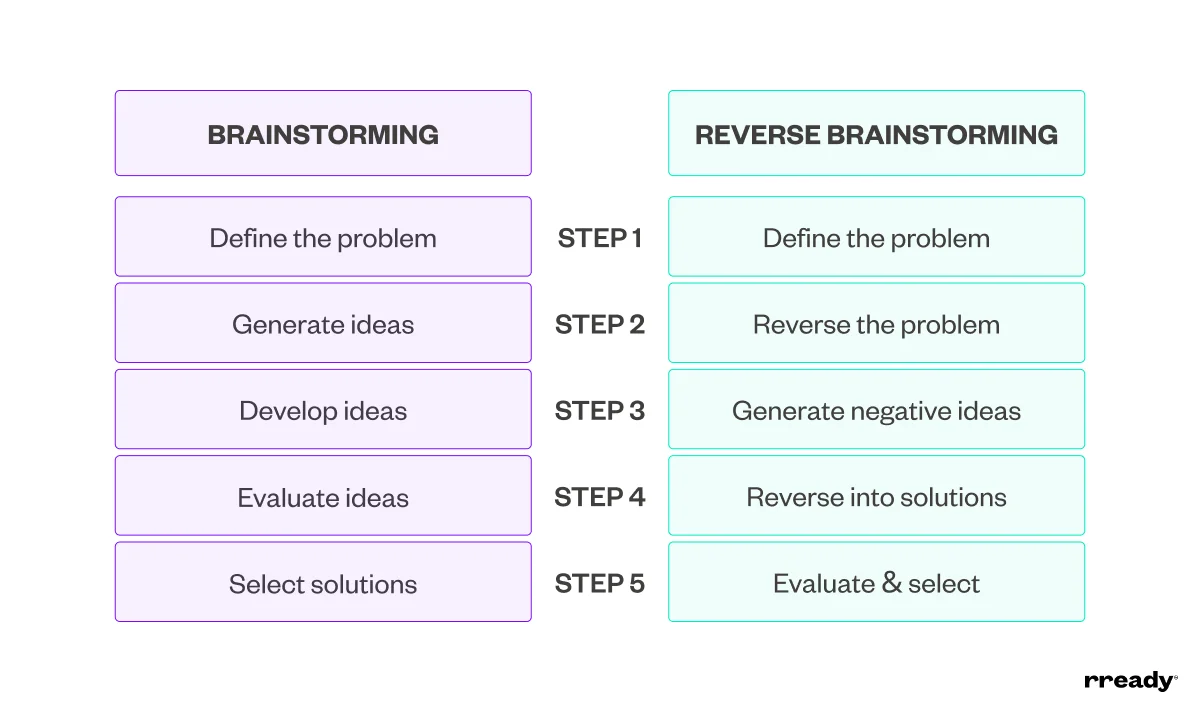
Reverse Brainstorming: Diese Technik dreht den Prozess um. Statt „Wie lösen wir das?“ fragen Sie „Wie können wir das Problem verschlimmern?“. Da es Teams oft leichter fällt, Schwachstellen zu finden statt direkter Lösungen, eignet sich diese Methode hervorragend für Prozessoptimierungen und Risikoanalysen.
3. Brainwriting: Mehr Ideen durch schriftliches Sammeln
Beim Brainwriting halten Teilnehmende ihre Ideen schriftlich fest und reichen sie anonym weiter, damit andere darauf aufbauen können.
Das sorgt für einen ungestörten Ideenfluss und eine gleichmäßige Beteiligung des gesamten Teams.
Da der Druck, vor der Gruppe zu sprechen, wegfällt, liefert Brainwriting oft deutlich mehr Ergebnisse als klassisches Brainstorming.
Die Methode eignet sich besonders:
In größeren Gruppen, in denen manche Personen ungern vor allen sprechen
Wenn Hierarchien die offene Diskussion hemmen könnten
Um zu verhindern, dass nur die lautesten Stimmen gehört werden
Wenn das Team mehr Zeit zum Nachdenken benötigt
4. Brain-Netting: Teamübergreifend und standortunabhängig zusammenarbeiten
Brain-Netting ist ein digitales Brainstorming. Teams nutzen Online-Tools, um Ideen in Echtzeit oder zeitversetzt gemeinsam zu entwickeln.
Statt in Präsenz-Meetings werden Ideen direkt auf Ideenmanagement-Plattformen erfasst, wo andere sie kommentieren und mit Medien wie Bildern oder Videos anreichern können.
Diese Technik eignet sich ideal für:
Unternehmen mit mehreren Standorten oder verschiedenen Zeitzonen
Remote- und Hybrid-Teams
Das kontinuierliche Sammeln von Ideen im Arbeitsalltag
Unternehmen, die Ideen zentral an einem Ort verwalten wollen
Profi-Tipp:
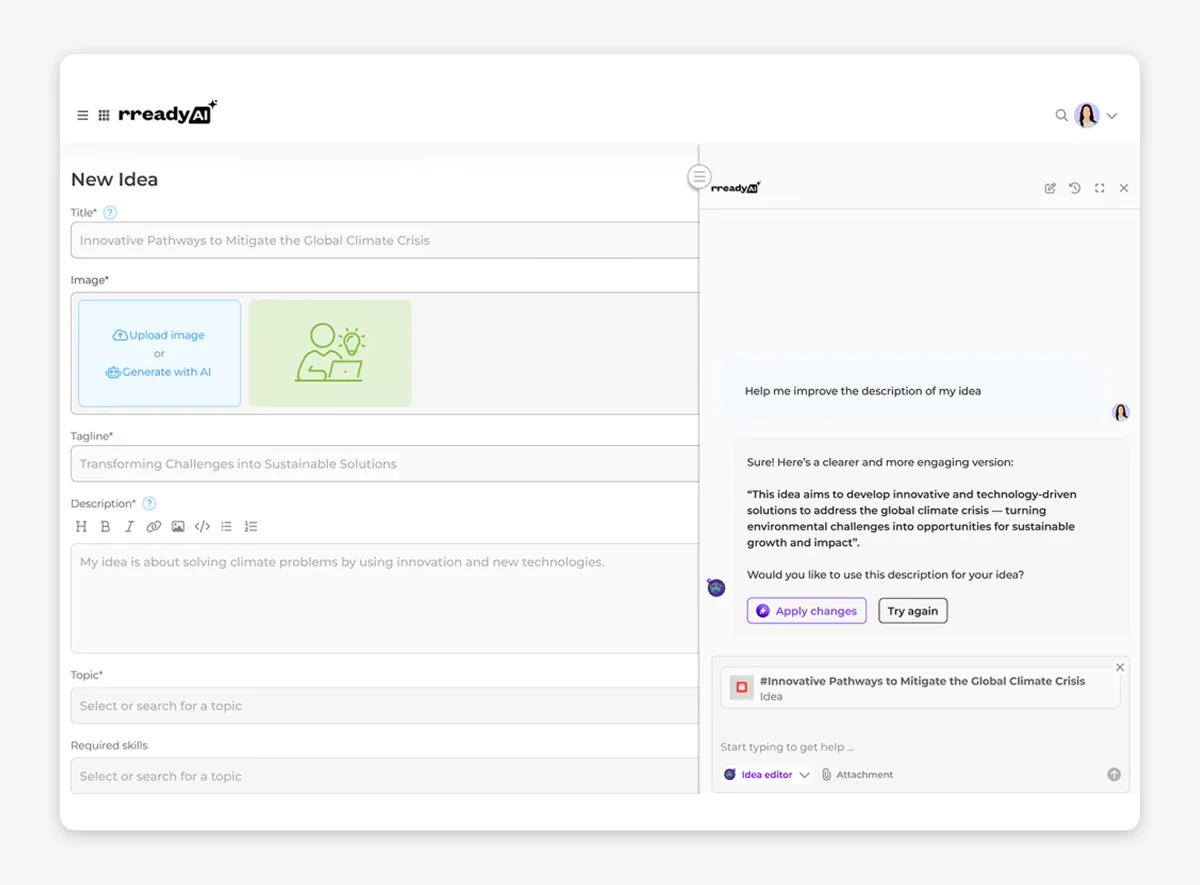
Nutzen Sie für ein effektives Ideenmanagement Tools, die mehr können als reines Sammeln. Erfolgreiches Brain-Netting braucht ein System, das den gesamten Lebenszyklus einer Idee abbildet, wie rready.
Das bietet die Ideenmanagement-Software von rready:
Strukturierte Erfassung: Anpassbare Formulare sorgen für vollständige und direkt bewertbare Vorschläge.
Integrierte Kollaboration: Kommentare und Feedback lassen Ideen im Team wachsen.
Smarte Bewertung und Priorisierung: Vordefinierte Kriterien und KI-gestützte Analysen filtern die besten Ansätze heraus.
Hohe Beteiligung: Transparente Prozesse und spielerische Elemente (Gamification) motivieren das Team langfristig.
Volle Transparenz und Reporting: Verfolgen Sie Fortschritte und messen Sie den Erfolg für alle Stakeholder übersichtlich.
So wird Brain-Netting zu einem skalierbaren und strukturierten Prozess in Ihrem Unternehmen.
5. Rollenspiele: Neue Perspektiven einnehmen
Beim Rollenspiel nehmen Teilnehmende eine andere Identität an – etwa die eines Kunden, Nutzers oder Partners –, um Probleme aus deren Sicht zu betrachten.
Diese Technik hilft besonders bei:
Der Optimierung von Customer Journeys und dem Produktdesign
Dem tiefen Verständnis von Kundenbedürfnissen und Problemen
Ideen, die bisher zu sehr aus der Innenperspektive gedacht wurden
Profi-Tipp:
Denken Sie dabei nicht nur an Ihre direkte Zielgruppe.
Versetzen Sie sich in bekannte Unternehmerpersönlichkeiten. Fragen Sie sich: „Wie würde Steve Jobs das lösen?“ oder „Wie würde Elon Musk das Problem angehen?“
Suchen Sie nach Beispielen für Markeninnovationen oder Produktdesign in Ihrer Branche, um gewohnte Denkmuster zu durchbrechen.
6. Kraftfeld-Analyse & Forced Relationships: Ungewöhnliche Verbindungen nutzen
Bei dieser Methode verbinden Sie bewusst zwei völlig unabhängige Konzepte, um neue Ideen zu generieren.
Durch die Kombination von Dingen, die eigentlich nicht zusammenpassen, erweitern Sie Ihren Denkrahmen und stoßen auf überraschende Lösungsansätze.
Die Methode ist einfach, schnell und ideal, wenn ein Team feststeckt oder neue Impulse braucht.
7. SCAMPER: Vorhandenes systematisch verbessern
SCAMPER ist eine strukturierte Methode, um bestehende Produkte, Services oder Prozesse zu hinterfragen und zu optimieren.
Dazu nutzt das Team einen gezielten Fragenkatalog:
Substitute (Ersetzen): Was lässt sich austauschen?
Combine (Kombinieren): Was kann miteinander verknüpft werden?
Adapt (Anpassen): Was lässt sich für einen anderen Kontext nutzen?
Modify (Verändern): Was kann vergrößert, verkleinert oder betont werden?
Put to another use (Umnutzen): Wie lässt sich das Produkt anders verwenden?
Eliminate (Weglassen): Was lässt sich vereinfachen oder entfernen?
Reverse (Umkehren): Was passiert, wenn man den Prozess umdreht?
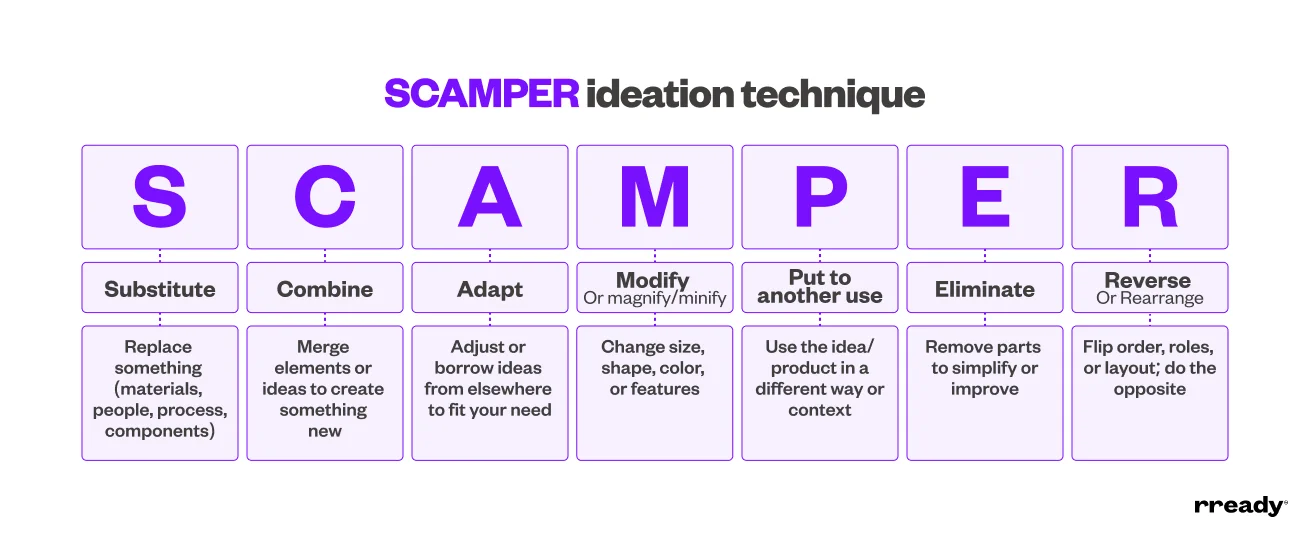
Statt bei null anzufangen, hilft SCAMPER, auf Bestehendem aufzubauen. So entstehen schnell pragmatische und direkt umsetzbare Ideen.
Die Methode eignet sich besonders, wenn:
Ein bestehendes Angebot modernisiert oder neu positioniert werden soll
Das Team an kontinuierlichen Verbesserungen statt an einer Neuerfindung arbeitet
Kosten gesenkt oder Prozesse vereinfacht werden sollen
Produkte an neue Markttrends angepasst werden müssen
Standards und aktuelle Arbeitsweisen hinterfragt werden sollen
8. First-Principles-Denken: Probleme auf den Kern reduzieren
Das Denken in Grundprinzipien zerlegt ein Problem in seine fundamentalen Wahrheiten. Es räumt mit Annahmen auf und baut die Lösung von Grund auf neu – basierend auf belegbaren Fakten.
Anstatt etwa zu akzeptieren, dass Raketen teuer sein müssen, weil sie es schon immer waren, analysierte SpaceX die reinen Materialkosten und definierte den gesamten Produktionsprozess neu. Das senkte die Kosten drastisch.
Diese Technik hilft besonders, wenn:
Teams in Branchenstandards feststecken („Das haben wir schon immer so gemacht“)
Komplexe Probleme völlig neue Denkansätze erfordern
Inkrementelle Verbesserungen nicht ausreichen und ein radikaler Wandel nötig ist
9. Die sechs Denkhüte: Ideen aus jedem Blickwinkel prüfen
Die Methode Die sechs Denkhüte (Six Thinking Hats) strukturiert Diskussionen, indem sie den Teilnehmenden verschiedene Rollen zuweist.
Statt unkoordiniert zu argumentieren, nimmt die Gruppe nacheinander verschiedene Denkweisen ein. Das macht die Diskussion fokussierter und sachlicher.
Jeder Hut steht für eine bestimmte Perspektive:
Weißer Hut (Fakten): Welche Daten haben wir? Welche Informationen fehlen uns?
Roter Hut (Gefühle): Was sagt unsere Intuition oder unser Bauchgefühl?
Schwarzer Hut (Risiken): Was könnte schiefgehen? Wo liegen die Schwachstellen?
Gelber Hut (Chancen): Was funktioniert gut? Wo liegt der langfristige Nutzen?
Grüner Hut (Kreativität): Welche neuen Ideen oder Alternativen gibt es?
Blauer Hut (Prozess): Wie steuern wir das Gespräch und was sind die nächsten Schritte?
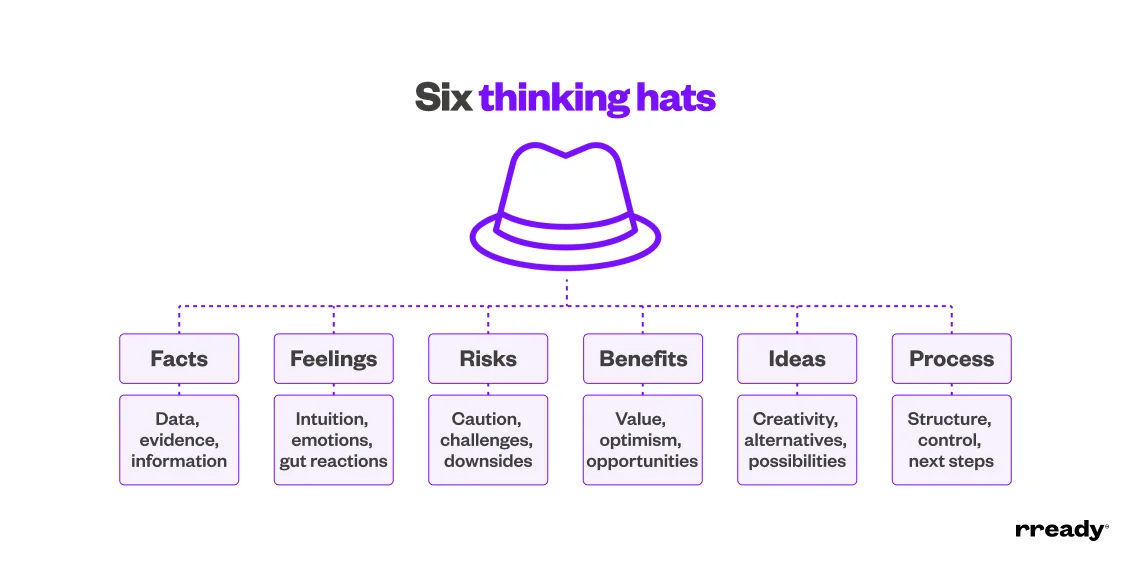
Durch diese Aufteilung vermeidet das Team unproduktive Diskussionen und gibt jedem Argument den passenden Raum.
Mit dem richtigen System von der Idee zur Umsetzung
Kreativitätstechniken sind wirkungsvoll, aber sie sind erst der Anfang.
Ideen, die im Unternehmen entstehen, müssen strukturiert erfasst, bewertet und weiterentwickelt werden.
Dazu benötigt ein Unternehmen ein produktives Ideenmanagement-System.
rready bietet genau diese Plattform: ein zentraler Ort, um Ideen ohne Reibungsverlust zu sammeln, zu verfeinern und erfolgreich umzusetzen.
Das ist aber noch nicht alles.
Neben klassischen Kreativitätstechniken ermöglicht rready auch moderne, systemgestützte Wege der Ideenfindung:
Methode | Beschreibung | Vorteil |
Ideenkampagnen | Fokussierte Aufrufe an Mitarbeitende, Ideen zu bestimmten Themen oder Zielen einzureichen | Liefert zielgerichteten Input passend zur Unternehmensstrategie |
KI unterstützt als Co-Pilot beim Generieren, Verfeinern und Strukturieren von Ideen | Beschleunigt die Ideenfindung und steigert die Qualität der Resultate | |
Signal-basierte Ideenfindung | Nutzen von Erkenntnissen aus internen Daten (z. B. CRM, ERP) zur Entdeckung von Potenzialen | Macht bestehende Daten zu einer kontinuierlichen Quelle für neue Ideen |
Mit einem strukturierten Anreizsystem, das Anerkennung, Transparanz und Belohnungen verbindet, hilft rready Ihnen zudem, die Motivation und das Engagement im Team langfristig hochzuhalten.
Erfahren Sie mehr über den Aufbau solcher Systeme in unserem rready Innovation Incentive Playbook.
Erleben Sie die Plattform live: Buchen Sie eine persönliche Demo mit dem rready-Team und erfahren Sie, wie rready Ihre Ideenfindung und Ihr Ideenmanagement von Anfang bis Ende unterstützt.
FAQ
Welches sind die wichtigsten Strategien zur Ideenfindung?
Zu den bewährtesten Ansätzen gehören Brainstorming, Brainwriting, Mindmapping, SCAMPER, First-Principles-Denken und Reverse Brainstorming.
Was ist die 6-3-5-Methode?
Die 6-3-5-Methode ist eine Brainwriting-Technik: 6 Personen schreiben in 5 Minuten jeweils 3 Ideen auf und entwickeln die Ideen der anderen weiter, um schnell eine Vielzahl an Ansätzen zu generieren.
Welche Tools unterstützen die Ideenfindung?
Neben klassischen Whiteboards und Kollaborations-Tools hilft eine professionelle Ideenmanagement-Software wie rready, Ideen zu strukturieren, zu entwickeln und erfolgreich zu bewerten.

Mehr erfahren

8 Vorteile von Ideenmanagement-Software
Entdecken Sie die Vorteile von Ideenmanagement-Software: Ideen erfassen, Zusammenarbeit verbessern und Mitarbeiterideen in echten Geschäftserfolg umsetzen.
9 Methoden zur Ideenfindung für Unternehmen im Jahr 2026
Die besten Ideenfindungstechniken, um Kreativität zu fördern, Denken zu strukturieren und Ideen in umsetzbare Ergebnisse für Ihr Team zu verwandeln.

Finanzielle vs. nichtfinanzielle Anreize bei Innovationen
Erfahren Sie, wie finanzielle und nichtfinanzielle Anreize Innovation fördern und Mitarbeitende motivieren, Ideen einzubringen und engagiert zu bleiben.