Dieser Artikel wurde ursprünglich auf Englisch veröffentlicht.
10 Top-Features von Ideenmanagement-Software
Die wichtigsten Funktionen von Ideenmanagement-Software: Zusammenarbeit verbessern, Ideen organisieren und Mitarbeiterideen schneller umsetzen.


Ideenmanagement-Software bringt Struktur in die Art und Weise, wie Ideen gesammelt, bewertet und priorisiert werden.
Der Markt dafür wird voraussichtlich von 6,57 Milliarden US-Dollar im Jahr 2025 auf 19,21 Milliarden US-Dollar bis 2035 anwachsen – angetrieben durch Innovationsdruck, digitale Transformation und kollaborativere Arbeitsweisen.
Da Teams immer verteilter arbeiten und Ideen aus verschiedensten Quellen stammen, benötigen Unternehmen strukturierte Wege, um aus Input echte Wirkung zu erzielen. Ein System zu haben, reicht jedoch nicht aus. Sie brauchen eine Lösung, die messbare Ergebnisse liefert.
Um Ihnen die Entscheidung zu erleichtern, zeigt dieser Leitfaden die wichtigsten Funktionen von Ideenmanagement-Software, die echten Mehrwert bieten.
Die wichtigsten Erkenntnisse
Ideenmanagement-Software strukturiert den Prozess
Sie zentralisiert die Erfassung, Bewertung und Priorisierung von Ideen, damit nichts verloren geht und sich Teams auf das Wesentliche konzentrieren können.Der Wert liegt im Zusammenspiel der Funktionen
Viele Plattformen bieten ähnliche Basisfunktionen. Entscheidend ist jedoch, wie gut sie den gesamten Ideenmanagement-Prozess in der Praxis unterstützen.Teilhabe und Zusammenarbeit bringen bessere Ideen
Je einfacher es für Mitarbeitende ist, Ideen einzubringen und weiterzuentwickeln, desto vielfältiger und qualitativ hochwertiger wird der Ideenpool.Daten, Struktur und KI machen aus Ideen Entscheidungen
Funktionen wie Analysen, Priorisierungsmodelle und KI helfen Teams, die wertvollsten Ideen zu identifizieren und souverän umzusetzen.Die richtige Plattform führt alles zusammen
Plattformen wie rready vereinen alle Kernfunktionen in einem System. Das vereinfacht das Ideenmanagement, stärkt die Zusammenarbeit und bringt echte Ergebnisse – ganz ohne Komplexität.
Was ist Ideenmanagement-Software?
Ideenmanagement-Software ist eine Anwendung, mit der Teams Ideen strukturiert und transparent erfassen, organisieren, bewerten und priorisieren können.
Sie ersetzt unübersichtliche Tools und veraltete Kummerkästen durch ein zentrales System, in dem Ideen einfach eingereicht, verglichen und verfeinert werden können.
Anstatt in Postfächern oder Meetings unterzugehen, werden Ideen sichtbar und nachverfolgbar. So können sich Unternehmen gezielt auf die Projekte konzentrieren, die es wirklich wert sind.
Ideenmanagement-Software wird oft mit Innovationsmanagement-Software verwechselt, unterscheidet sich aber im Leistungsumfang.
Das Ideenmanagement konzentriert sich auf die Frühphase – das Strukturieren und Auswählen von Ideen. Das Innovationsmanagement geht weiter und umfasst auch die Umsetzung, Entwicklung und das gesamte Portfolio-Management.
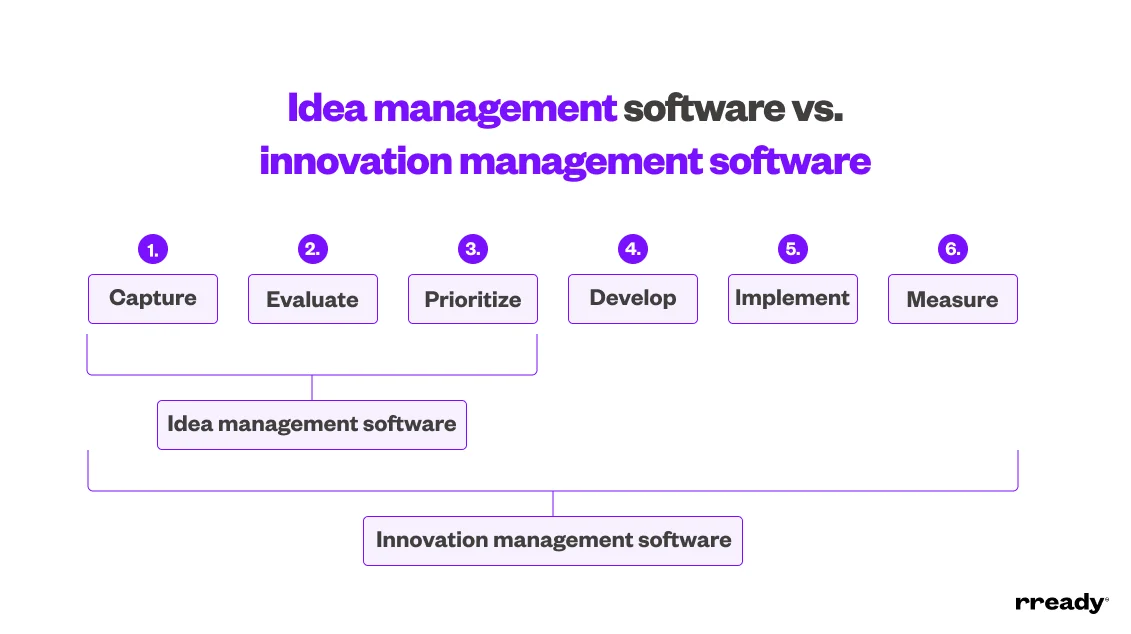
Diese Unterscheidung ist wichtig, da die benötigten Funktionen stark von Ihren genauen Zielen abhängen.
Die 10 wichtigsten Funktionen von Ideenmanagement-Software
Bei der Auswahl einer Ideenmanagement-Software sagt eine reine Feature-Liste nur wenig aus.
Die meisten dieser 10 Kernfunktionen sind Standard. Ausschlaggebend ist, wie sie aufgebaut sind und wie reibungslos sie den Ideenmanagement-Prozess in der Praxis unterstützen.
1. Ideeneinreichung, die zur Teilnahme motiviert
Eine zentrale Ideeneinreichung ist Standard für jede Ideenmanagement-Software. Worauf es wirklich ankommt, ist ein nutzerfreundliches Design der Einreichung.
Wählen Sie Tools, mit denen das Teilen von Ideen einfach und motivierend ist. Dazu gehören:
Eine einfache, intuitive Benutzeroberfläche ohne Schulungsaufwand.
Flexible Formate, von der schnellen Notiz bis hin zu strukturierten Formularen.
Anpassbare Vorlagen für unterschiedliche Anwendungsfälle oder Kampagnen.
Geräteunabhängiger Zugriff direkt im täglichen Arbeitsfluss.
Volle Transparenz über den aktuellen Status eingereichter Ideen.
Diese Kriterien sind entscheidend, da die Beteiligung der Mitarbeitenden das gesamte System antreibt.
Je einfacher der Prozess ist, desto mehr wertvolle Vorschläge erhalten Sie aus den unterschiedlichsten Bereichen Ihres Unternehmens.
Laut einer Studie von McKinsey führt eine diverse Perspektive direkt zu höherem Mitarbeiterengagement, besserer Bindung von Talenten und letztlich zu mehr Innovation. Es lohnt sich also, die Hürden für die Teilnahme so niedrig wie möglich zu halten.
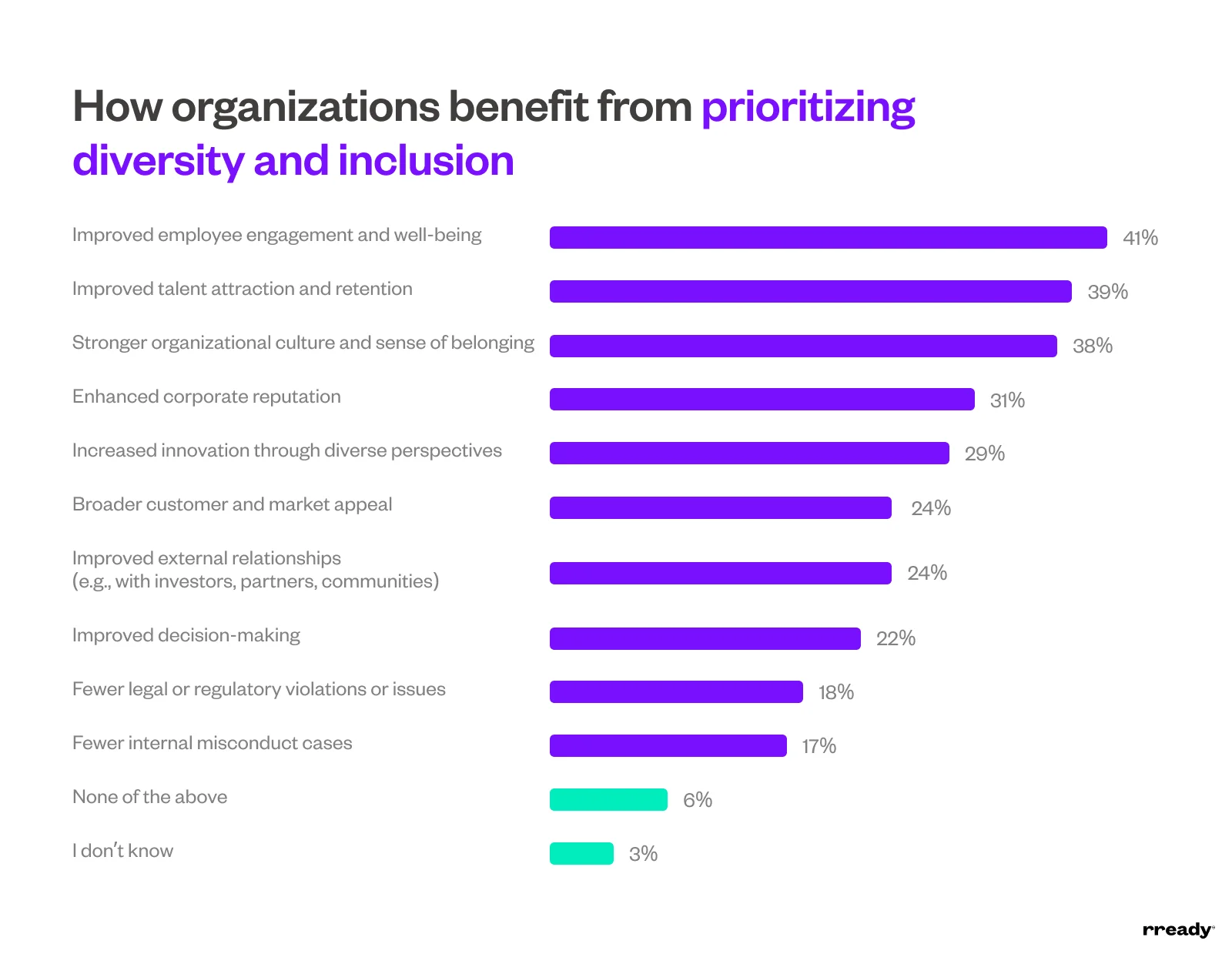
2. Kollaborations-Tools für wertvollen Austausch
Laut Gallup arbeiten rund 50 % aller Beschäftigten hybrid und 25 % komplett remote. Gleichzeitig hat fast die Hälfte der hybriden Teams keine klaren Regeln für die Zusammenarbeit definiert.
Die Folge: Die Zusammenarbeit wird unbeständig und wertvolles Wissen geht verloren. Hier spielen die Kollaborationsfunktionen von Ideenmanagement-Software eine zentrale Rolle.
Die folgende Tabelle zeigt die wichtigsten Funktionen für eine kontinuierliche Zusammenarbeit:
Kollaborations-Funktion | Ihr Nutzen |
Kommentare und Diskussionen | Feedback geben, Fragen klären und Ideen gemeinsam verfeinern. |
Reaktionen und Interaktionen | Schnell Interesse, Zustimmung oder Priorität signalisieren. |
Tagging und Erwähnungen | Die richtigen Personen zur passenden Zeit einbinden. |
Benachrichtigungen | Beteiligte über den aktuellen Fortschritt auf dem Laufenden halten. |
Gemeinsame Feeds | Ideen und Updates für alle transparent sichtbar machen. |
Diese Funktionen sind wichtig, da gute Ideen selten sofort perfekt sind. Sie wachsen durch Feedback, Austausch und unterschiedliche Sichtweisen.
3. Voting und Priorisierung für die besten Ideen
Ohne eine klare Struktur zur Bewertung lässt sich nicht feststellen, welche Ideen das größte Potenzial haben.
Effektive Voting- und Priorisierungsfunktionen bieten Ihnen:
Integrierte Voting-Optionen wie Upvotes, Sterne-Bewertungen oder Ranglisten.
Kriterienbasierte Bewertung nach Kriterien wie Machbarkeit oder Nutzen.
Anpassbare Bewertungsmodelle für verschiedene Projektphasen.
Experten-Feedback zusätzlich zur Meinung der Masse.
Eine transparente Logik, die Entscheidungen für alle nachvollziehbar macht.
Dies ist entscheidend, da die Auswahl sonst schnell zu einem Beliebtheitswettbewerb oder purem Bauchgefühl wird.
Die richtigen Funktionen stellen sicher, dass Ideen nach objektiven Kriterien bewertet und die besten Konzepte zuverlässig herausgefiltert werden.
4. Ideenkampagnen für gezielten Input
Das freie Sammeln von Ideen hat seine Berechtigung, reicht allein jedoch meist nicht aus.
Mit Ideenkampagnen und Challenges lenken Sie die Aufmerksamkeit gezielt auf konkrete Ziele, Probleme oder Marktchancen innerhalb eines festen Zeitrahmens.
Statt ungerichteter Vorschläge erhalten Sie zielgerichteten Input zu geschäftsrelevanten Themen – wie der Optimierung interner Prozesse, Kostensenkungen, einem besseren Kundenservice oder neuen Produktideen.
5. Gamification und Interaktion für dauerhafte Motivation
Laut Gallup ist die weltweite Mitarbeiterbindung im Jahr 2025 auf nur noch 20 % gesunken – der niedrigste Wert seit Jahren.
Software kann dieses Problem nicht allein lösen, aber sie kann die Beteiligung an Ihrem Ideenmanagement spürbar steigern.
Folgende Elemente helfen dabei, die Motivation Ihrer Teams dauerhaft hochzuhalten:
Bestenlisten, die besonders aktive Teilnehmende hervorheben.
Badges oder Punktesysteme für erreichte Meilensteine und Aktivität.
Fortschrittsanzeigen, die den Nutzen des eigenen Beitrags sichtbar machen.
Falls Sie klassische Rankings vermeiden möchten, können Sie stattdessen besondere Beiträge würdigen.
Die Ideenmanagement-Lösung von rready ermöglicht es beispielsweise, die 20 aktivsten Nutzerinnen und Nutzer basierend auf Einreichungen, Kommentaren und allgemeinem Engagement hervorzuheben.

Diese Art der Sichtbarkeit macht es einfach, wertvolle Beiträge anzuerkennen und gewünschtes Verhalten zu fördern, ohne einen harten Wettbewerb zu erzeugen.
6. Reporting und Analysen für fundierte Entscheidungen
Daten und Analysen sind heute in jeder Branche die Basis für gute Entscheidungen und schnelles Handeln.
Dennoch fällt es vielen Unternehmen schwer, ihre Daten optimal zu nutzen. Fragmentierte Informationen führen bei 34 % der Unternehmen zu Umsatzverlusten.
Das gilt auch für das Ideenmanagement.
Um zu erkennen, welche Ideen sich lohnen, benötigen Sie präzise, verlässliche Daten als Entscheidungshilfe.
Achten Sie daher auf Plattformen, die den Erfolg Ihrer Initiativen messbar machen – durch:
Dashboards für Aktivität und Anzahl der Ideen.
Kennzahlen zu Engagement und Beteiligungsquoten.
Anpassbare Berichte für verschiedene Stakeholder.
Datenvisualisierungen für eine einfache und schnelle Präsentation der Ergebnisse.
7. Sicherheit und Zugriffsrechte für sensible Konzepte
Nicht jede Idee sollte für alle sofort sichtbar sein. Manche enthalten sensible Daten oder frühe Konzepte, die einen geschützten Raum erfordern.
Ideenmanagement-Software sollte daher über ein rollenbasiertes Rechtesystem verfügen, das genau regelt, wer Ideen sehen, bearbeiten oder bewerten darf.
Für strategische Initiativen, die nur bestimmte Teams betreffen, hilft ein geschlossener Bereich, um den Austausch vertraulich und fokussiert zu halten.
So entsteht ein System, das Offenheit und Kontrolle ideal verbindet, damit Ideen ohne Risiko geteilt werden können.
8. Struktur, die Ideen auffindbar und nutzbar macht
Mit steigender Anzahl an Ideen wird eine gute Organisation unerlässlich – besonders in Großunternehmen.
Wenn Hunderte oder Tausende Vorschläge eingehen, müssen diese auch langfristig nutzbar bleiben, da nicht alles sofort umgesetzt werden kann.
Eine gut durchdachte Software unterstützt Sie dabei durch:
Kategorisierungen und Tags für eine thematische Strukturierung.
Schnelle Such- und Filterfunktionen zum schnellen Auffinden relevanter Themen.
Zusammenführung von Duplikaten für eine saubere Pipeline.
Archivierung, um ältere Ideen für später aufzubewahren.
Die Themen-Funktion von rready ermöglicht es beispielsweise, Ideen nach strategischen Schwerpunkten oder spezifischen Herausforderungen zu gruppieren.

Durch die Zuordnung zu klaren Themen finden Sie Ideen schneller und verknüpfen sie direkt mit den richtigen Initiativen. So werden Ideen zu einem langfristigen Unternehmenswert statt zu einer Eintagsfliege.
9. KI-gestützte Tools zur Prozessoptimierung
Künstliche Intelligenz (KI) gehört mittlerweile zum Standard für moderne Arbeitsweisen und Wettbewerbsfähigkeit.
Richtig eingesetzt spart sie Zeit – oft bis zu 60 Minuten pro Tag pro Mitarbeitendem – und sorgt für immense Produktivitätssteigerungen.
Das erklärt, warum bereits 34 % der Unternehmen KI nutzen, um ihr Geschäft zu transformieren, und 30 % ihre Kernprozesse darauf ausrichten.
Auch im Ideenmanagement bietet KI entscheidende Vorteile:
Automatisierte Erkennung ähnlicher Ideen zur Vermeidung von Dubletten.
Unterstützung bei der Bewertung durch das Herausfiltern von Potenzialen nach festen Kriterien.
Hilfe beim Ausformulieren von Ideen für klarere und strukturiertere Vorschläge.
Kontextbasierte Empfehlungen für die nächsten Prozessschritte.
Smarte Suchfunktionen für eine mühelose Navigation bei hohem Ideenvolumen.
Diese Funktionen vereinfachen die Verwaltung erheblich. Teams gewinnen dadurch wertvolle Zeit, um sich auf die eigentliche Weiterentwicklung von Ideen zu konzentrieren.
10. Integrationen in bestehende Workflows
Selbst die beste Ideenmanagement-Software nützt wenig, wenn sie isoliert von Ihren täglichen Tools betrieben wird.
Nahtlose Schnittstellen (Integrationen) sind daher unverzichtbar.
Sie stellen sicher, dass Ideen geteilt und bewertet werden können, ohne dass Mitarbeitende ständig die Anwendung wechseln oder sich an neue Arbeitsweisen gewöhnen müssen.
Die Plattform rready setzt hierbei auf einen API-First-Ansatz.
Das ermöglicht eine einfache Anbindung an Ihre bestehenden Systeme:
Microsoft Teams und Slack für schnelle Benachrichtigungen und Austausch.
SAP, Oracle und Salesforce für die Verknüpfung mit Ihren ERP- und CRM-Systemen.
Azure und SSO-Anbieter für sicheren Zugriff und einfache Benutzerverwaltung.
Eigene APIs und Webhooks für Datensynchronisation in Echtzeit.
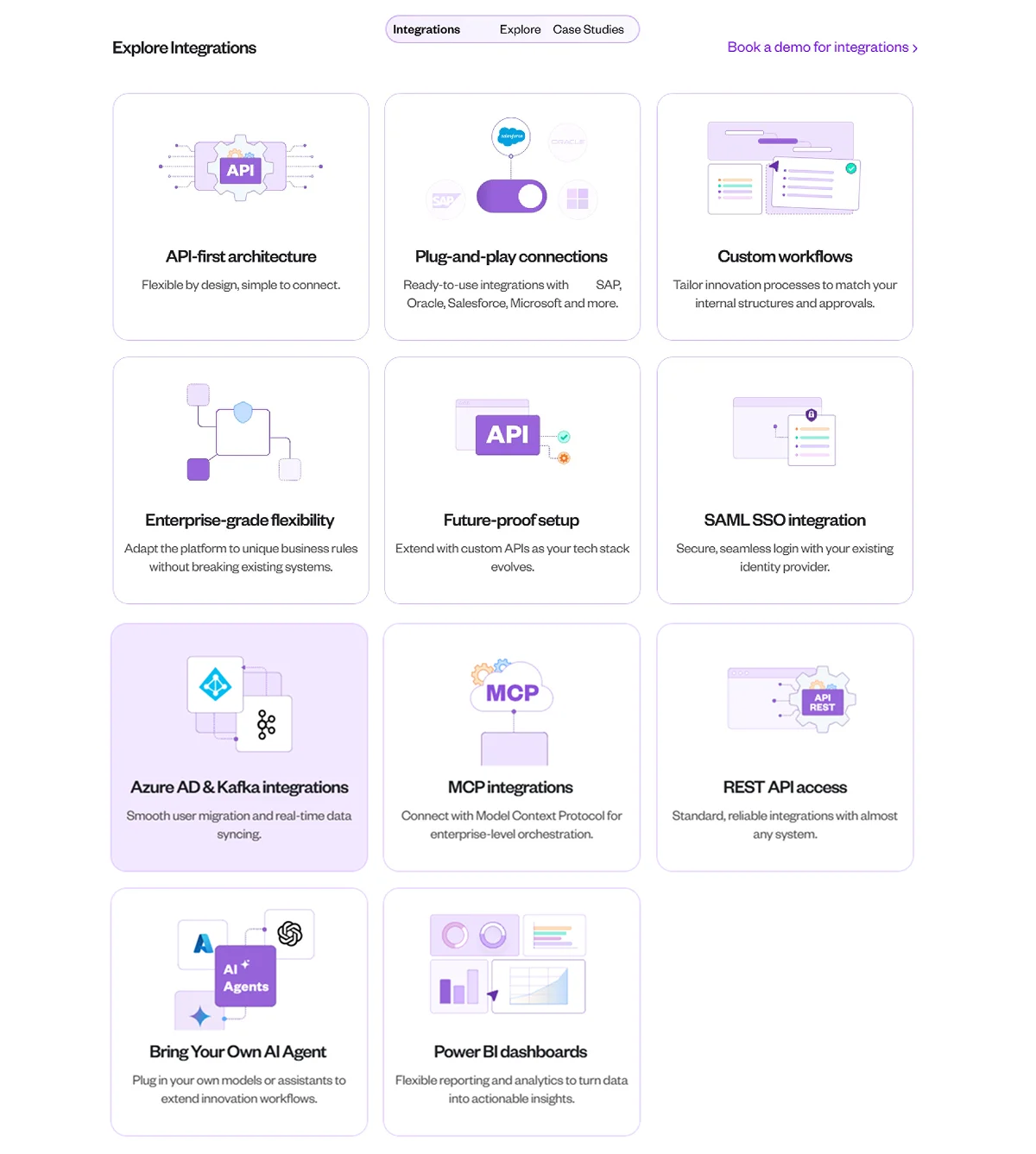
Diese Integrationen sorgen dafür, dass das Ideenmanagement zu einem natürlichen Teil Ihrer täglichen Arbeit wird.
Mit rready Ideen in echte Ergebnisse verwandeln
Die besten Funktionen nützen nur dann, wenn sie perfekt ineinandergreifen.
Die Ideenmanagement-Lösung von rready vereint all diese wichtigen Funktionen in einer intuitiven, zentralen Plattform.
Von der ersten Einreichung an stellt rready sicher, dass Ideen sichtbar bleiben, leicht weiterentwickelt und transparent bewertet werden. Teams können ganz natürlich zusammenarbeiten, während Verantwortliche die volle Kontrolle über den Auswahl- und Freigabeprozess behalten.
Der entscheidende Vorteil von rready ist die nahtlose Integration in Ihre bestehende IT-Infrastruktur.
Dank flexibler Workflows, integrierter Intelligenz und vielseitiger Schnittstellen passt sich rready Ihren Prozessen an – nicht umgekehrt.
Gleichzeitig behalten Sie mit aussagekräftigen Analysen den Erfolg Ihrer Initiativen stets im Blick.
Durch die systemweite KI-Unterstützung arbeiten Teams schneller, sparen manuelle Aufwände und fokussieren sich auf das Wesentliche: bessere Ideen und kluge Entscheidungen.
Bereit für mehr Struktur und Dynamik im Ideenmanagement? Buchen Sie eine persönliche Demo mit dem rready-Team und erfahren Sie, wie wir Ihr Unternehmen unterstützen können.
FAQ
Wofür wird Ideenmanagement-Software verwendet?
Sie dient der strukturierten Erfassung, Organisation, Bewertung und Priorisierung von Ideen im Unternehmen.
Was sind die Vorteile von Ideenmanagement-Software?
Zu den Vorteilen von Ideenmanagement-Software gehören eine höhere Qualität der Vorschläge, eine stärkere Beteiligung der Teams, eine bessere Entscheidungsbasis und die gezielte Fokussierung auf die wertvollsten Ideen.
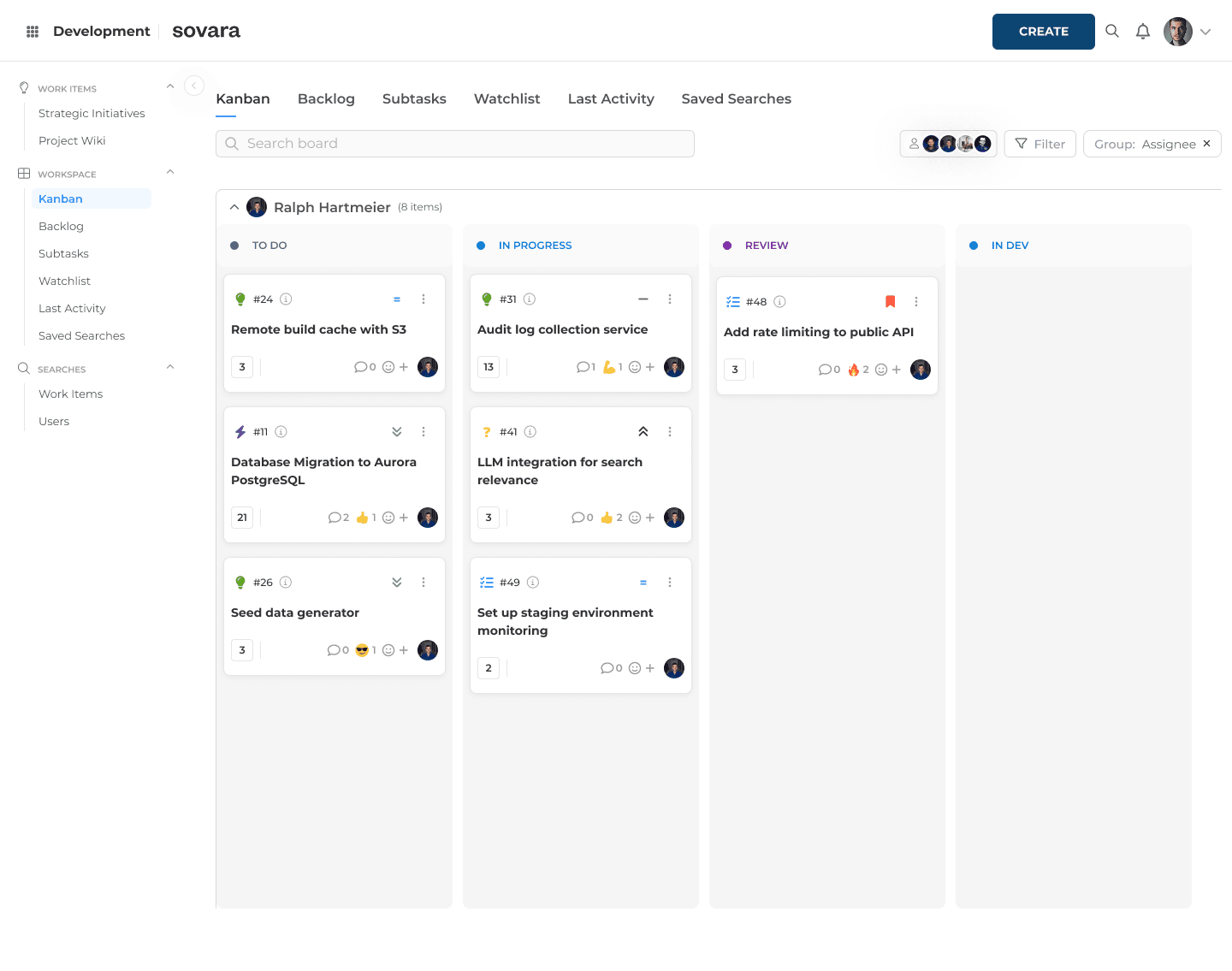

Mehr erfahren

8 Vorteile von Ideenmanagement-Software
Entdecken Sie die Vorteile von Ideenmanagement-Software: Ideen erfassen, Zusammenarbeit verbessern und Mitarbeiterideen in echten Geschäftserfolg umsetzen.

9 Methoden zur Ideenfindung für Unternehmen im Jahr 2026
Die besten Ideenfindungstechniken, um Kreativität zu fördern, Denken zu strukturieren und Ideen in umsetzbare Ergebnisse für Ihr Team zu verwandeln.

Finanzielle vs. nichtfinanzielle Anreize bei Innovationen
Erfahren Sie, wie finanzielle und nichtfinanzielle Anreize Innovation fördern und Mitarbeitende motivieren, Ideen einzubringen und engagiert zu bleiben.