Dieser Artikel wurde ursprünglich auf Englisch veröffentlicht.
Was ist Ideenmanagement-Software? Definition und Funktionen
Erfahren Sie, was Ideenmanagement-Software ist und wie sie hilft, Ideen zu erfassen, Zusammenarbeit zu verbessern und Beiträge in Maßnahmen umzusetzen.


Noch vor nicht allzu langer Zeit war das Sammeln von Ideen bei der Arbeit vor allem eine physische Aufgabe. Man warf einen Vorschlag in eine Box und hoffte, dass etwas daraus wird. Meistens wurde daraus nichts.
Diese Methode bot schließlich wenig Transparenz, keine einfache Möglichkeit, Ideen weiterzuentwickeln, und noch weniger Klarheit darüber, was danach tatsächlich passierte.
Auch dieser Ansatz hält der heutigen organisatorischen Realität nicht stand, besonders wenn man bedenkt, dass Ideen heute ständig über Teams, Tools und Datenströme hinweg entstehen, oft in Echtzeit.
Ohne Struktur, Sichtbarkeit und konsequente Nachverfolgung können wertvolle Beiträge noch schneller verschwinden als früher.
Deshalb wurden veraltete Vorschlagsboxen durch digitale Tools ersetzt, die speziell für Ideenmanagement entwickelt wurden.
Viele Organisationen vollziehen diesen Wandel, denn der Markt für Ideenmanagement-Software wird voraussichtlich von 5,9 Milliarden US-Dollar im Jahr 2024 auf mehr als 19 Milliarden US-Dollar bis 2035 wachsen.
Um Teil dieses Wandels zu werden, sollten Sie zuerst verstehen, was Ideenmanagement-Software ist, warum sie genutzt wird und worauf es bei der Auswahl wirklich ankommt.
Wichtigste Erkenntnisse
Ideenmanagement-Software macht aus verstreuten Beiträgen fokussiertes Handeln
Im Kern bietet Ideenmanagement-Software Organisationen ein zentrales, strukturiertes System, um Ideen zu erfassen, zu bewerten und voranzubringen, damit sie nicht in Chats, Postfächern oder Köpfen verloren gehen.Die stärksten Ideen kommen meist von Mitarbeitenden, nicht von außerhalb der Organisation
Mitarbeitende sind den täglichen Herausforderungen und Chancen am nächsten. Deshalb sind sie die wertvollste Quelle für Ideen zu Prozessverbesserungen, Kosteneinsparungen, Produktoptimierungen und Risikoreduzierung.Struktur und Priorisierung machen Ideen erfolgreich
Ideen zu zentralisieren ist nur der Anfang. Klare Pipelines, gemeinsame Bewertungskriterien und konsequente Priorisierung helfen Teams, sich auf Ideen zu konzentrieren, die zur Unternehmensstrategie passen und die größte Chance auf echten Impact haben.Gutes Ideenmanagement verbessert nicht nur Ergebnisse, sondern auch Kultur und Engagement
Wenn Ideen sichtbar sind, diskutiert und nachverfolgt werden, wird Ideation zur gemeinsamen Praxis. Mitarbeitende fühlen sich gehört, Zusammenarbeit nimmt zu und Zufriedenheit sowie Bindung verbessern sich.Die richtige Plattform macht den entscheidenden Unterschied
Effektive Ideenmanagement-Software muss leicht einführbar, teamübergreifend flexibel, kollaborativ, messbar und KI-gestützt sein. Plattformen wie rready vereinen all das in einem KI-nativen System und helfen Organisationen, eine echte Ideation-Engine aufzubauen, statt nur Ideen zu sammeln.
Was ist Ideenmanagement-Software?
Ideenmanagement-Software ist ein digitales System, das entwickelt wurde, um Ideen in einer Organisation zu erfassen, zu organisieren, zu bewerten und weiterzuentwickeln.
Stellen Sie es sich als strukturiertes Zuhause für Ideation vor: ein Ort, an dem Ideen gesammelt, ausgearbeitet und vorangebracht werden, statt in Postfächern, Chats oder Tabellen zu verschwinden.
Die betreffenden Ideen stammen in erster Linie aus der Organisation selbst.
Denn Mitarbeitende sehen Probleme aus nächster Nähe, erkennen Ineffizienzen früh und entwickeln eher wirksame Lösungen, weil sie die Arbeit selbst machen. Deshalb erkennen 60 % der Unternehmen interne Mitarbeitende als die wichtigsten Partner für Innovation und Ideation an.
Diese Mitarbeitenden bringen typischerweise Ideen ein zu:
Prozessverbesserungen zur Reduktion von Reibung im Arbeitsalltag
Kosteneinsparungen durch intelligentere Arbeitsweisen
Neuen Produkten oder Funktionen auf Basis praktischer Erfahrung
Verbesserungen der Customer Experience auf Grundlage realer Interaktionen
Risikoreduzierung und Compliance-Verbesserungen, die frühzeitig erkannt werden
Einige Plattformen haben das Ideenmanagement erweitert und zusätzliche Inputs einbezogen, etwa von Kund:innen, Partnern und externen Expert:innen.
Moderne Ideenmanagement-Lösungen helfen Organisationen außerdem, Ideen gezielt auf die wichtigsten Bereiche auszurichten durch:
Künstliche Intelligenz, die internen Kontext, frühere Einreichungen und organisatorische Prioritäten analysiert
Datenfeeds, die Muster, Leistungslücken und Chancen sichtbar machen, die bereits in internen Systemen vorhanden sind
Marktsignale, die Trends in Ideen übersetzen, die Mitarbeitende innerhalb der Organisation umsetzen können
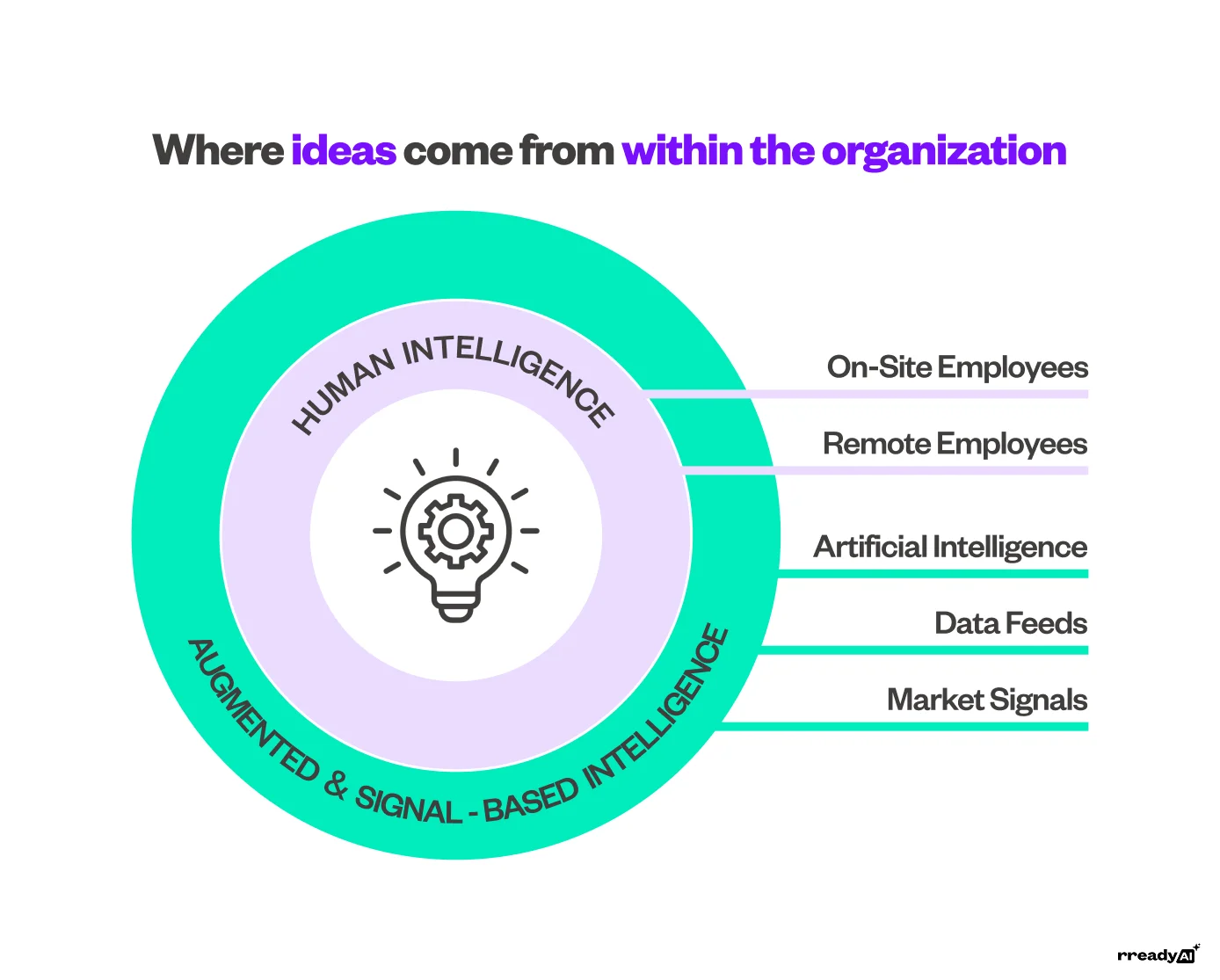
Durch die Kombination dieser Inputs können Organisationen Themenfelder oder strategische Herausforderungen definieren, in denen Ideen eingereicht werden sollen. So wird der Ideation-Prozess deutlich gezielter und besser an den Geschäftsprioritäten ausgerichtet.
Warum sich Ideenmanagement-Software lohnt: 6 zentrale Gründe
Bei so vielen bereits eingesetzten digitalen Tools wie Kollaborations-Apps, Analyseplattformen und Wissensdatenbanken ist es leicht, Ideenmanagement-Software als nur ein weiteres zu pflegendes System abzutun.
Doch bei Ideenmanagement-Software überwiegt der Nutzen den Aufwand deutlich, denn dieses Tool schließt eine echte Lücke: verstreute Inputs in fokussiertes Handeln zu verwandeln.
Hier sind sechs Gründe, warum sich Ideenmanagement-Software lohnt.
1. Sie zentralisiert den gesamten Ideenmanagement-Lebenszyklus
Die meisten Organisationen kämpfen nicht mit einem Mangel an Ideen.
Wenn diese Ideen jedoch in Gesprächen an der Kaffeemaschine und auf Notizzetteln geteilt werden, kommen nur sehr wenige über die Gesprächsphase hinaus.
Ideenmanagement-Software bündelt all diese Stränge in einem einzigen End-to-End-System, in dem sie diskutiert und weiterentwickelt werden können.
2. Sie bringt Struktur in die Ideation
Ideenmanagement-Software bringt Struktur in die Ideation, indem sie organisiert, wie Ideen gesammelt, bewertet und priorisiert werden.
Neben klaren Phasen für die Einreichung enthält ein strukturiertes Ideenmanagement-System in der Regel:
Gemeinsame Kriterien zur Bewertung von Wirkung, Machbarkeit und strategischer Passung
Teamübergreifende Zusammenarbeit zum Abbau von Silos
Verschlankte Workflows, die helfen, vielversprechende Ideen voranzubringen
Das Ergebnis ist ein fokussierterer Ideation-Prozess, in dem die besten Ideen leichter identifiziert, bewertet und weiterentwickelt werden können.
3. Sie hilft, das Wichtigste zu priorisieren
Wenn Ideen aus allen Richtungen einströmen, lässt man sich schnell von der Begeisterung mitreißen. Doch nicht jede Idee ist es wert, verfolgt zu werden.
Eine der größten Stärken von Ideenmanagement-Software ist, dass sie Ihnen hilft, die Ideen zu bewerten, zu vergleichen und zu priorisieren, die zu Ihren Zielen passen, die Investition rechtfertigen und das Potenzial für echten Impact haben.
Statt den Aufwand zu verzetteln, indem die lautesten oder neuesten Ideen bevorzugt werden, können Teams sich auf das konzentrieren, was am wahrscheinlichsten erfolgreich ist.
4. Sie führt zu besseren Ergebnissen
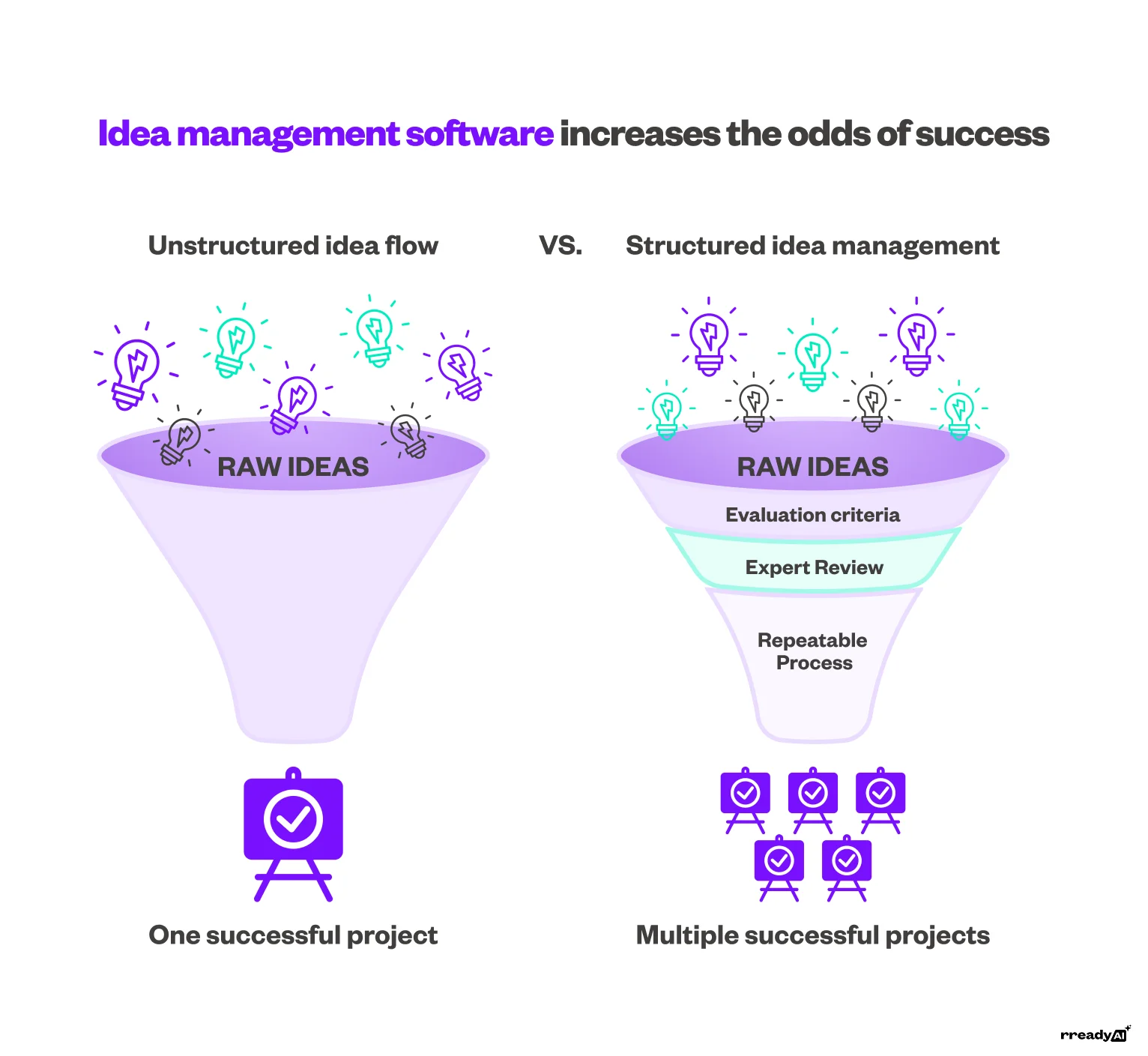
Es braucht rund 3.000 rohe Ideen, um ein einziges erfolgreiches Projekt hervorzubringen. Das legt zumindest ältere Forschung nahe.
Auch wenn Ideenmanagement nicht jede Idee in einen Erfolg verwandeln kann, verbessert es die Chancen eindeutig.
Das geschieht durch:
Klare Bewertungskriterien
Einbindung der richtigen Expert:innen
Weiterführung von Ideen in einem wiederholbaren Prozess, der Qualität vor Lautstärke stellt
Wenn Ideen in einem strukturierten Prozess getestet, verfeinert und vorangebracht werden, haben die, die bestehen, eine deutlich höhere Erfolgschance.
5. Sie stärkt die Unternehmenskultur
Ideenmanagement-Software verändert grundlegend, wie Menschen an Ideation teilnehmen.
Statt Ideation als Einzelaufgabe zu sehen, tragen Mitarbeitende Ideen bei, reagieren darauf und verfeinern sie als Teil eines gemeinsamen Prozesses.
Mit der Zeit prägt dieser gemeinsame Prozess eine Kultur, in der Beteiligung zur Norm wird und Feedback selbstverständlich ist.
6. Sie steigert die Mitarbeiterzufriedenheit
Mitarbeitende, die sich gehört fühlen, sind 4,6-mal wahrscheinlicher bereit, ihr Bestes zu geben. Genau dafür ist Ideenmanagement-Software ausgelegt.
Indem Kommunikation zu einem Austausch in beide Richtungen wird, verstärkt die Software eine einfache, aber starke Botschaft: Ihre Perspektive zählt.
Ideen sind sichtbar, Feedback ist integriert, und Beiträge verschwinden nicht im Nichts.
Dieses Gefühl von Zugehörigkeit stärkt die Bindung, fördert Zusammenarbeit über verschiedene Perspektiven hinweg und hilft Organisationen, wertvolle Mitarbeitende zu halten.
Worauf Sie bei Ideenmanagement-Software achten sollten: 6 entscheidende Komponenten
Auch wenn das Grundprinzip von Ideenmanagement-Software sehr wertvoll ist, hält nicht jedes Tool dieses Versprechen.
Die sechs folgenden Faktoren helfen Ihnen, Software zu identifizieren, die Ideation tatsächlich End-to-End unterstützt und dabei keine unnötige Komplexität schafft.
1. Einfache Einführung über Teams hinweg
Wenn Mitarbeitende Hürden überwinden müssen, um eine Idee einzureichen, behalten sie diese Ideen vielleicht lieber für sich.
Ideenmanagement-Software muss in jeder Phase intuitiv wirken, einschließlich:
Den richtigen Ort zum Mitwirken finden
Die Idee einreichen
Später Kontext oder Updates ergänzen, wenn sich die Idee weiterentwickelt
Mit Ideen anderer über Kommentare oder Feedback interagieren
2. Flexible Konfiguration für reale Workflows
Ideation sieht in unterschiedlichen Organisationen nicht gleich aus, und das sollte auch nicht erzwungen werden.
Ideenmanagement-Software muss sich an unterschiedliche Ziele, Workflows und Sprachen anpassen, ohne den Prozess zu brechen.
Konfigurierbare Kampagnen, Formulare und Workflows ermöglichen Teams, die richtigen Inputs auf die richtige Weise zu erfassen und gleichzeitig alles in ein konsistentes, organisationsweites System zu überführen.
Profi-Tipp:
So wichtig Flexibilität in der Software selbst ist, so anpassungsfähig muss auch die Implementierung sein. Selbst die besten Ideenmanagement-Tools bleiben wirkungslos, wenn sie ohne Kontext, Abstimmung oder klare Verantwortlichkeit ausgerollt werden.
Wenn Sie sich für rreadys Idea Management entscheiden, erhalten Sie eine maßgeschneiderte Implementierung, die auf Ihre Strategie, Governance und Kultur abgestimmt ist, damit die Plattform ab Tag eins zu Ihrer realen Arbeitsweise passt.
3. Integrierte Zusammenarbeit
Da Zusammenarbeit für den Ideenmanagement-Prozess zentral ist, sollte Ihre Software Hürden abbauen und sinnvolle Beteiligung ermöglichen, indem sie:
Kommentare und Diskussionen direkt dort erleichtert, wo Ideen liegen
Gemeinsame Räume für die Weiterentwicklung und Ausarbeitung von Ideen bereitstellt
Hilft, die richtigen Expert:innen zur richtigen Zeit einzubinden
Sichtbarkeit bei Feedback und Nachverfolgung schafft, damit Beiträge sich lohnen
4. Nahtlose Integration in bestehende Tools
Wenn Ihre Ideenmanagement-Software nahtlose Integrationen mit Projektmanagement-, Kollaborations- oder Enterprise-Tools ermöglicht, können Sie einen Stack aufbauen, der zu Ihrer Organisation passt, ohne Teams in einen isolierten Workflow zu zwingen.
Das Ergebnis ist ein Ideation-Setup, das mit Ihrer bestehenden Arbeitsweise skaliert.
5. Transparenz zur Ideation-Performance
Wenn die Wirkung Ihrer Ideen nicht messbar ist, lassen sich diese Ideen schwer steuern und noch schwerer rechtfertigen.
Fortgeschrittene Analysen machen aus Ideenmanagement eine belastbare Steuerungslogik statt einer reinen Wohlfühlaktivität.
Die richtige Software zeigt, was unter der Oberfläche passiert: welche Ideen weiterkommen, welche Teams am meisten beitragen und wo echter Impact entsteht.
Diese Transparenz hilft Ihnen, ROI nachzuweisen, Muster zu erkennen und die Wirksamkeit Ihres Ideation-Systems kontinuierlich zu verbessern.
6. KI-gestützte Unterstützung
Künstliche Intelligenz und Innovation gehen Hand in Hand.
KI hilft Teams, schneller zu arbeiten, breiter zu denken und bessere Entscheidungen zu treffen.
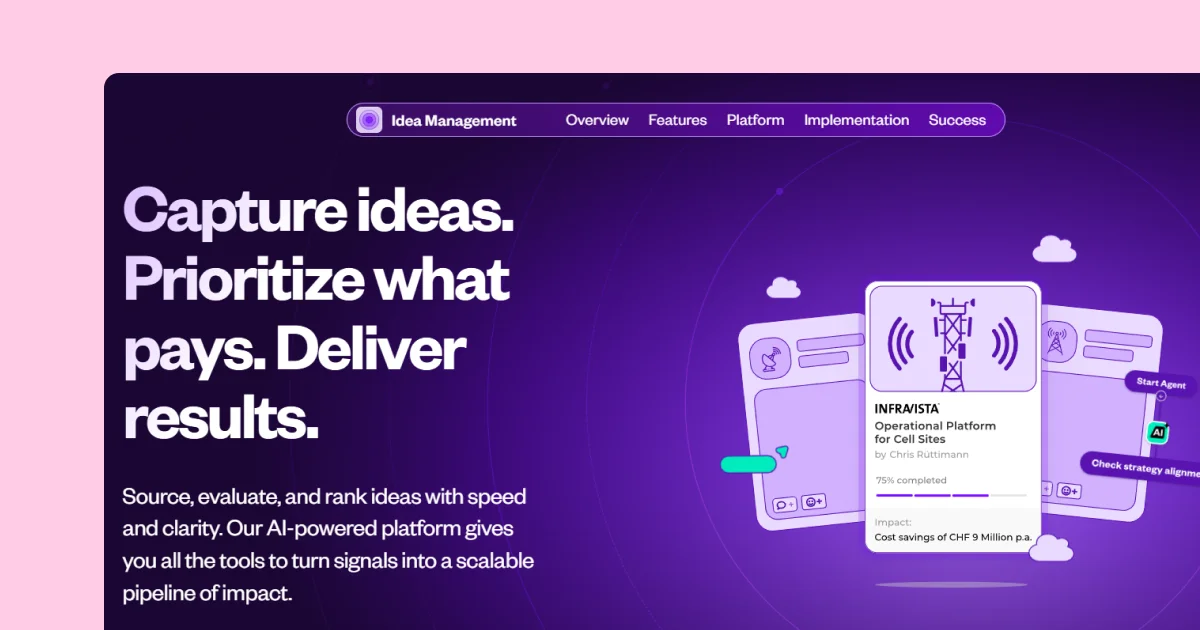
In moderner Ideenmanagement-Software fungiert KI als Co-Pilot: Sie unterstützt die Ideation, schärft die Bewertung und reduziert Reibung über den gesamten Lebenszyklus.
Die folgende Tabelle zeigt, wie KI in der Praxis eingesetzt wird und wo sie echten Mehrwert schafft:
KI-Fähigkeit | Wobei sie hilft |
Ideenformulierung | Hilft Beitragenden, Ideen klar zu formulieren, indem Eingaben strukturiert und die Verständlichkeit verbessert werden |
Ideenanreicherung | Macht verwandte Ideen, internen Kontext oder relevante Signale sichtbar, um frühe Konzepte zu stärken |
Duplikaterkennung | Identifiziert ähnliche oder überlappende Ideen, reduziert Redundanz und hält den Fokus auf wirklich neuen Ansätzen |
Ideenbewertung | Unterstützt Reviewer mit objektiver Bewertung und Mustererkennung |
Priorisierungs-Insights | Hebt Ideen mit dem höchsten potenziellen Impact hervor, basierend auf definierten Kriterien und historischen Daten |
Workflow-Automatisierung | Übernimmt Routineaufgaben, damit Teams weniger Zeit für Verwaltung und mehr Zeit für Fortschritt investieren |
Profi-Tipp:
Wenn KI nur an eine bestehende Plattform angehängt wird, bleibt sie auf oberflächliche Aufgaben und isolierte Erkenntnisse beschränkt.
Der echte Mehrwert entsteht, wenn KI im Kern des Systems verankert ist und Kontext, Workflows und Entscheidungen in Echtzeit versteht.
Deshalb ist die Wahl einer KI-nativen Plattform wie rready entscheidend.
Mit KI, die über den gesamten Ideation-Lebenszyklus eingebettet ist, erhalten Sie Unterstützung, die sich mit den Ideen weiterentwickelt, statt statischer Empfehlungen.
Ideenmanagement richtig umgesetzt
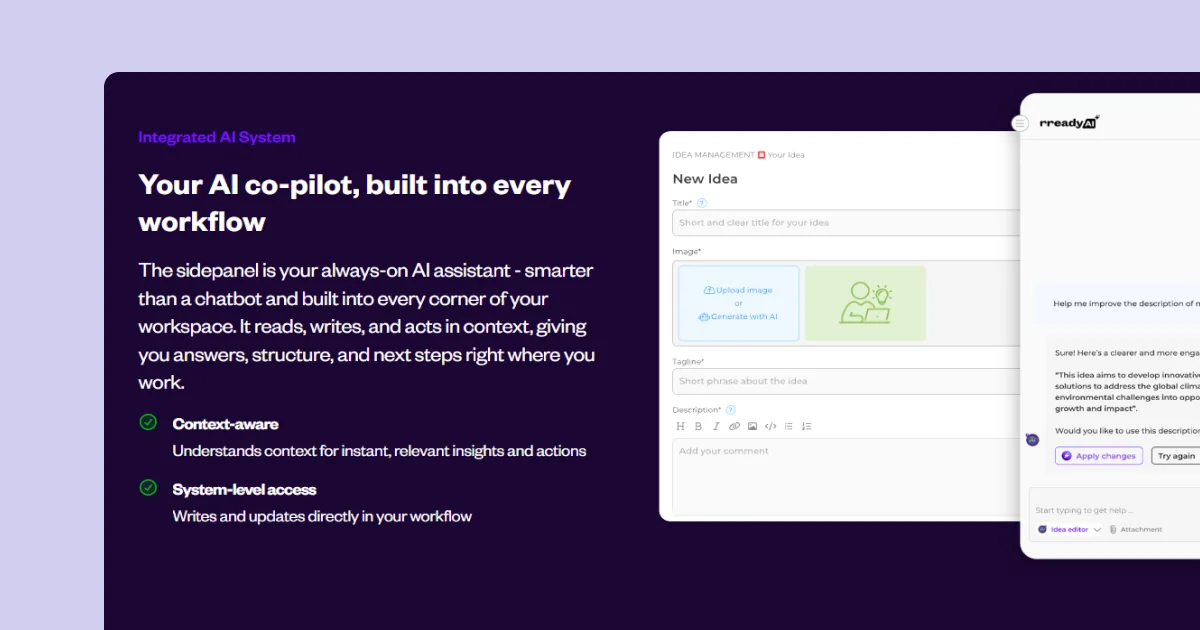
rready ist dafür gebaut, eine Sache außergewöhnlich gut zu tun: Ideen in messbaren Impact zu verwandeln.
Das gelingt mit einer Idea-Management-Plattform, die strukturiert, intuitiv und von Grund auf KI-gestützt ist. So können Organisationen Ideen 10-mal schneller generieren und finanzielle Wirkung sechsmal schneller erzielen.
Mit rready folgt Ideenmanagement einem klaren, wiederholbaren Ablauf, der umfasst:
Ideengewinnung: Inputs von Mitarbeitenden werden erfasst, um in internen Daten verborgene Chancen zu erkennen. KI-gestützte Ideation sorgt dafür, dass Ideen von Anfang an aktuell, relevant und strategisch ausgerichtet sind.
Strukturieren und verfeinern: Ideen werden gruppiert, präzisiert und angereichert; Duplikate werden automatisch markiert und verwandte Beiträge miteinander verknüpft statt gegeneinander gestellt.
Bewerten und priorisieren: Individuelle Scoring-Modelle, KPIs und KI-unterstützte Bewertung helfen, die wichtigsten Ideen fair, transparent und konsistent sichtbar zu machen.
Umsetzen und nachverfolgen: Freigegebene Ideen werden mit klarer Verantwortung und Fortschrittskontrolle umgesetzt, damit Ergebnisse nicht bei der Freigabe enden.
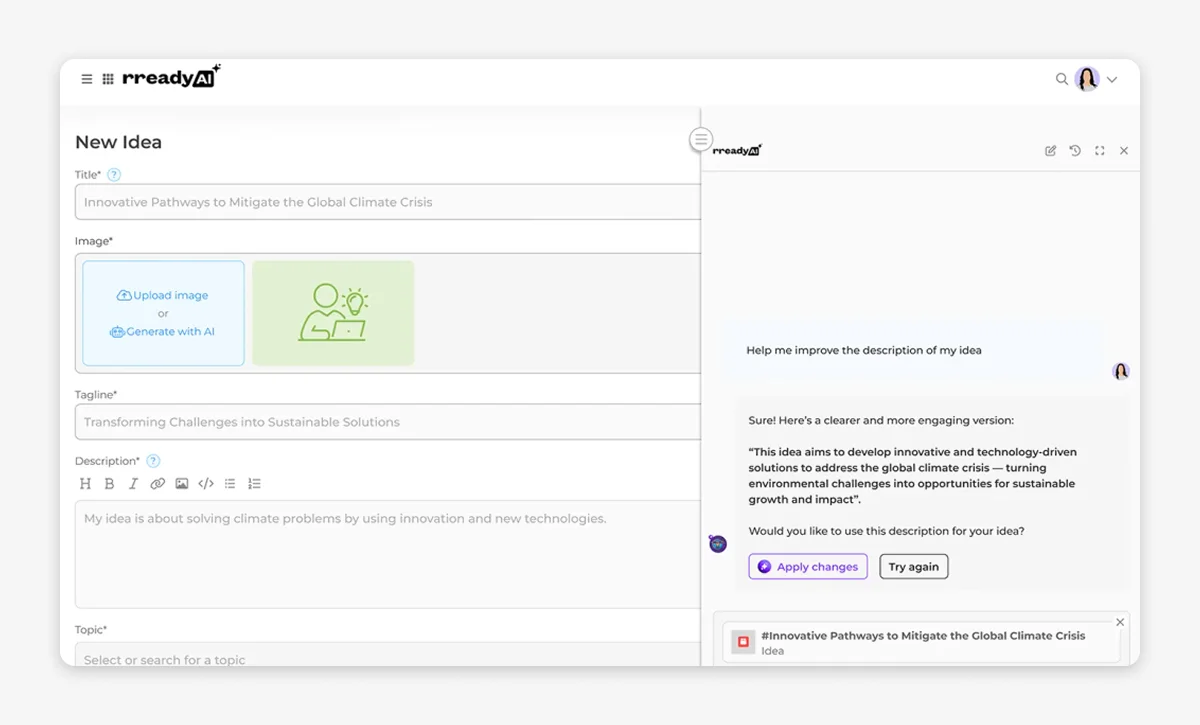
Zusätzlich erfüllt rready alle Kriterien, die wirklich zählen, darunter:
Einfache Einführung über Teams hinweg mit einer intuitiven Oberfläche
Flexible Konfiguration zur Unterstützung unterschiedlicher Teams, Ziele und Workflows
Reibungslose Zusammenarbeit durch gemeinsame Diskussionen und Feedback
Nahtlose Integration in Ihre bestehende Tool-Landschaft
Fortgeschrittene Analysen und Reports zur Nachverfolgung von Erfolg, ROI und Performance
Das Ergebnis ist Klarheit von Anfang an, intelligentere Priorisierung, schnellere Time-to-Market und ein Impact, den Sie messen können statt nur darüber zu sprechen.
Neugierig, wie eine Ideation-Engine für Ihre Organisation aussehen könnte? Vereinbaren Sie eine persönliche Demo und sehen Sie, wie rready die Ideation Ihrer Teams voranbringen kann.

Mehr erfahren

8 Vorteile von Ideenmanagement-Software
Entdecken Sie die Vorteile von Ideenmanagement-Software: Ideen erfassen, Zusammenarbeit verbessern und Mitarbeiterideen in echten Geschäftserfolg umsetzen.

9 Methoden zur Ideenfindung für Unternehmen im Jahr 2026
Die besten Ideenfindungstechniken, um Kreativität zu fördern, Denken zu strukturieren und Ideen in umsetzbare Ergebnisse für Ihr Team zu verwandeln.

Finanzielle vs. nichtfinanzielle Anreize bei Innovationen
Erfahren Sie, wie finanzielle und nichtfinanzielle Anreize Innovation fördern und Mitarbeitende motivieren, Ideen einzubringen und engagiert zu bleiben.