Dieser Artikel wurde ursprünglich auf Englisch veröffentlicht.
Digitale Souveränität 2026: Trends und Prognosen
Erfahren Sie mehr über die wichtigsten Trends der digitalen Souveränität für 2026 – Sovereign Cloud, AI-Governance, Shadow AI und Compliance-Risiken.


Digitale Souveränität ist die Fähigkeit zu entscheiden, wer auf Ihre Daten zugreifen darf, welche Gesetze für Ihre Systeme gelten und wie viel Kontrolle Ihr Unternehmen tatsächlich über beides behält.
Im Jahr 2026 hat sich diese Diskussion von der IT-Abteilung in die Chefetage verlagert.
Die weltweiten Ausgaben für souveräne Cloud-Infrastrukturen werden im Jahr 2026 80,4 Milliarden US-Dollar erreichen. Der Grund: Unternehmen haben erkannt, dass das Wissen über den Speicherort von Daten fast nichts darüber aussagt, wer darauf zugreifen kann.
Amazon, Microsoft und Google kontrollieren mehr als 63 % des weltweiten Marktes für Cloud-Infrastruktur. Nach dem US CLOUD Act können sie gezwungen werden, alle auf ihren Plattformen gespeicherten Daten herauszugeben – unabhängig davon, wo sich diese physisch befinden.
Jedes System in Ihrem Unternehmen birgt das gleiche Risiko. Die Tools, mit denen Ihre Teams Arbeit nachverfolgen, Projekte verwalten und Entscheidungen dokumentieren, laufen über Infrastrukturen, die Ihre Rechts- und Compliance-Teams vielleicht noch nie geprüft haben.
Wo stehen IT- und Sicherheitsverantwortliche also heute?
Hier ist ein Blick auf die wichtigsten Trends zur digitalen Souveränität, die 2026 prägen, und was sie für Unternehmen bedeuten, die die Kontrolle behalten wollen.
Wichtige Erkenntnisse
Wo Ihre Daten gehostet werden und wer sie kontrolliert, sind zwei verschiedene Fragen
Eine Plattform kann lokal registriert und gehostet sein und dennoch der Gerichtsbarkeit einer ausländischen Muttergesellschaft unterliegen. Eigentumsverhältnisse und Vertragsrecht gehören auf die Checkliste für Ihre Unternehmenssoftware, nicht nur Sicherheitszertifikate und Verfügbarkeit.
Die in Ihre Unternehmenstools integrierte KI fällt möglicherweise bereits unter mehrere Compliance-Richtlinien
Die Durchsetzung von KI-Richtlinien ist in den USA, Südkorea und China bereits aktiv. Jedes System, das KI zur Verarbeitung, Filterung oder Ausführung von Aufgaben nutzt, fällt in diese Kategorie – und die meisten Unternehmen haben ihre Risiken noch nicht analysiert.
Schatten-KI im Unternehmen ist ein aktuelles Problem, kein zukünftiges
Mitarbeiter nutzen bereits private KI-Konten, um Dokumente zu entwerfen, Recherchen durchzuführen und Unterlagen vorzubereiten. Liegen diese Tools außerhalb der Unternehmens-Governance, gilt das auch für alle verarbeiteten Daten.
Die meisten Versprechen von Anbietern für „souveräne Lösungen“ halten einer genauen Prüfung nicht stand
Mit der Nachfrage nach souveränen Plattformen wächst auch das sogenannte „Sovereignty Washing“. Fragen Sie Anbieter vorab genau: Wo findet das KI-Inferenzverfahren statt, wer hat Zugriff auf die Daten und welche vertraglichen Garantien sichern dies ab?
sovara ist die souveräne Alternative zu Jira und Confluence von rready. Entwickelt für Unternehmen, die die volle Kontrolle benötigen, ohne Kompromisse bei der Produktivität einzugehen.
Trends zur digitalen Souveränität 2026: 6 bestimmende Kräfte
Die folgenden sechs Trends verändern im Jahr 2026 die Art und Weise, wie große Unternehmen über Datenkontrolle, KI-Compliance und Plattformsouveränität denken. Jeder davon hat direkte Auswirkungen auf IT-Leiter, Sicherheitsteams und alle Entscheidungsträger beim Thema Softwaretools.
1. Souveräne Cloud ist im Mainstream angekommen
Früher war die souveräne Cloud Behörden und stark regulierten Branchen vorbehalten. Das ändert sich im Jahr 2026.
Europa ist auf dem besten Weg, der zweitgrößte Markt für souveräne Clouds weltweit zu werden. Die Ausgaben werden im Jahr 2026 voraussichtlich 12,6 Milliarden US-Dollar betragen, und Gartner prognostiziert, dass Europa Nordamerika bis 2027 überholen wird (23,1 Milliarden US-Dollar gegenüber 21,1 Milliarden US-Dollar).
Etwa 80 % dieser Ausgaben fließen in neue Projekte und Altsysteme, die zum ersten Mal in die Cloud verlagert werden, statt in Migrationen zwischen bestehenden Cloud-Umgebungen.
Die Tools, die Ihre Teams täglich zur Projektverfolgung, Dokumentation und Zusammenarbeit nutzen, entscheiden darüber, wie viel Kontrolle Sie langfristig über Ihre kritischen Geschäftsdaten haben. Es ist einfacher, diese Entscheidung jetzt zu treffen, als sie später mühsam rückgängig zu machen.
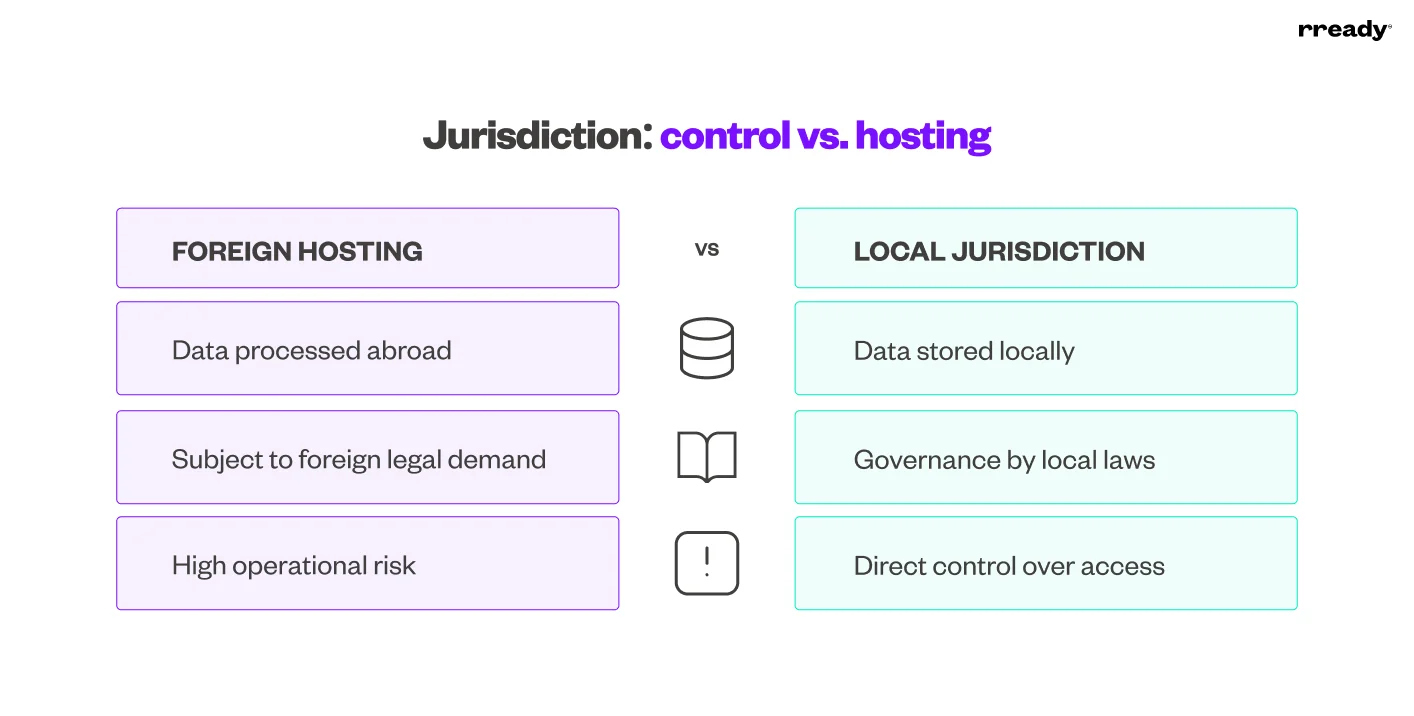
2. Wer die Plattform kontrolliert, ist wichtiger als der Speicherort der Daten
Zu wissen, wo Daten gespeichert sind, sagt fast nichts darüber aus, wer rechtlich darauf zugreifen darf. Die entscheidende Frage lautet: „Unter welchen Gesetzen agiert unsere Plattform?“
Die meisten Software-Prüfungen konzentrieren sich auf Sicherheitszertifikate und SLAs zur Systemverfügbarkeit. Gerichtsbarkeit und Eigentumsverhältnisse landen selten auf der Checkliste. Eine Plattform kann lokal registriert und gehostet sein, aber dennoch als hundertprozentige Tochtergesellschaft eines Unternehmens agieren, das ausländischem Recht unterliegt.
Wichtige Fragen für jedes Tool in Ihrem Software-Stack:
Wer besitzt und betreibt die Plattform rechtlich, einschließlich der Muttergesellschaft?
Legen die Datenverarbeitungsvereinbarungen alle Subunternehmer transparent offen?
Welche Gerichtsbarkeit gilt für den Anbietervertrag selbst?
3. KI-Compliance ist heute eine globale Pflicht
Das OECD AI Policy Observatory erfasst mehr als 900 nationale KI-Politikinitiativen in fast 70 Ländern.
Wenn Ihr Unternehmen grenzüberschreitend tätig ist, unterliegen Ihre Systeme mit hoher Wahrscheinlichkeit mehreren dieser Richtlinien gleichzeitig.
Jedes große regulatorische System für KI fordert im Jahr 2026 dasselbe:
Verstehen, wie Ihre KI Entscheidungen trifft
Diese Entscheidungen Regulierungsbehörden klar erklären können
Nachweisen, dass Menschen die Ergebnisse überprüfen und korrigieren können
Das ist nur möglich, wenn Sie die KI kontrollieren, auf der Ihre Plattform läuft. Läuft diese KI über ein gemeinsam genutztes externes Modell, das Sie nicht kontrollieren, können Sie diese Fragen den Behörden nicht beantworten.
Mehrere wichtige Rechtsräume haben in den letzten 12 Monaten Meilensteine bei der Durchsetzung erreicht:
Rechtsraum | Regelung | Aktiv seit | Anforderungen |
USA (Texas) | Texas Responsible AI Governance Act (TRAIGA) | 1. Januar 2026 | Folgenabschätzungen, Transparenzerklärungen und menschliche Aufsicht für hochriskante KI-Systeme in den Bereichen Beschäftigung, Gesundheit, Wohnen und Finanzen |
USA (Kalifornien) | Transparency in Frontier AI Act | 1. Januar 2026 | Transparenz- und Berichterstattungspflichten für Entwickler und Anwender von fortschrittlicher KI |
Südkorea | Basic AI Act | 22. Januar 2026 | Transparenz, menschliche Aufsicht und Risikodokumentation für weitreichende KI; gilt extraterritorial |
China | Geändertes Cybersicherheitsgesetz | 1. Januar 2026 | KI-Governance als fester Bestandteil des Cybersicherheitsgesetzes; stärkt die KI-Risikoüberwachung und Ethikprüfungen mit deutlich höheren Strafen bei Verstößen |
Jedes System, das KI zur Verarbeitung, Filterung oder Steuerung von Aufgaben nutzt, ist potenziell betroffen – und genau dies sind die folgenschweren Entscheidungen, die diese Gesetze regeln.
Südkoreas Basic AI Act gilt extraterritorial, TRAIGA gilt überall dort, wo Ihre Mitarbeiter betroffen sind, und Chinas Gesetz greift an jedem Ihrer Standorte.
Für globale Unternehmen bedeutet das: Alle drei Gesetze sind wahrscheinlich gleichzeitig relevant. Die Souveränität über Ihre KI ist der einzige Weg, um überall complient zu sein.
4. Sovereign AI wird zum neuen Standard
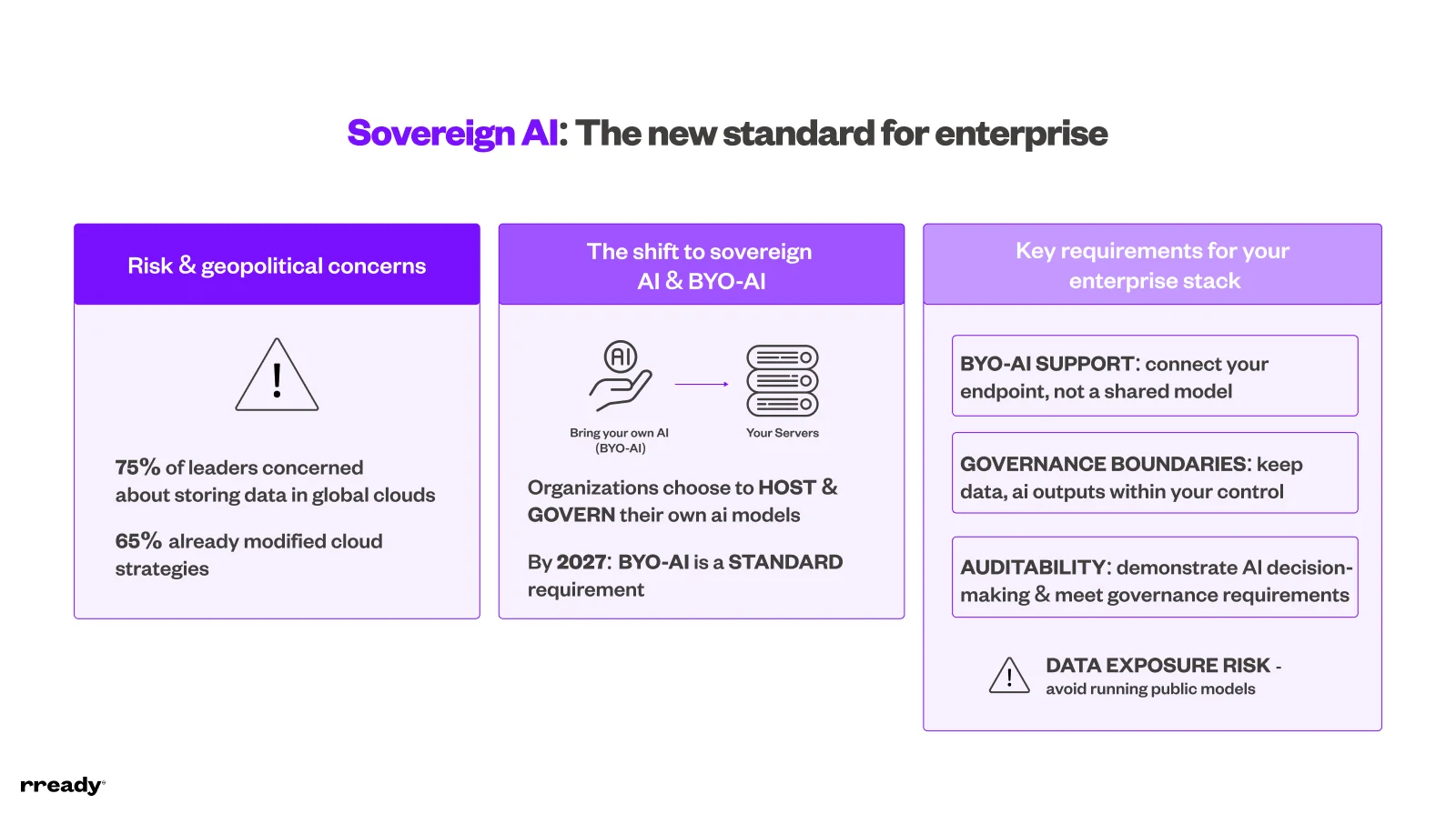
Laut dem Cloud Readiness Report 2025 von Kyndryl sind 75 % der Führungskräfte besorgt über die geopolitischen Risiken der Datenspeicherung in globalen Cloud-Umgebungen. 65 % haben ihre Cloud-Strategie bereits als Reaktion darauf angepasst.
Deshalb wächst der Trend „Bring Your Own AI“ (BYO-AI) rasant. Unternehmen verabschieden sich von öffentlichen Drittanbieter-Modellen und hosten und verwalten ihre KI lieber selbst.
Bis 2027 wird die Frage, ob eine Lösung BYO-AI unterstützt, kein Premium-Feature mehr sein, sondern Standard bei jeder Softwareprüfung.
Dieser Druck betrifft jedes Tool mit KI-Funktionen im Unternehmen. Die Systeme, die Ihre Teams täglich für Workflows, Zusammenarbeit und Entscheidungen nutzen, verarbeiten sensible Geschäftsdaten.
Wenn diese Systeme auf öffentlichen Modellen außerhalb Ihrer Kontrolle laufen, setzt jede Interaktion Ihre Daten einem Risiko aus. Achten Sie bei der Auswahl von Unternehmenstools mit KI auf:
BYO-AI-Unterstützung zur Anbindung Ihrer eigenen KI statt eines gemeinsamen externen Modells
Klare Governance-Grenzen, die KI-Ergebnisse und -Interaktionen in Ihrer Kontrolle halten
Auditierbarkeit für KI-Funktionen, um Entscheidungslogik nachzuweisen und Richtlinien zu erfüllen
5. Schatten-KI ist in Ihrem Unternehmen bereits Realität
Laut Gartner nutzen 57 % der Mitarbeiter private GenAI-Konten für die Arbeit und 33 % geben zu, sensible Informationen in nicht freigegebene Tools einzugeben.
Das bedeutet: Mitarbeiter greifen bereits selbstständig zu verfügbaren KI-Tools, um:
Dokumente, Berichte und interne Kommunikation zu entwerfen und zu optimieren
Markt- und Wettbewerbsanalysen durchzuführen
Business Cases und Finanzmodelle zu erstellen
Präsentationen und Entscheidungsvorlagen vorzubereiten
Wenn es sich dabei um öffentliche Modelle handelt, die keinem Unternehmens-Compliance unterliegen, läuft diese Arbeit komplett unbemerkt über externe Systeme ab.
83 % der Unternehmen nennen Datenlecks als größte Sorge bei der KI-Nutzung. Dieses Risiko ist dort am höchsten, wo Ihre Teams am aktivsten arbeiten.
Die einfachste Lösung: Geben Sie Ihren Mitarbeitern geschützte KI-Tools an die Hand, die direkt in die genutzte Software integriert sind. Gibt es eine sichere, interne Option, müssen sie nicht auf externe Tools ausweichen.
6. „Sovereignty Washing“ ist ein echtes Risiko beim Softwarekauf
Da „Souveränität“ zum Standard-Verkaufsargument wird, entsteht ein neues Problem: Echte Souveränität von gutem Marketing zu unterscheiden.
Paul van Vulpen, Forscher an der Universität Amsterdam, prägte den Begriff „Sovereignty Washing“. Er beschreibt Anbieter, die ihre Produkte als souverän darstellen, obwohl die tatsächliche Kontrolle über Daten und Infrastruktur eingeschränkt bleibt.
Da immer mehr Einkäufer gezielt nach Souveränität fragen, werden viele Plattformen mit Zertifikaten zur digitalen Souveränität werben, die sie gar nicht garantieren können.
Achten Sie bei der Prüfung auf diese Warnsignale:
„Lokal gehostete“ oder „regionale“ Optionen, die auf der Infrastruktur eines US-Hyperscalers laufen
Compliance-Zertifikate ohne klare Datenverarbeitungsverträge, Subunternehmerlisten oder Audit-Rechte
„Regionale“ Optionen auf Plattformen, die dennoch der Gerichtsbarkeit des Heimatlandes des Mutterkonzerns unterliegen
Anbieter, die nicht genau sagen können, wo das KI-Inferenzverfahren stattfindet oder welche Dritten Zugriff auf Daten haben
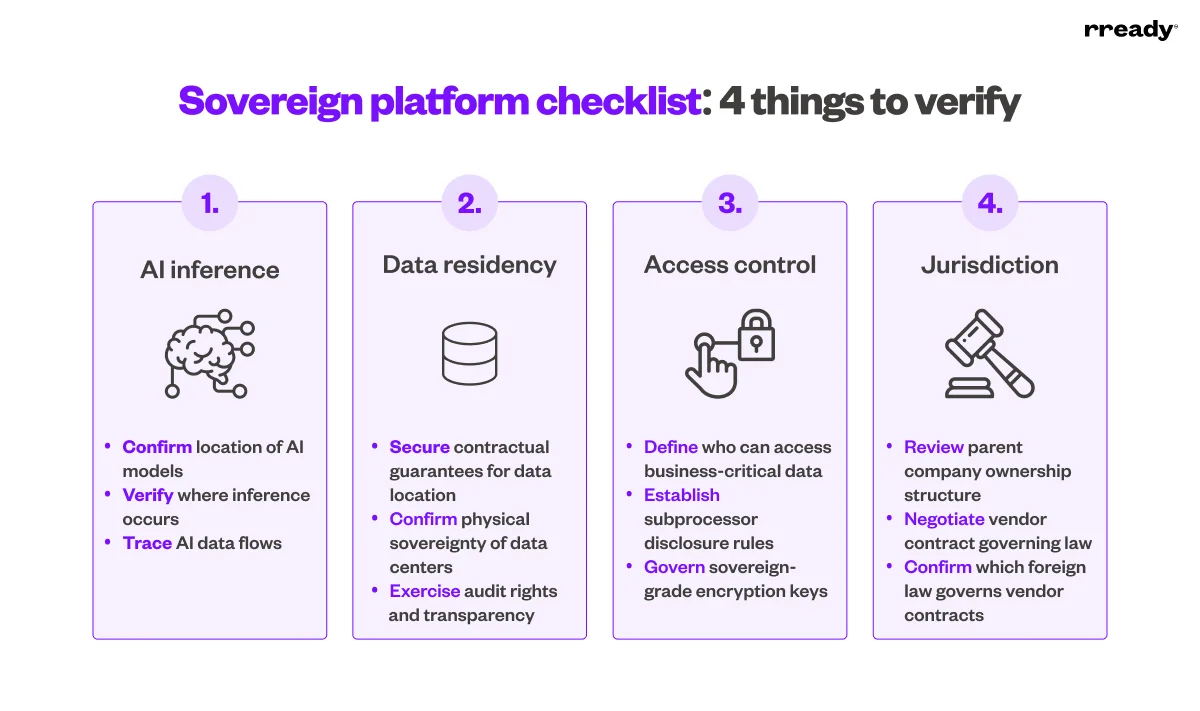
Wenn ein Anbieter behauptet, souverän zu sein, fragen Sie direkt:
Wo genau findet das KI-Inferenzverfahren statt?
Wer sind die Subunternehmer?
Was genau sagen die vertraglichen Garantien über Datenspeicherung und Zugriff?
Erhalten Sie darauf keine klaren Antworten, können Sie davon ausgehen, dass die Realität nicht Ihren Anforderungen entspricht.
Wie rready Ihnen hilft, ein souveränes Unternehmen aufzubauen
Jedes Kernsystem in Ihrem Unternehmen birgt Souveränitätsrisiken – auch die Workflow-Tools, über die Ihre gesamte tägliche Arbeit läuft.
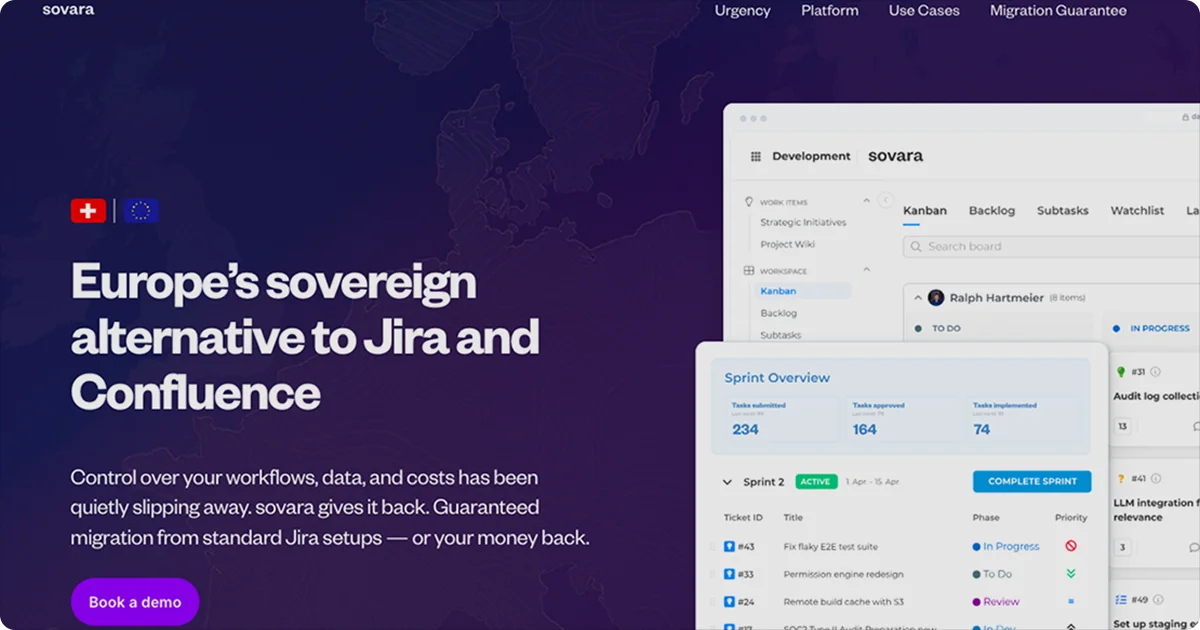
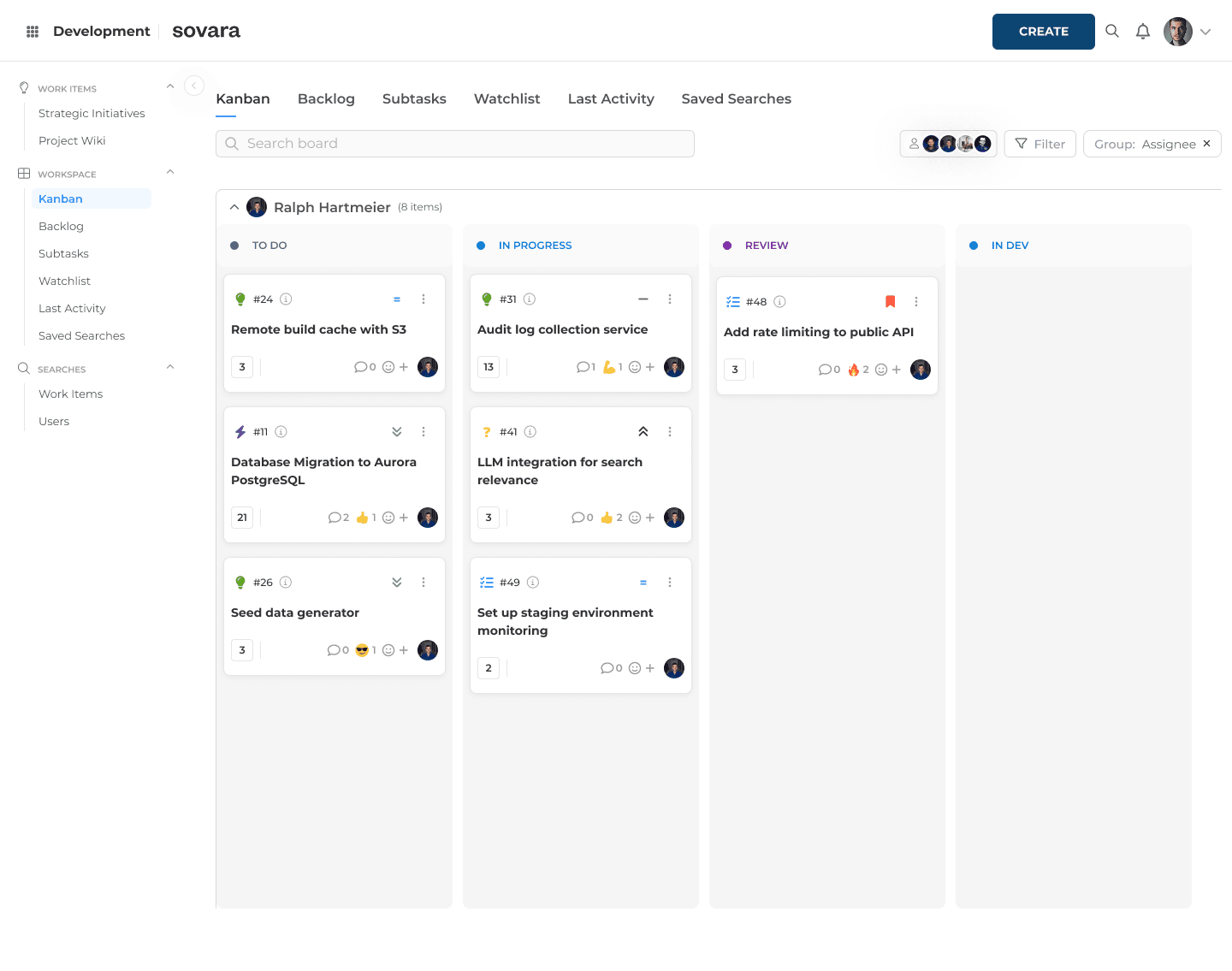
sovara ist die souveräne Arbeitsplattform von rready. Sie wurde für Unternehmen entwickelt, die sich nicht auf eine US-Cloud-Infrastruktur verlassen können und eine klare Kontrolle über Systeme, Datenstandorte und Gerichtsbarkeit benötigen. Wenn Ihr Unternehmen heute Jira oder Confluence nutzt, ist sovara die beste souveräne Alternative.
Das bietet sovara:
Audit-Fähigkeit und Transparenz zur Erfüllung von Compliance-Richtlinien und Nachweispflichten in der Lieferkette
Granulare Rollen und Berechtigungen, damit Sie steuern, wer auf geschäftskritische Daten zugreifen, sie prüfen und bearbeiten darf
SSO- und Active-Directory-Integration, damit der Systemzugriff nahtlos in Ihre bestehende Identity Governance passt
API- und Webhook-Konnektivität für integrierte Workflows ohne unkontrollierte Datenflüsse
Die Plattform unterstützt souveräne Cloud- und On-Premise-Szenarien mit einem Migrationspfad, der die Ausfallsicherheit im Betrieb sichert und Ihre bestehenden Workflows nicht unterbricht.
Für Unternehmen, die auch die Kontrolle über genutzte KI behalten wollen, bietet rready ein BYO-AI-Feature. Damit binden Sie Ihre eigene KI-Instanz an, statt Geschäftsdaten über ein geteiltes externes Modell zu senden. Sie entscheiden, welche KI Ihre Daten verarbeitet und wo dies geschieht.
rready unterstützt bereits über 50 Großkunden und Behörden in 15 Ländern, darunter Konzerne wie Roche, TotalEnergies und Holcim.
Lesen Sie unseren Guide zu den besten Lösungen für digitale Souveränität, oder buchen Sie direkt eine Demo, um die Plattform in Aktion zu sehen.
FAQ
Atlassian beendet den Support für Data Center im Jahr 2029. Was sind Ihre Optionen?
Die Migration zu Atlassian Cloud ist eine Option, bringt aber eigene Risiken mit sich: Ihre Daten wandern auf eine US-Infrastruktur und unterliegen dem CLOUD Act. Eine souveräne Alternative bietet Ihnen den gleichen Funktionsumfang ohne dieses rechtliche Risiko.
Architektur-Entscheidungen müssen in den Jahren 2026 bis 2027 getroffen werden, die eigentlichen Migrationen folgen meist 2027 bis 2028.
Was muss eine souveräne Alternative zu Jira und Confluence wirklich bieten?
Drei Dinge sind entscheidend:
Datenspeicherung in der von Ihnen gewählten Gerichtsbarkeit ohne das Risiko ausländischer Gesetze
Volle Kontrolle über Zugriffe und Systemverhalten ohne Einschränkungen durch den Anbieter
Ein Migrationspfad, bei dem Sie bestehende Workflows der letzten Jahre nicht komplett neu aufbauen müssen
Kann ein Anbieter nicht präzise sagen, wo Ihre Daten liegen und wer rechtlich Zugriff hat, ist das Label „souverän“ reines Marketing.
Wie baut man intern das Argument für den Wechsel zu einer souveränen Workflow-Plattform auf?
Beginnen Sie mit dem Risiko, nicht mit dem Produkt. Rechtliche Risiken, das Support-Ende von Atlassian im Jahr 2029 und die Kosten verzögerter Entscheidungen sind konkrete Argumente, die Budgetverantwortliche und Sicherheitsteams überzeugen.
Mit dem Ansatz „Hier ist unsere Schwachstelle und das ist unser Zeitfenster zum Handeln“ kommen Sie schneller ans Ziel als mit einem reinen Funktionsvergleich.

Mehr erfahren

Atlassian Data Center End of Life: Ihre drei Optionen
Das Support-Ende kommt am 28. März 2029, doch der Kaufstopp am 30. März 2028 trifft zuerst. Die Termine, der Umfang und Ihre drei realen Optionen.

Die 6 besten europäischen Alternativen zu Jira & Confluence
Welche europäischen Alternativen zu Jira und Confluence gibt es 2026 – und wie unterscheiden sie sich bei Souveränität, KI, Migration und Kosten?

Jira: Vom Projekttool zum Betriebssystem
Atlassian Data Center läuft 2029 aus. Migration beginnt nicht mit dem Datenexport, sondern mit dem Überblick über das, was Sie aufgebaut haben.