Dieser Artikel wurde ursprünglich auf Englisch veröffentlicht.
Warum ist digitale Souveränität 2026 wichtiger denn je?
Erfahren Sie mehr über digitale Souveränität, wie Sie Kontrolle über Daten, Systeme & Infrastruktur zurückgewinnen, Risiken senken und Compliance sichern.


Digitale Souveränität ist die Fähigkeit eines Unternehmens, selbst zu bestimmen, wo seine Daten liegen, wer seine Systeme betreibt, welche Technik es einsetzt und welchem Recht beides unterliegt.
Im Jahr 2026 steht diese Kontrolle unter enormem Druck. Der Grund: Digitale Infrastruktur konzentriert sich zunehmend in den Händen weniger globaler Anbieter.
Tatsächlich kontrollieren US-Hyperscaler mittlerweile mehr als 70 % des Cloud-Marktes in der Europäischen Union. Das wirft Fragen zu Abhängigkeit, Gesetzgebung und langfristiger Resilienz auf.
Digitale Souveränität zielt darauf ab, diese Abhängigkeit zu reduzieren. Sie hilft Ihnen, die Kontrolle in einer Landschaft zurückzugewinnen, in der Sie Regeln, Zugriffe und Risiken nicht immer selbst bestimmen können.
Dieser Leitfaden erklärt die wichtigsten Konzepte, Risiken und praktischen Schritte. Er zeigt, warum das Thema für die Unternehmens-IT wichtig ist und wie Sie den Weg zu einer souveränen Infrastruktur einschlagen.
Wichtige Erkenntnisse
Digitale Souveränität bedeutet Kontrolle über Ihre digitale Umgebung
Sie behalten die Hoheit über Ihre Daten, Systeme und deren Steuerung, ohne sich vollständig von globalen Anbietern abzuspalten.Es geht um weit mehr als Datensouveränität
Datensouveränität konzentriert sich rein auf Daten. Digitale Souveränität umfasst dagegen die Infrastruktur, den Betrieb und die rechtliche Kontrolle über Ihren gesamten Tech-Stack.Steigende Risiken machen das Thema zur geschäftlichen Priorität
Regulatorischer Druck, Vendor Lock-in und geopolitische Spannungen erhöhen den Bedarf an Kontrolle, Ausfallsicherheit und Compliance.Sie bringt konkrete geschäftliche Vorteile
Digitale Souveränität erhöht die Resilienz, vereinfacht die Compliance, ermöglicht Innovationen und stärkt das Vertrauen von Stakeholdern.Fangen Sie dort an, wo Kontrolle am wichtigsten ist
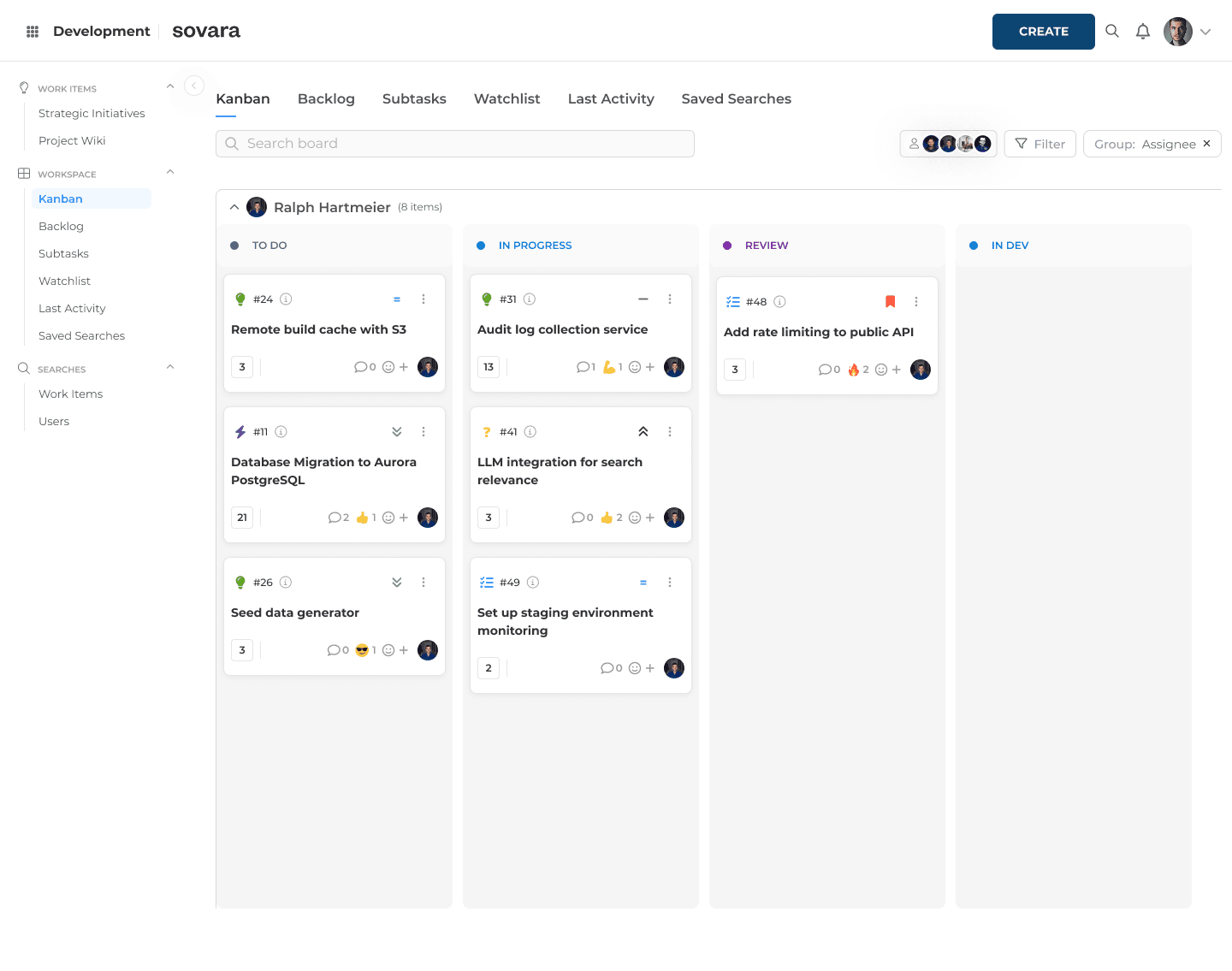
Arbeitsplattformen sind ein pragmatischer Startpunkt. Lösungen wie sovara helfen Ihnen, die Kontrolle über Workflows, Daten und die Systementwicklung zurückzugewinnen – ohne Verlust an Flexibilität.
Was ist digitale Souveränität? Kernkonzepte und Dimensionen
Digitale Souveränität ist die Kontrolle darüber, wie Ihre digitalen Systeme arbeiten. Dazu gehört, wo sie laufen, wer sie kontrolliert und welche Gesetze gelten.
Das erfordert keine vollständige Autarkie oder den radikalen Bruch mit globalen Anbietern.
Es geht schlicht darum, die eigene Entscheidungsfähigkeit zu wahren. So verstehen Sie Abhängigkeiten, erkennen Kompromisse und vermeiden Systeme, die Sie nicht kontrollieren können.
Was sind die Säulen der digitalen Souveränität?
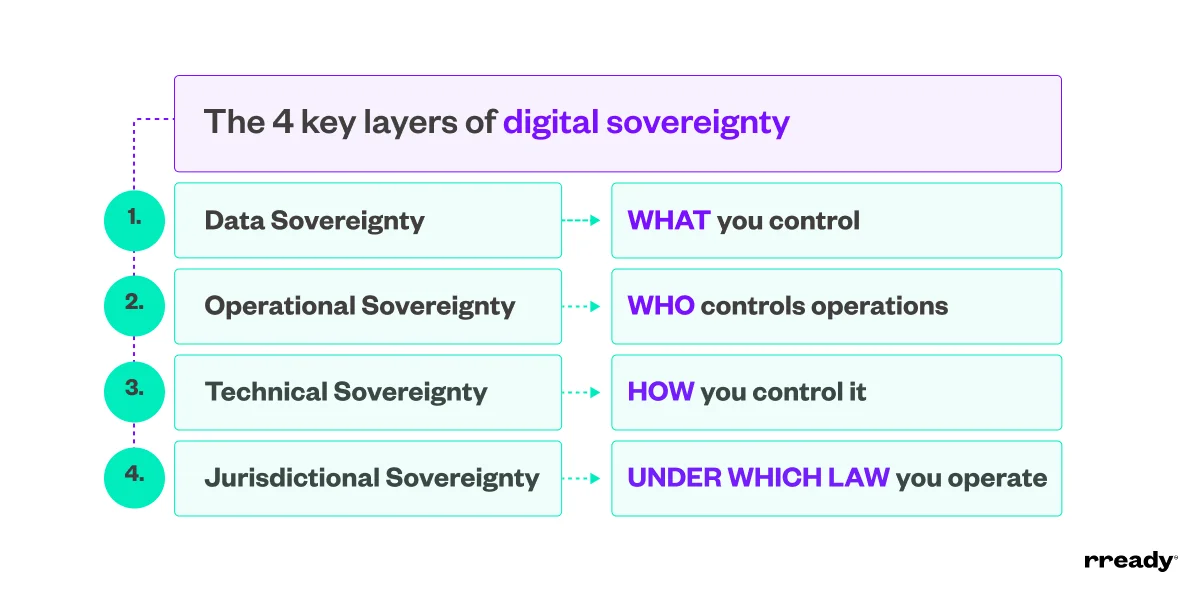
Digitale Souveränität stützt sich auf Kernsäulen, die definieren, wo Kontrolle ansetzt und wie sie praktisch durchgesetzt wird:
Datensouveränität: Ihre Daten bleiben unter Ihrer Kontrolle. Sie bestimmen Speicherort, Verarbeitung, Zugriff, Transfer und Löschung.
Operative Souveränität: Organisationen behalten die Kontrolle über Betrieb und Wartung ihrer Systeme. So laufen kritische Prozesse auch ohne externe Anbieter weiter.
Technische Souveränität: Systeme nutzen offene Architekturen. Das erlaubt es Ihnen, Technologien flexibel zu integrieren, anzupassen und weiterzuentwickeln, ohne sich an einen Anbieter zu binden.
Jurisdiktionelle Souveränität: Ihre digitale Umgebung unterliegt den Gesetzen Ihrer Wahl. Sie bietet Schutz vor fremdem rechtlichen Zugriff oder kollidierenden Vorschriften.
Wer sollte sich mit digitaler Souveränität befassen?
Jeder, der von digitalen Systemen abhängt, sollte sich mit digitaler Souveränität befassen. Dazu gehören:
Behörden und öffentliche Institutionen: Sie sichern damit die Kontrolle über staatliche Infrastrukturen, setzen Vorgaben durch und garantieren die Sicherheit öffentlicher Dienste.
Unternehmen und Organisationen: Sie sind über Hardware, Software und Cloud-Dienste von Partnern abhängig. Das beeinflusst direkt ihre Kontrolle über Daten, Prozesse und Risiken.
Regulierte Branchen: Sektoren wie Gesundheit, Finanzen, Energie und Telekommunikation müssen strenge Compliance-Vorgaben erfüllen und sensible Daten schützen.
Multinationale Konzerne: Sie nutzen Souveränitäts-Frameworks, um globale Systeme mit lokalen Gesetzen zu vereinbaren und Compliance überall zu sichern.
Einzelpersonen: Sie brauchen Souveränität, um persönliche Daten und digitale Identitäten zu schützen sowie die Kontrolle über die Datennutzung zu behalten.
Was ist der Unterschied zwischen Daten- und digitaler Souveränität?
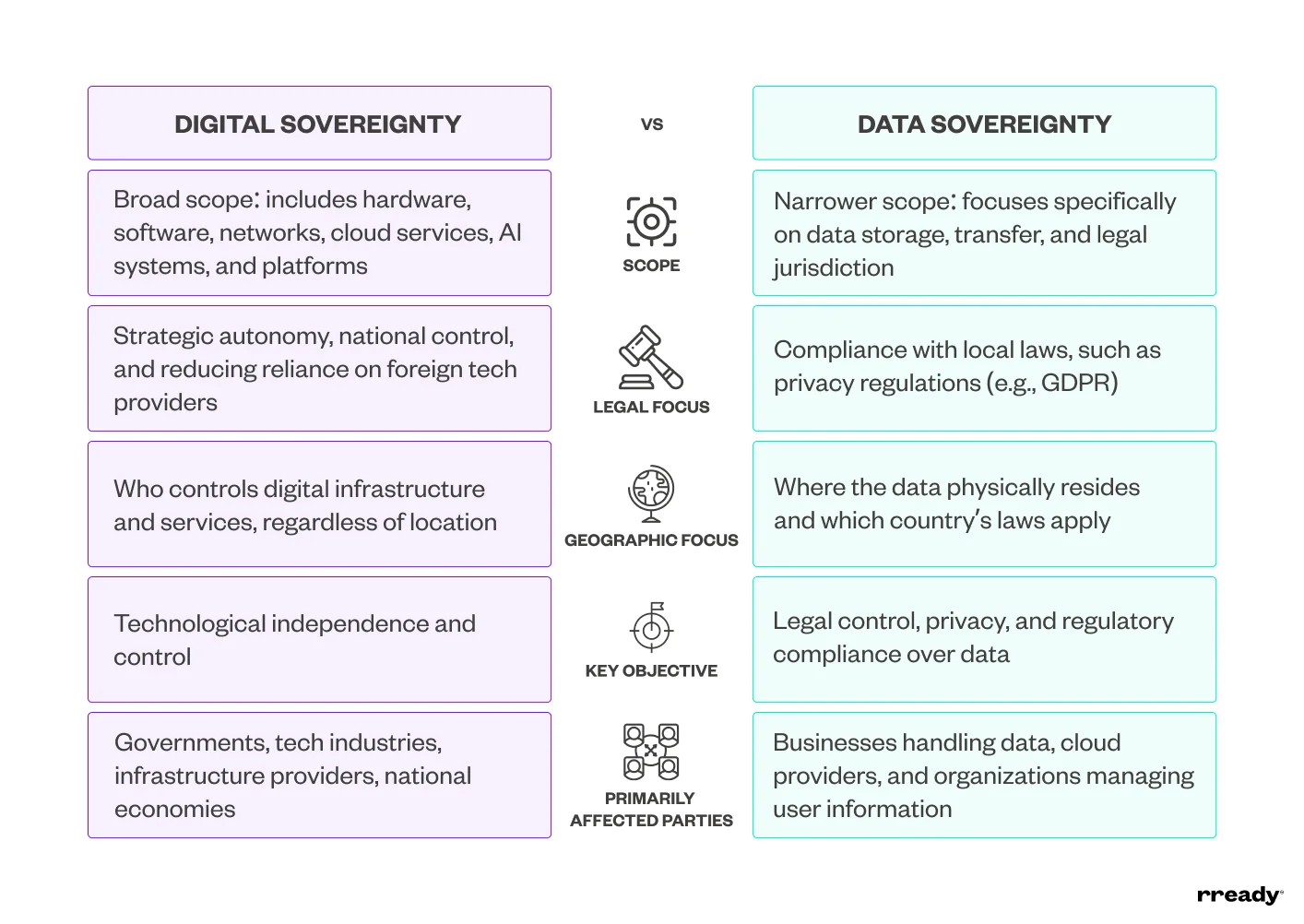
Der Hauptunterschied liegt im Umfang.
Die Datensouveränität konzentriert sich rein auf die Daten – also auf Speicherung, Verarbeitung und rechtliche Rahmenbedingungen.
Die digitale Souveränität geht viel weiter. Sie schließt die gesamte Infrastruktur, Software, den Betrieb und alle steuernden Regeln ein.
Kurz gesagt: Datensouveränität ist ein Teilbereich der digitalen Souveränität, kein separater Entwurf.
Warum digitale Souveränität jetzt wichtig ist: 4 Treiber
Digitale Systeme sind für Unternehmen geschäftskritisch geworden. Gleichzeitig nehmen Risiken bei Kontrolle, Compliance und Ausfallsicherheit zu. Digitale Souveränität ist daher heute kein reines IT-Thema mehr, sondern Chefsache.
Vier Kernursachen machen das Thema so dringlich:
1. Steigende regulatorische und rechtliche Risiken
Der regulatorische Druck wächst, besonders in Europa.
Richtlinien wie DSGVO, NIS-2 und DORA erhöhen die Anforderungen an Datenmanagement, Sicherheit und operative Resilienz. Gleichzeitig verschärfen sich internationale Rechtskonflikte.
Durch Gesetze wie den US CLOUD Act können US-Behörden US-Anbieter zur Herausgabe von Daten zwingen – völlig unabhängig davon, wo diese physisch gespeichert sind.
Das erzeugt für regulierte Unternehmen große Unsicherheiten bei Compliance und Kontrolle.
2. Kontrollverlust über eigene IT-Systeme
Viele Unternehmen wiegen sich in falscher Sicherheit, was die Kontrolle über ihre Systeme und Daten angeht.
In der Praxis verlagert sich diese Kontrolle schleichend nach außen zu externen Plattformen.
Das zeigt sich oft an subtilen, aber kritischen Punkten:
Der Speicherort der Daten ist starr, unklar oder schwer zu prüfen.
Die Infrastruktur wird außerhalb der eigenen Jurisdiktion und Kontrolle gehostet.
Systemfunktionen werden vom Anbieter diktiert, nicht von eigenen Teams.
Auf Dauer schränkt dies Ihre Handlungsfreiheit bei Zugriffsrechten, Prozessanpassungen und Marktveränderungen stark ein.
3. Vendor Lock-in als strategisches Risiko
Die Abhängigkeit von einzelnen Anbietern ist längst kein rein technisches Problem mehr. Sie ist ein relevantes Geschäftsrisiko.
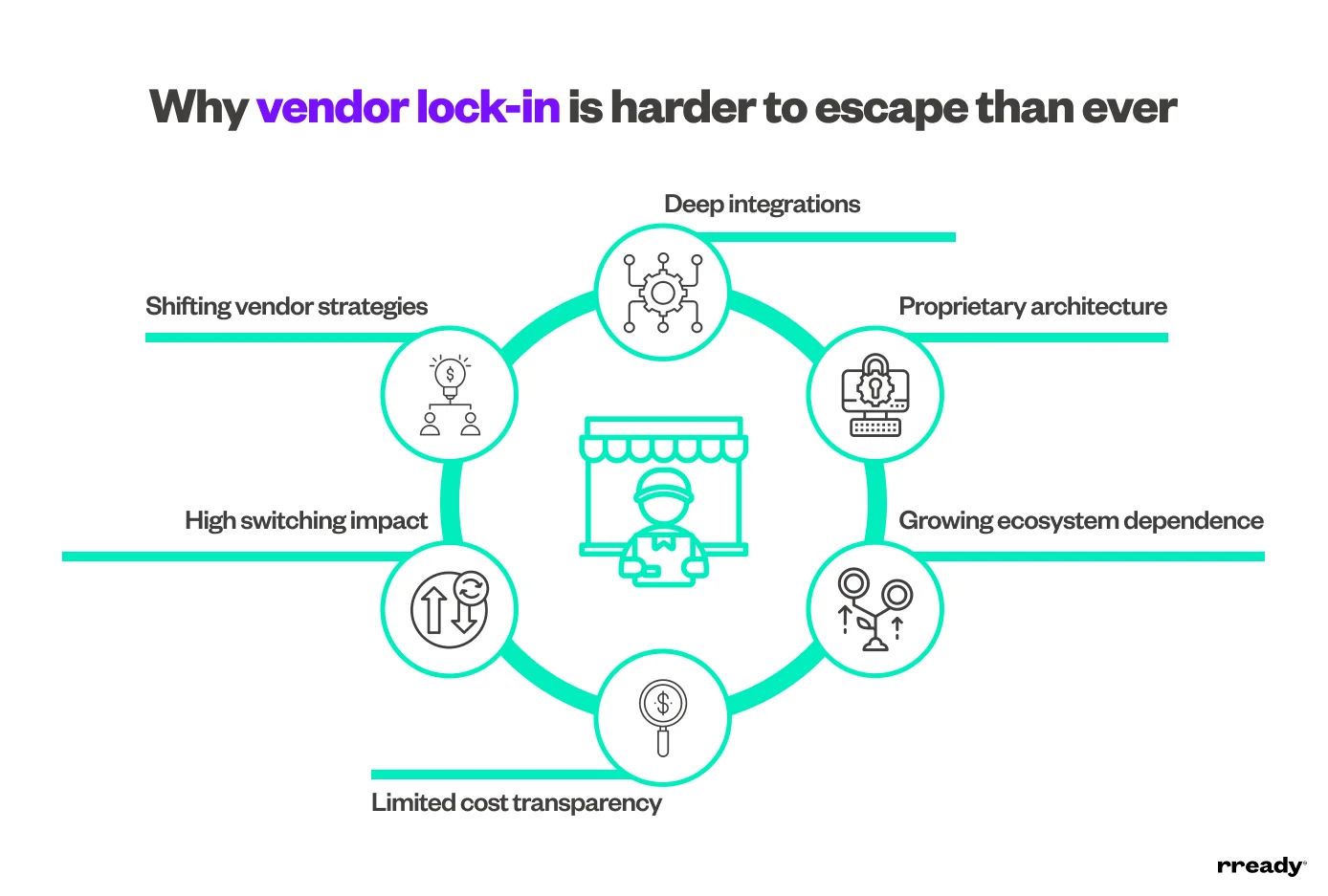
Der Wechsel von dominierenden Plattformen fällt Unternehmen immer schwerer:
Tief integrierte Systeme machen Migrationen hochgradig komplex und zeitaufwendig.
Proprietäre Architekturen verhindern Interoperabilität und offenen Austausch.
Abhängigkeiten im Ökosystem des Anbieters wachsen im Laufe der Zeit kontinuierlich.
Undurchsichtige Preismodelle erschweren eine zuverlässige Budgetplanung.
Ein Wechsel erfordert enormen Aufwand, birgt Risiken und stört den laufenden Betrieb.
Ändert zudem der Anbieter seine Strategie – etwa durch den erzwungenen Wechsel auf Cloud-Modelle –, müssen Unternehmen ohne Ausweichoption zwingend mitziehen.
4. Zunahme geopolitischer Risiken und Cyber-Bedrohungen
Digitale Infrastruktur ist nicht neutral. Sie wird von Geopolitik, Regulierung und globalem Wettbewerb beeinflusst.
Deutlich zeigt sich das am Anstieg von Cyber-Vorfällen um 48 % im Jahr 2024, teils befeuert durch geopolitische Spannungen.
Zudem wächst die Sorge über die Abhängigkeit von ausländischen Technologieanbietern und die enorme Machtkonzentration bei wenigen Konzernen.
Diese Risiken treffen Unternehmen direkt bei:
der Geschäftskontinuität im Falle von Krisen oder geopolitischen Spannungen;
der operativen Resilienz bei der Absicherung kritischer Systeme;
der Einhaltung von Compliance-Vorgaben in verschiedenen Ländern;
der langfristigen strategischen Flexibilität und Unabhängigkeit.
Der Weg zur digitalen Souveränität: 6 konkrete Vorteile
Digitale Souveränität bietet Unternehmen messbare Vorteile durch mehr Kontrolle über Systeme, Daten und die eigene Zukunft. Das sind die sechs wichtigsten Vorzüge:
1. Höhere Resilienz und weniger Abhängigkeiten
Wer die Abhängigkeit von einzelnen Anbietern oder monolithischen Ökosystemen reduziert, senkt das Ausfallrisiko. Es stärkt die Geschäftskontinuität, da Single Points of Failure vermieden werden und Sie Systeme flexibler bereitstellen und verwalten können.
2. Integrierte Compliance und maximale Kontrolle
Wenn Sie Speicherort, Verarbeitung und Zugriffe selbst bestimmen, wird Compliance zum Teil Ihrer Architektur. Das verringert den Aufwand für nachträgliche Anpassungen. Richtlinien wie DSGVO, NIS-2 und DORA lassen sich direkt erfüllen, wenn Systeme von Anfang an mit einer integrierten Compliance-Unterstützung konzipiert sind.
3. Freiraum für Innovation und Weiterentwicklung
Unabhängig von proprietären Systemen können Sie neue Technologien wie Cloud-Native-Plattformen oder Künstliche Intelligenz (KI) sicher und kontrolliert einführen. So schaffen Sie Freiräume, um Systeme nach eigenen Vorstellungen zu testen und agil anzupassen.
4. Mehr Vertrauen bei allen Stakeholdern
Eine transparente Kontrolle über Daten und Systeme stärkt das Vertrauen von Kunden, Partnern und Regulierungsbehörden. Es zeigt, dass Sie sensible Informationen verantwortungsvoll und richtlinienkonform schützen.
5. Stärkere Sicherheit und strategische Positionierung
Angesichts wachsender Bedrohungen im Cyberraum stärkt digitale Souveränität Ihre Fähigkeit, kritische Systeme effektiv zu schützen. Sie sichert die Handlungsfähigkeit sowohl im Betrieb als auch bei strategischen Entscheidungen ab.
6. Kontrolle über Kollaborations- und Arbeitsplattformen
Mehr erfahren

Schatten-KI per Update: Das Beispiel Atlassian Rovo
Schatten-KI kommt oft per Update, in längst freigegebenen Tools. Das Beispiel von Atlassian Rovo zeigt, worauf Sie bei der KI-Governance achten sollten.

Atlassian Data Center End of Life: Ihre drei Optionen
Das Support-Ende kommt am 28. März 2029, doch der Kaufstopp am 30. März 2028 trifft zuerst. Die Termine, der Umfang und Ihre drei realen Optionen.

Die 6 besten europäischen Alternativen zu Jira & Confluence
Welche europäischen Alternativen zu Jira und Confluence gibt es 2026 – und wie unterscheiden sie sich bei Souveränität, KI, Migration und Kosten?