Stakeholder Management in Innovation
Learn more about the importance of stakeholder management in innovation to enhance collaboration, build trust, and drive successful innovation outcomes.


Your organization’s innovations and ideas will ultimately impact many different parties. Therefore, understanding the importance of stakeholders and how to successfully manage their involvement in innovation, should be a priority right from the start.
In this quick guide to stakeholder management in innovation, we’ll look at the key stakeholders and their roles as well as the best ways to engage them throughout the innovation process.
Who are the key stakeholders in the innovation process?
A stakeholder is defined as 'an individual or a group of individuals with an interest, often financial, in the success of a business'.
While there are other stakeholders to consider, such as regulators, the four primary stakeholders when it comes to corporate innovation and their important roles in the innovation process, are:
1. Management: Their role is to cultivate a culture of innovation that encourages a buy-in from everyone.
2. Employees: As they are the closest people to the customer, they often provide the best ideas, which is why bottom-up innovation must be supported.
3. Customers: Their response to innovations and the brand will ultimately determine whether your organization succeeds, which is why welcoming their ideas and involving them is advised.
4. Public: Ultimately, the public's role is to define the overall perception of the organization and its innovations, which is vital as a part of these stakeholders represent your potential future customers.
Internal vs external stakeholders
One of the key distinctions in categorizing stakeholders is by classifying them as internal and external stakeholders. Internal stakeholders have a direct interest in the business and include employees, owners, and investors.
External stakeholders on the other hand, although they are affected by the innovation outcomes, they do not have a direct interest in the organization.
Why is stakeholder management important in innovation?
Involving stakeholders in the innovation process is important for numerous reasons. Firstly, both internal and external stakeholders will normally include various parties that can have the power to open pr shut important doors for an organization when innovating.
For example, internal stakeholders like management can open doors for innovative endeavours by allocating the necessary resources and fostering a supportive culture. In the same way, an external stakeholder such as regulatory body could impose more stringent regulations, thereby limiting organizations in their innovation efforts. The reverse in each scenario is of course, also true.
This is why stakeholder management is important to build strong relationships with these stakeholders, as well as trust. Further, by showing stakeholders that their opinions are valued and involving them every step of the way, helps to build more transparent processes.
Different stakeholders can also actively contribute to the innovation process with their different insights and diverse input they have to offer. This ensures a collaborative innovation process, ultimately leading to richer and more robust innovation outcomes.
Identifying stakeholders through stakeholder mapping
A stakeholder map is a visual project management tool that is designed to help project managers understand each stakeholder’s influence, level of interest, and need for updates. When used correctly, it highlights how each stakeholder is involved.
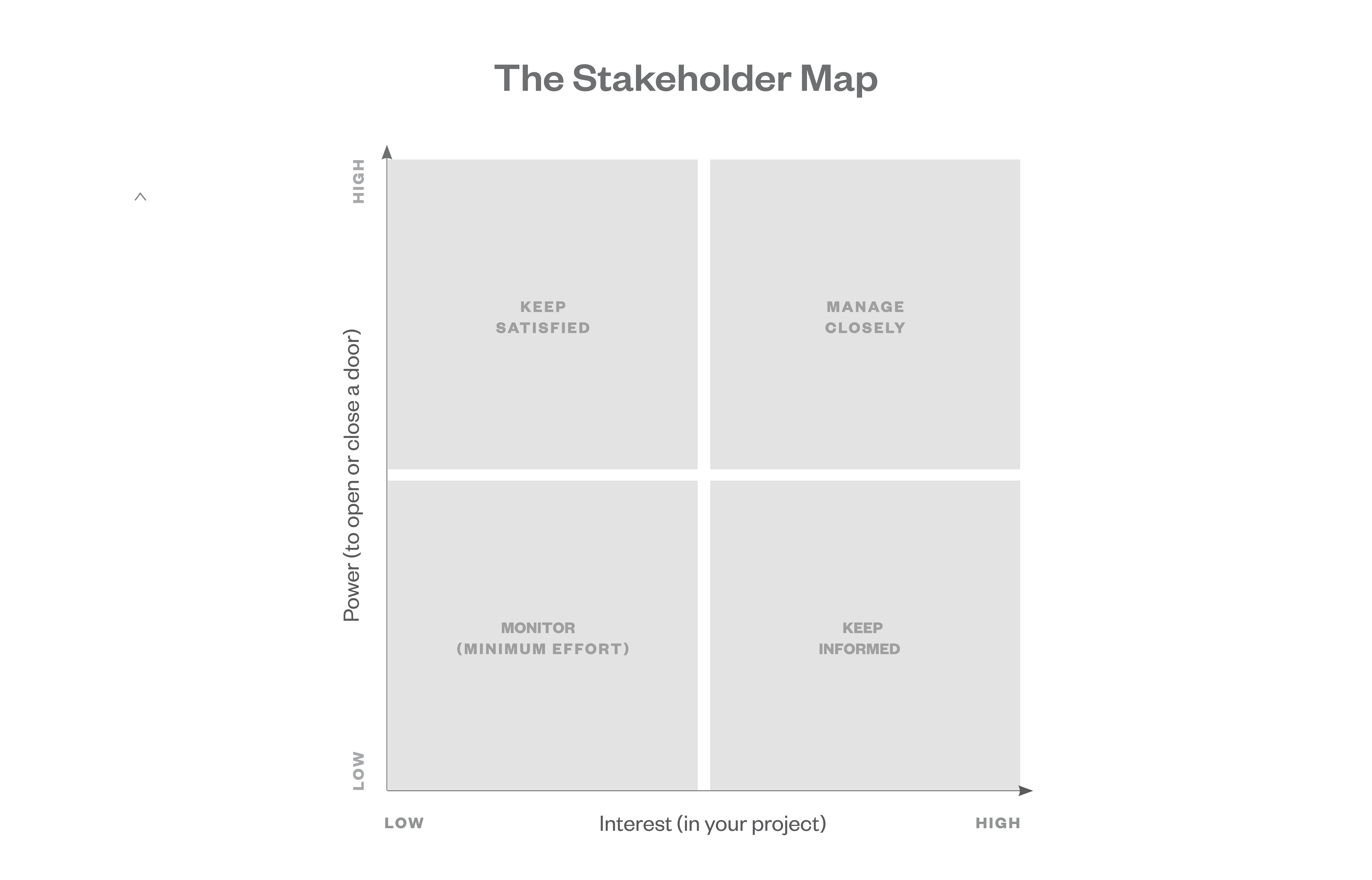
The Stakeholder Map: The above matrix can be used by innovators and project teams to map the stakeholders they have identified during the innovation process. Take some minutes to brainstorm measures to manage and monitor the different stakeholder groups and ask questions like:
|
Given that roughly 49% of innovations are targeted at external stakeholders, knowing where each stakeholder stands at any stage is vital. Using the stakeholder map, innovators can do this by plotting each individual stakeholder on the map.
How to engage stakeholders in the innovation process
Involving stakeholders in the innovation process is key to harness different opinions and insights, that can ultimately lead to better outcomes and improved business results. Understanding how to maintain stakeholder engagement throughout the innovation process is crucial for leveraging these relationships to benefit your organization.
Best practices for engaging stakeholders in innovation
Cultivate a truly collaborative approach to innovation to yield more ideas and boost engagement.
Begin engaging stakeholders at the outset of the process to generate enthusiasm for the innovation objectives and build a foundation of trust.
Communicate openly and transparently, leaving room for stakeholders to voice their opinions and be heard.
Consistently deliver on promises and provide updates where necessary to prevent a loss of trust and engagement.
When integrated with regular communication and updates, such as email bulletins or newsletters for all stakeholders, a positive outlook towards innovation should be maintained. More importantly, it lends itself to an increase in both the quality and volume of ideas submitted.
What to avoid when managing stakeholders
When managing stakeholders, there are a number of pitfalls that should actively be avoided to ensure a smoother approach and avoid possible conflict arising. This can be as important as implementing the steps mentioned above. These common pitfalls can include:
Not identifying and segregating stakeholders appropriately - this prevents you from providing each party the relevant and necessary insights.
Using the same management strategy for all - while you want an inclusive culture, respecting contrasting influences is vital.
Not keeping stakeholders in the loop - they deserve to receive regular updates throughout the project process.
Using innovation management tools to engage stakeholders
Engaging with stakeholders becomes much easier with the use of an innovation management tool that also includes an online platform and cloud-based communication. This allows you to connect different stakeholders seamlessly, to facilitate real-time collaboration and information sharing, regardless of where they are located. This is mainly used for internal stakeholders in organizations, but can also be opened up to external stakeholders, depending on company polocies.
Additionally, innovation management tools often also come with a variety of features that can further enhance stakeholder engagement in the innovation process. Keeping all stakeholders in the loop, such features include data analytics, project management-based features and different feedback mechanisms.
Both internal and external stakeholders can have a significant impact on the innovation efforts of your company. A truly collaborative approach that strikes the right balance between managing stakeholder needs with the interests of the organization can lead to improved innovation performance for the organization and consequently, to more satisfied stakeholders.

Read more

8 idea management software benefits [Fully explained]
Discover the idea management software benefits that help you capture ideas, improve collaboration, and turn employee input into real business impact.

9 idea generation techniques businesses should use in 2026
Learn the best idea generation techniques to help you spark creativity, structure thinking, and turn ideas into actionable outcomes for your team.

Financial vs. Non-financial Incentives in Innovation
Explore the role of financial vs non-financial incentives in innovation and learn how you can motivate employees to share ideas and stay engaged.