AI vs. Human Creativity: Which One is Better in 2026?
Compare AI vs human creativity to understand how machines amplify ideas while your emotion, intuition, and insight drive true originality.

Artificial intelligence (AI) is a threat to human creativity.
At least that’s what some experts claim. And with 12 million people forced to shift roles by 2030 due to AI’s rapid rise, it’s easy to see why. As algorithms learn to sketch, write, and brainstorm, many fear the machines will steal our creative thunder.
Still, others insist the opposite.
They argue that generative AI might create endless options, but it still can’t match the messy brilliance of human thought. Studies back them up, too, showing that the best human ideas can still outperform machine-made ones.
So, who’s right? Is AI about to out-create us, or will the human mind always stay one step ahead?
That’s exactly why this guide exists: to dig into the AI vs. human creativity question and help you understand where each one shines.
Let’s begin.
Key takeaways
AI and human creativity excel in different ways
AI generates ideas through data and pattern recognition, making it fast, scalable, and analytical. Humans, on the other hand, create through emotion, experience, and intuition.Human originality still leads, but AI boosts innovation capacity
While humans create from lived experience and emotion, AI can explore millions of creative possibilities in seconds. This makes AI a powerful tool for expanding the scope of innovation and uncovering new directions people might miss.AI lacks emotional depth but amplifies human potential
Empathy, vulnerability, and intuition make human creativity deeply relatable, which AI can’t replicate. But when paired with AI’s data-driven insights, these emotional qualities become even more powerful, fueling ideas that connect and perform.The future of creativity is collaboration, not competition
Studies show that teams combining human input with AI tools see up to 25% higher creative productivity and improved quality. For teams exploring autonomous assistants that can plan and execute tasks, this overview of what AI agents are and how they work provides helpful context for practical adoption in creative workflows.rready helps teams harness both sides of creativity
rready’s suite, including Idea Management, KICKBOX Intrapreneurship, and Innovation Management, empowers teams to collaborate smarter with AI. It gives employees the structure, tools, and insights they need to turn bold ideas into real business impact.
AI vs. human creativity: The basics
To compare the creative processes of humans and AI, we first need to look at how each side actually creates.
AI creativity is the ability of artificial intelligence systems to generate useful ideas, designs, or solutions using algorithms and machine learning. Instead of relying on imagination, AI works through data, patterns, and probabilities, identifying connections humans might overlook.
Importantly, AI doesn’t create concepts out of thin air. It recombines existing information rather than inventing something that has never existed in any form before.
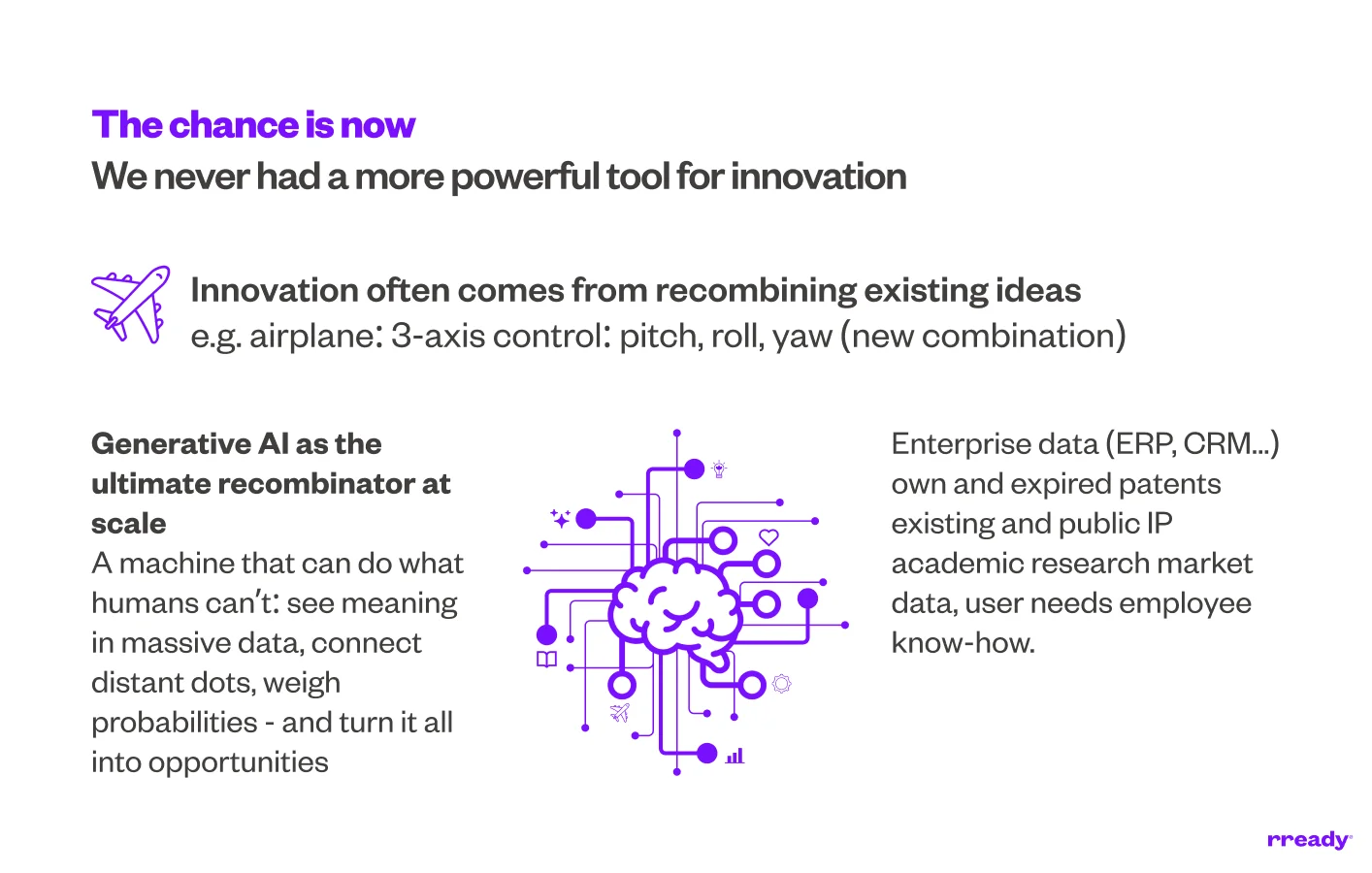
As for human creativity, it’s the ability to imagine, connect dots, and bring something truly new into the world. It’s primarily fueled by emotion, intuition, and curiosity, blending spontaneous “aha!” moments with deliberate problem-solving.
Here’s a quick snapshot to summarize how AI and human creativity compare and contrast:
Aspect | AI creativity | Human creativity |
Source of data | Draws from large, distributed datasets (e.g., customer complaints in CRM systems, archived patents, or market shifts), integrating information from across the entire organization | Draws from personal memory, lived experience, conversations, and what individuals or teams can collectively recall |
Source of ideas | Generates ideas by recombining patterns identified in data and learned models | Generates ideas from emotions, experiences, and intuition |
Process | Analytical, algorithmic, repeatable | Emotional, imaginative, sometimes chaotic |
Speed | Rapid; processes vast data in seconds | Slower, reflective, shaped by time and inspiration |
Originality | Derived from existing data | Rooted in lived experience and unique perception |
Emotional depth | Limited to learned associations | Deeply tied to empathy and self-expression |
Adaptability | Learns from input data | Learns from emotion, culture, and context |
Consistency | High; can reproduce patterns easily | Variable; influenced by mood, mindset, and context |
AI vs. human creativity: The comparison
Creativity at work boils down to a few essential categories. Here’s how AI and humans stack up in each one.
1. AI vs. human creativity: Originality & innovation capacity
By its very definition, originality is about being distinctive and creating something unmistakably yours.
Human creativity excels here, drawing from emotion, experience, and culture to create ideas, designs, and perspectives with real depth and meaning.
AI, in contrast, doesn’t create from experience; it generates from what it’s learned. It can remix, reframe, and refine patterns, but it can’t truly originate in the human sense of the word.
But here’s the thing: even the most imaginative mind has its limits.
You simply can’t expect one person, one team, or even a whole company to explore millions of possibilities and come up with the perfect idea on demand every time. That’s what AI does.
Its innovation capacity lies in scale. It can scan, combine, and refine insights from vast data sources, unlocking possibilities no single human could explore alone.
Pro tip
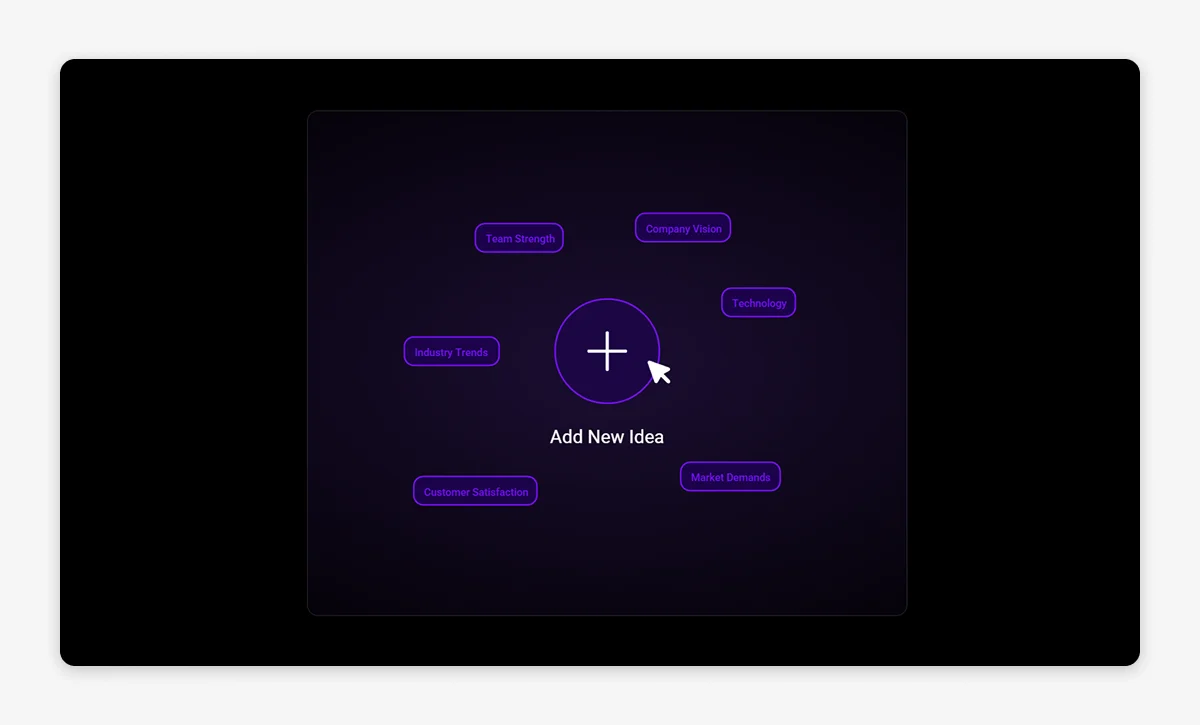
The real strength of AI creativity isn’t in the sheer number of ideas. It’s in how AI-native systems like rready can tailor them to your company’s goals, team strengths, and expertise.
This lets you laser-focus on the right ideas instead of chasing random ones that might only sound good in your head.
2. AI vs. human creativity: Context awareness & interpretation
Context is everything in creativity. It’s what turns ideas from “clever” to “relevant.”
Humans naturally read the room. They understand tone, timing, and subtext, weaving culture and emotion into every creation.
As for AI, it can interpret data within a given context, but it doesn’t actually understand the deeper meaning behind it. That’s why AI-generated work can miss the mark. It might check every logical box, yet still overlook the nuances that make an idea work in practice.
However, AI also learns quickly.
The more context you feed it, the sharper its interpretations become, making its creative output more applicable in the real world.
3. AI vs. human creativity: Emotional intelligence & empathy
Empathy, intuition, vulnerability: those are the trademarks of the human mind. They are also everything that AI lacks.
Human creativity draws power from emotion: joy, heartbreak, pride, and frustration. Those feelings shape ideas that connect, persuade, and move people. It’s why a campaign born from lived experience, like Dove’s Real Beauty campaign, hits harder than one built from data points alone.
A recent contrast in the advertising world makes this divide even clearer.
Coca-Cola’s AI-generated Christmas campaigns sparked backlash for feeling “cheap” and disconnected from the emotional warmth people expect during the holidays. In the same season, Apple released its new Apple TV sonic logo crafted entirely by hand, using real cut and polished glass, filmed rather than rendered.
The behind-the-scenes reveal went viral precisely because viewers could feel the craft: the tactile detail, the human intention, the physical imperfections.
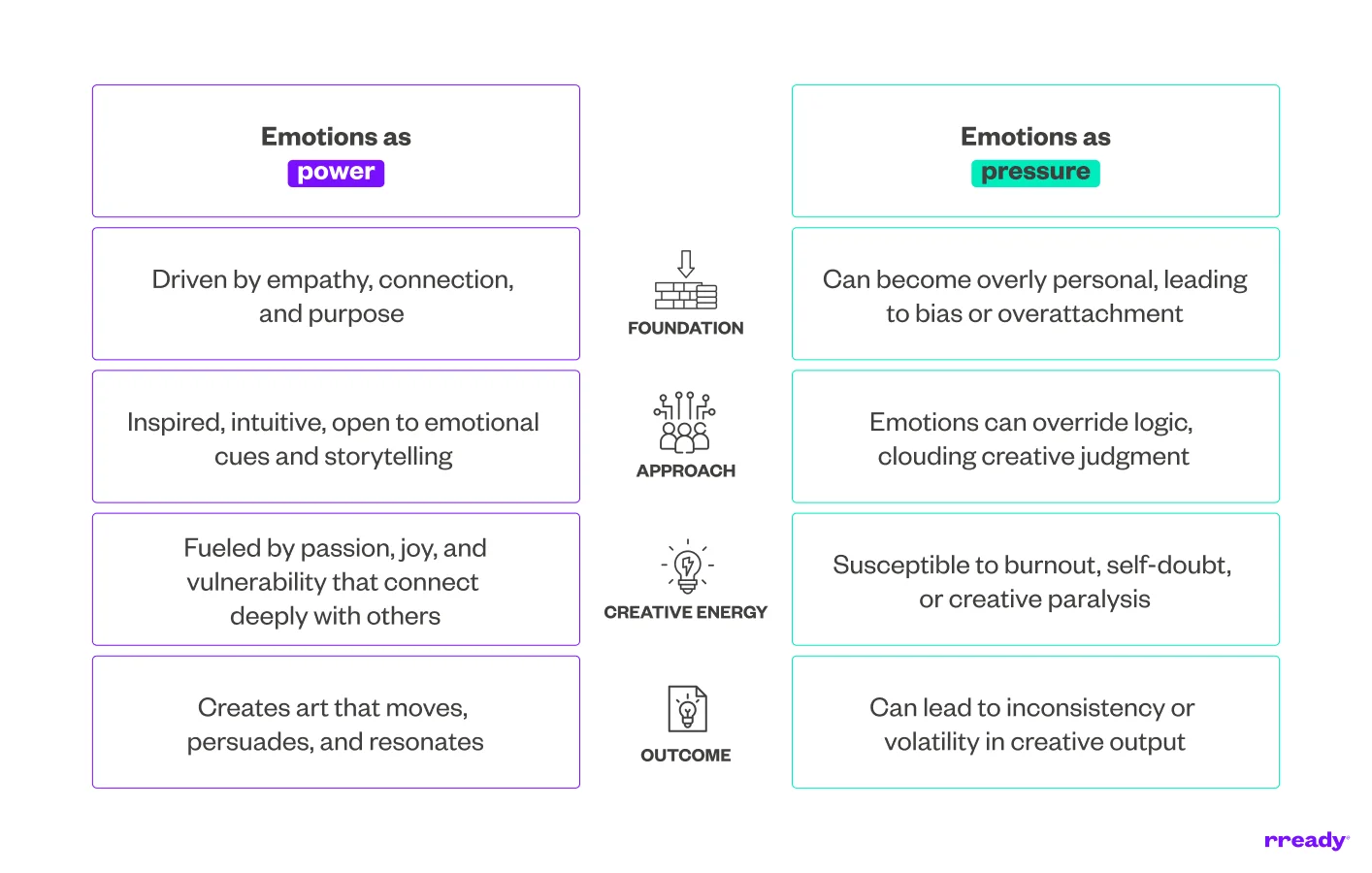
That’s what emotions do; they make human creativity rich, layered, and deeply resonant.
However, they can also make it unpredictable.
The same emotions that inspire brilliance can cloud judgment, spark self-doubt, or lead to burnout. In other words, they can both fuel innovation and stall it completely.
4. AI vs. human creativity: Problem-solving & adaptability
When it comes to problem-solving, both humans and machines share one key trait: a drive to find solutions.
The difference lies in how that search unfolds.
AI tackles challenges with logic and precision, analyzing massive datasets to identify patterns and outcomes humans might miss. As such, it thrives when problems are clearly defined.
Humans, meanwhile, shine in gray areas: when rules don’t apply and the problem itself is fuzzy. They can improvise, pivot, and sometimes stumble onto solutions by accident. That unpredictability makes human problem-solving highly adaptive.
5. AI vs. human creativity: Speed & efficiency
While most creative categories have shades of gray, speed and efficiency is one where AI is the undisputed champion.
Thanks to its ability to sort vast datasets and pattern-match at scale, AI can generate ideas, visuals, music, or text in the time it takes humans to sketch a concept, if that. Many companies are now building dedicated AI agent workflows around these capabilities to automate repetitive creative tasks while allowing teams to focus on strategy and refinement.
And the numbers prove it:
62% of creative professionals say generative AI has reduced their task time by 20%, freeing up nearly a full workday each week.
Highly skilled workers using generative AI have seen productivity gains of up to 40%.
Over 90% of participants in an ideation study improved their performance using AI, some by as much as 40%.
Pro tip
When boosting your creativity, look for AI-native platforms that combine speed with real purpose.
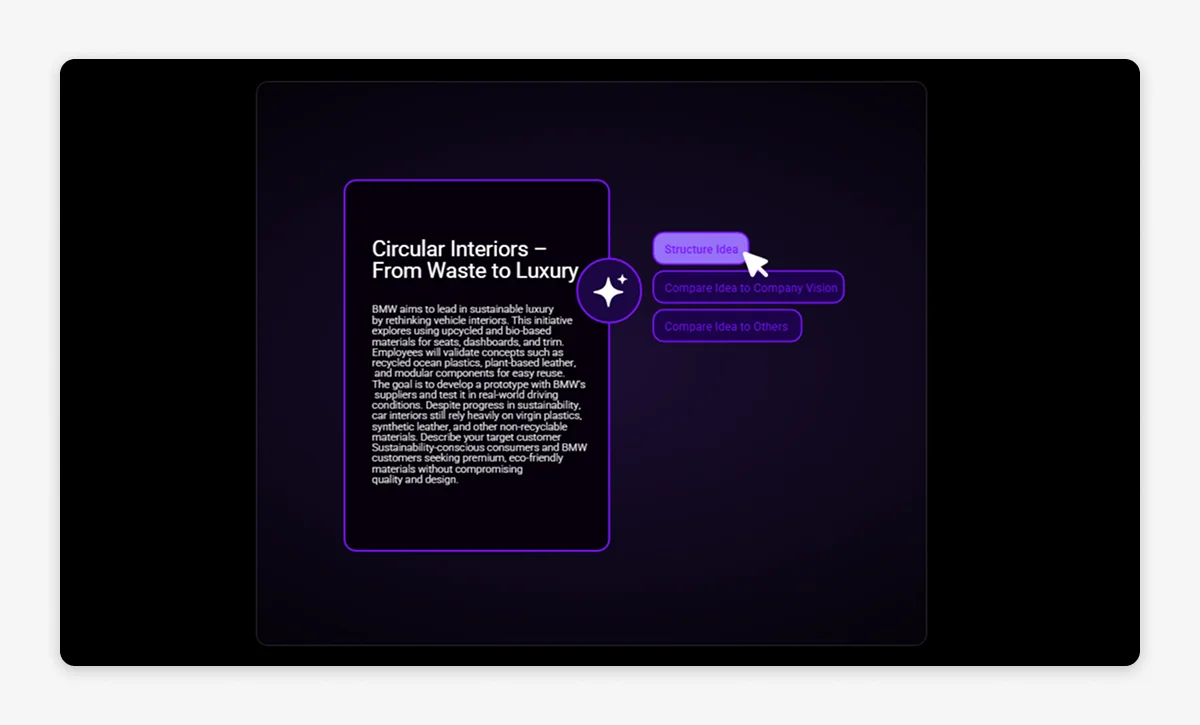
At rready, for example, duplication and similarity search tools quickly clear the backlog of redundant ideas, while custom AI agents execute routine ideation tasks so your team spends time refining instead of regurgitating.
6. AI vs. human creativity: Bias & objectivity
When it comes to creative decision-making, humans draw on intuition, emotion, and experience to make nuanced calls. But that depth comes with a cost: biases.
Personal preferences, overconfidence, and attachment to previous work can easily steer ideas off course. AI, on the other hand, doesn’t play favorites. Instead, it evaluates data objectively and at scale.
That’s not to say AI bias doesn’t exist. It does, but it’s a direct result of the data it’s trained on. In other words, AI’s objectivity is only as true as the data it learns from.
7. AI vs. human creativity: Resource utilization & constraints
Both human and AI creativity can suffer when resources are limited, whether that’s time, funding, or access to the right tools.
For humans, these constraints often translate into burnout, abandoned ideas, or even no ideas at all.
As for AI, limited or poor-quality data can stall its performance just as quickly. It results in less accurate outputs, repetitive or generic ideas, or an inability to create useful results at all.
Pro tip
For creativity and innovation to thrive, people need the space, time, and resources to work on their ideas.
Programs like rready’s KICKBOX Intrapreneurship program make that possible by giving every employee access to a structured innovation framework, expert support, and the tools to turn ideas into action.
AI vs. human creativity: The verdict
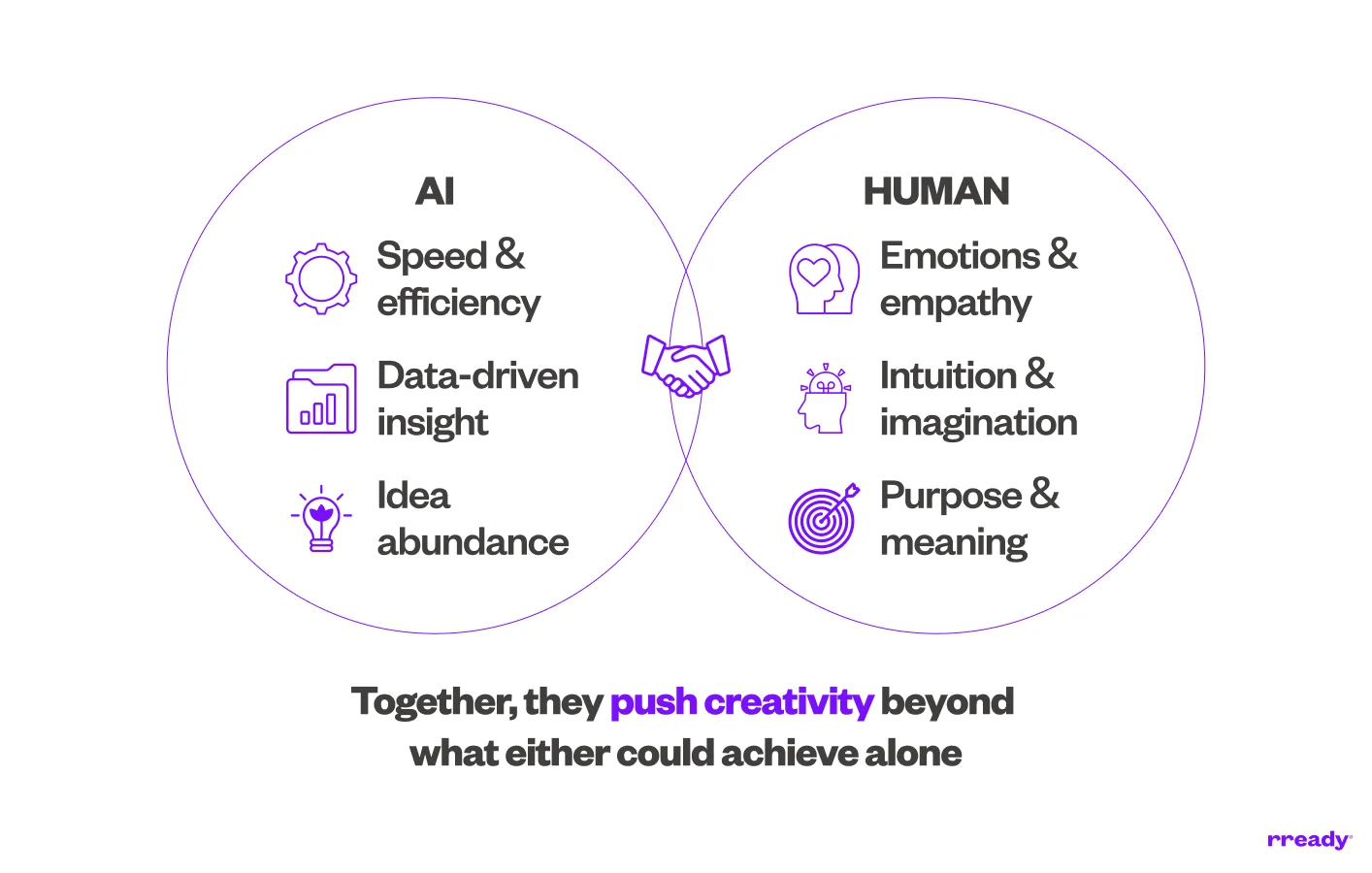
After all the comparisons, one thing’s clear: it was never meant to be AI vs. human creativity, but AI and human creativity working hand in hand.
People need AI to accelerate ideas, analyze complexity, and push creative boundaries further than ever before. AI, in turn, needs people for emotion, intuition, and purpose: the ingredients that make creativity meaningful instead of mechanical.
The data already proves the combination works.
A 2024 study found that humans collaborating with text-to-image AI boosted creative productivity by 25% while producing higher-quality ideas. Similarly, Adobe reports that 60% of creative professionals say generative AI helps them create better work, not just more of it.
That’s why the future belongs to teams that rely on both: the algorithms that do the heavy lifting and the innovator’s mindset that turns raw ideas into real impact.
The future of innovation starts here
rready sees artificial intelligence as an engine that can empower human creativity. That’s why the platform ensures AI is behind every idea, every spark, every “what if.”
But these AI capabilities don’t exist in isolation.
They’re part of a connected suite of innovation tools designed to help humans and technology work smarter together. The suite includes:
Idea Management for tapping into the collective brainpower of your organization
KICKBOX Intrapreneurship for giving every employee the space, structure, and resources to bring their ideas to life
Innovation Management for having full control over your entire innovation funnel
Together, these tools empower teams to do what humans do best: dream boldly, while letting AI handle the rest.
Claim your free rready demo today and give your teams the tools to outsmart yesterday.
FAQ
Is AI more creative than humans?
Not quite; it’s just different. AI is brilliant at speed, scale, and connecting dots across massive datasets. But human creativity thrives on emotion, intuition, and lived experience. The magic happens when the two work together.
Can AI ever replace human creativity?
No, it can’t, and it shouldn’t. AI can enhance human creativity by generating ideas, spotting patterns, and freeing people from repetitive work. But only humans can bring purpose, empathy, and imagination needed for ideas that truly inspire.
Can AI match human creativity?
In a way, it can, by mimicking its output. However, AI can’t mimic the origin of human creativity. All it can do is learn from patterns of creativity, while humans do the real work of imagining.
Read more

9 Best AI Tools for Innovation in 2026 [Comparison List]
Explore the best AI tools for innovation to help you streamline workflows, spark creativity, and accelerate breakthroughs across your projects.
AI vs. Human Creativity: Which One is Better in 2026?
Compare AI vs human creativity to understand how machines amplify ideas while your emotion, intuition, and insight drive true originality.
How AI-driven Innovation Will Accelerate Your Industry
Discover how AI-driven innovation will accelerate your industry with strategies to boost creativity, efficiency, and long-term competitive edge.