
8 Tips for Creating a Growth Mindset Culture in 2026
Explore proven tips for creating a growth mindset culture that helps you inspire learning and build a more resilient, motivated team.


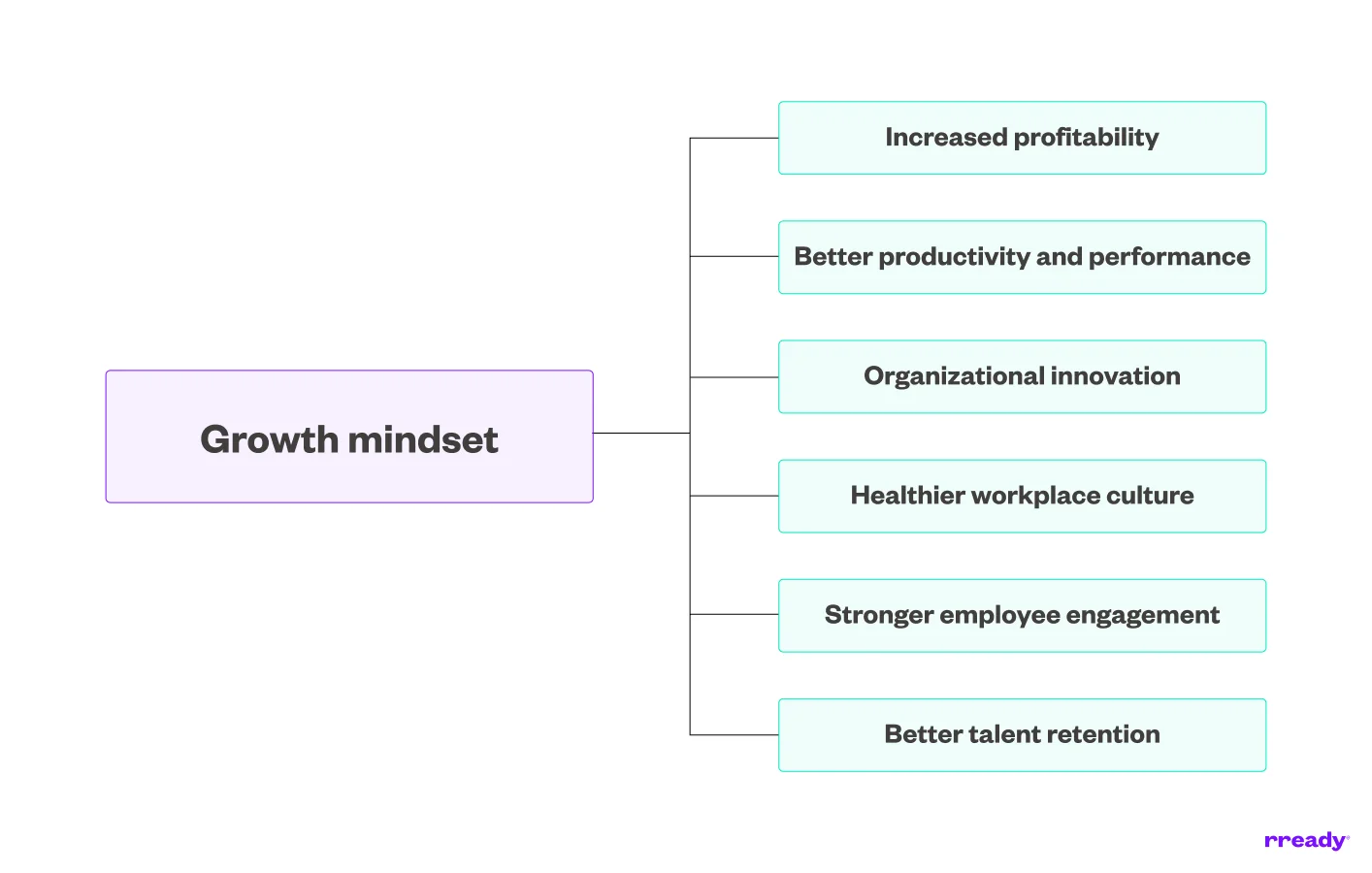
Research shows that 80% of executives link a growth mindset to revenue growth, while 64% cite productivity and performance as its biggest payoffs. Meanwhile, 60% of learning and development professionals call it the critical driver of workplace innovation.
A growth mindset is also hailed as the secret ingredient that creates healthier workplace cultures, stronger employee engagement, and talent retention.
So, where’s the catch? If the benefits are so clear, why isn’t every company reaping them?
Because a growth mindset doesn’t just happen. You have to create the conditions for it and keep adapting them as you learn what works and what doesn’t.
To help you get started, we’ve rounded up eight practical and creative tips for creating a growth mindset culture that fuels innovation, resilience, and long-term success.
Key takeaways
A growth mindset starts with genuine belief, not slogans
Just declaring “we value growth” won’t build a culture that values having a growth mindset. Leaders must truly believe in their people’s potential to adapt, solve problems, and evolve. They must back that belief with consistent actions that make learning and improvement part of daily work.Hire and promote for potential, not perfection
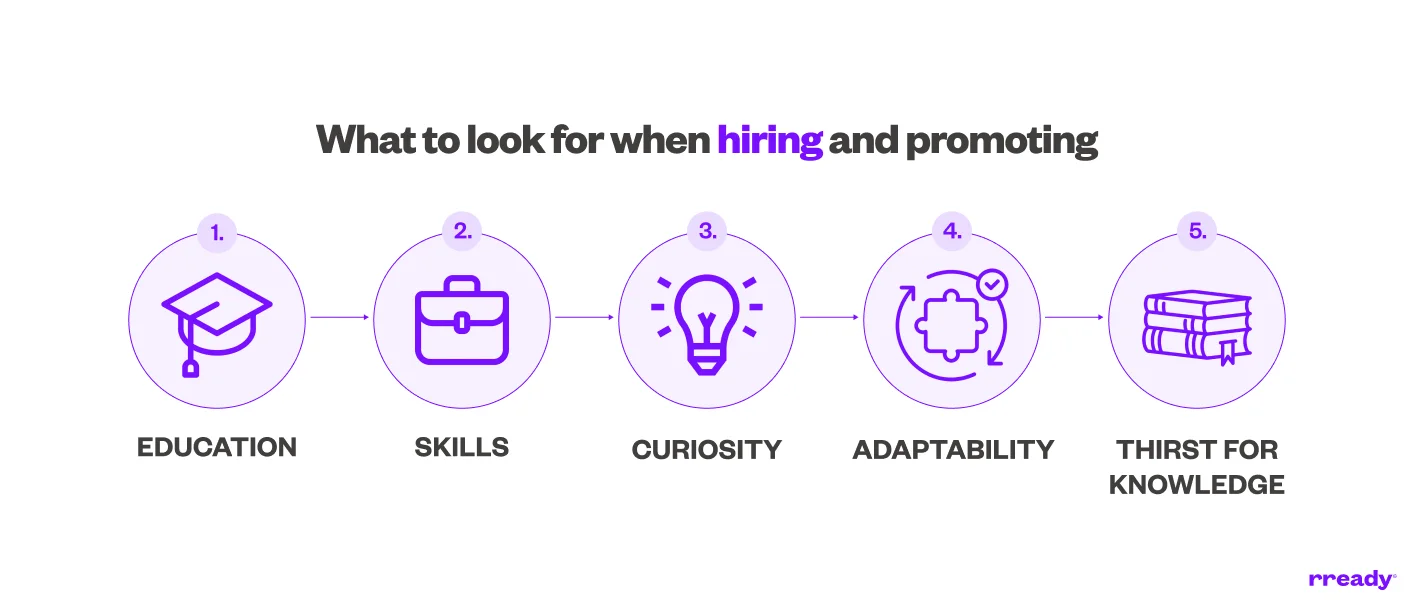
Skills and degrees matter, but curiosity, flexibility, and openness to learning are a lot more important in the long run. Companies that use inclusive language and look beyond rigid checklists attract diverse talent that drives innovation and adapts faster to change.Make continuous learning a habit, not an event
Learning should happen every day, not just during formal training. Offering hands-on workshops, challenging projects, and shared learning spaces keeps curiosity alive and helps employees develop adaptability, which is the foundation of long-term growth.Normalize feedback and failure as learning tools
Constructive feedback and experimentation fuel progress. Encourage reflection, reward smart risks, and create routines like “Failure Show-and-Tell” sessions or “Most Courageous Attempt” awards to reframe mistakes as steps toward improvement.Turn collaboration into the engine of growth—with rready
True growth happens when innovation is shared, visible, and inclusive. rready’s Idea Management platform helps teams exchange ideas openly, while the KICKBOX Intrapreneurship program empowers every employee to explore, test, and develop their own ideas. The result is a culture built on ownership, curiosity, and collective progress.
1. Commit to growth
Corporate culture isn’t built on fairy dust. You can’t wish your way to a growth mindset. Still, every transformation starts with belief, and that part of the fairytale rings true here as well.
If you treat a growth mindset like a checkbox, it becomes just another slogan gathering dust. Instead, start with the genuine conviction that your people can adapt, problem-solve, and stretch beyond what they know today.
Only when leaders truly believe in their team’s potential can they create the right conditions for growth to happen.
2. Look beyond the resume
Skills and degrees matter, but they are not the whole story.
If you cling to a narrow prototype of what the “ideal” candidate looks like, you’ll miss out on the very diversity that drives innovation.
Instead, look for people who are curious, flexible, and eager to learn. A simple place to start is using inclusive language that invites potential, not perfection. For instance, phrasing like “experience with” instead of “expert in” makes room for capable candidates who are still growing.
The same strategy should apply to promotions.
People who continuously learn will adapt faster, solve problems more efficiently, and stay engaged when faced with challenges, which is why they deserve to be the first in line for new opportunities.
You’ll spot these thinkers by the thoughtful questions they ask and their willingness to explore ideas outside their comfort zone.
3. Make learning your team’s superpower
Insatiable curiosity sparks exploration and fuels continuous learning that keeps growth alive.
Channel that energy correctly, and you’ve got the blueprint for long-term adaptability and innovation.
And senior leaders agree.
As many as 87% of them say that offering ongoing learning opportunities is a cornerstone of a growth mindset culture.
But how do you make that happen?
By building an environment where learning happens naturally, every day, with:
Practical access: Offer workshops, training programs, and online courses that employees actually want to join.
Stretch projects: Give people room to take on something slightly beyond their comfort zone and grow into it.
Visible learning moments: Use your internal communication or collaboration platforms to share takeaways, insights, or small wins that inspire others to learn, too.
When curiosity has space to breathe, creating a growth mindset culture becomes a natural outcome.
Pro tip
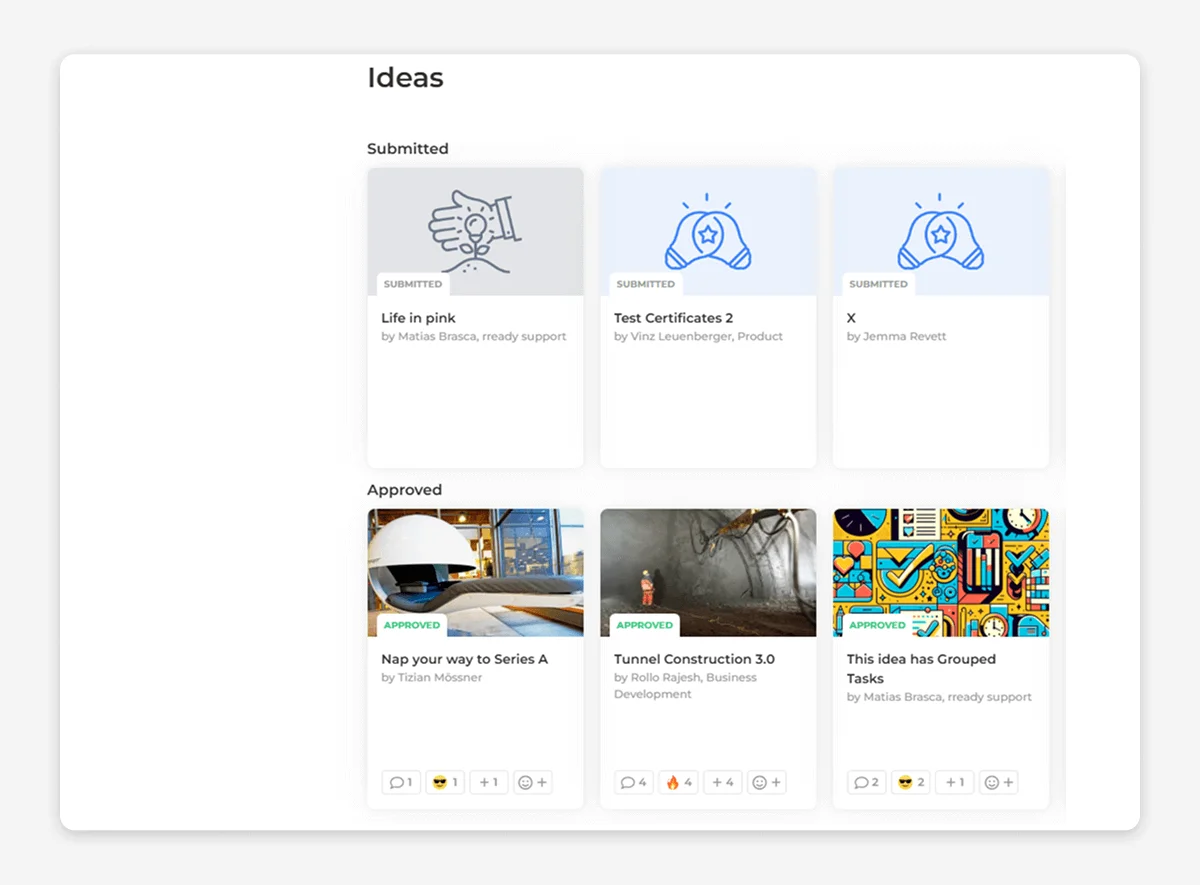
With rready's Idea Management platform, teams can brainstorm, comment, and build on each other’s input in one shared space.
This open exchange keeps curiosity alive, encourages collective learning, and turns everyday collaboration into continuous growth.
4. Turn feedback into fuel
One of the biggest pitfalls of a fixed mindset is when employees disregard feedback, making a growth mindset culture much more difficult to create.
These employees take feedback as a personal attack, causing them to shut down, get defensive, and miss out on chances to improve.
Of course, taking criticism isn’t easy—no one enjoys being told they could’ve done better. That’s why it’s your duty as a leader to create an environment where feedback fuels progress, not fear.
Here’s what effective feedback looks like in a growth mindset culture:
Do this | Not this |
Focus on effort, strategy, and improvement: “I liked your approach here, how could we make it even stronger next time?” | Focus on ability or blame: “You’re just not good at this.” |
Give balanced feedback; highlight what worked and what can improve | Offer only praise or only criticism, as it distorts perception |
Make feedback routine through regular 1:1s or quick check-ins | Save feedback only for annual reviews or after mistakes |
Frame feedback as opportunity: “This will help you grow in X area.” | Frame feedback as punishment or final judgment |
Ask for feedback yourself to model openness | Assume leadership means you’re beyond critique |
5. Make failure part of the formula
Failure isn’t the villain in innovation. The real culprit is how some companies react to it, treating mistakes as a show of incompetence instead of drivers of change.
Creating a growth mindset culture requires encouraging experimentation, reflection, and fast learning. McKinsey & Company found that 83% of outperformers encourage their teams to test new ideas, fail quickly and affordably, and learn from the results.
Here are a few creative ways to make that happen:
Host “Failure Show-and-Tell” sessions: Once a month, have teams share something that went wrong and what they learned from it. Keep it open and light to break the stigma around failure.
Run quick “post-game reviews:” After projects or setbacks, ask “What worked, what didn’t, and what will we do differently next time?”
Use the power of “yet:” Shift language from “We didn’t achieve it” to “We haven’t achieved it yet.” This reframes failure as a step, not a stop.
Reward smart risks: Recognize people who take thoughtful risks, even when the results fall short. This shows that growth matters more than perfection.
Pro tip
Failure feels a lot less scary when there’s a system that turns it into progress.
That’s what the KICKBOX Intrapreneurship program does: it gives employees the space, guidance, and encouragement to explore ideas, even when things don’t go as planned.
After all, every idea, even the one that doesn't take off, is a chance to build confidence.
6. Model the mindset you want to see
Everyone plays a role in creating a growth mindset culture, but leadership might be the most important piece of the puzzle. While 96% of executives believe they have a growth mindset, only 45% of employees say their leaders actually demonstrate it. That kind of gap can make or break trust.
It’s important to remember that a culture of growth starts at the top. As a leader, you should:
Admit when you don’t have the answer
Talk openly about what you’re learning
Ask for feedback
Use growth-minded language in meetings
Reflect on projects that didn’t go as expected
When leaders show they’re still learning, they give everyone else permission to do the same.
7. Reward the climb, not just the summit
Creating a growth mindset culture means celebrating the effort, creativity, and problem-solving that lead to success, not just the final numbers on the board. Progress itself is success, and rewarding it doesn’t mean overlooking results; It just means valuing the journey that makes those results possible.
When people feel seen for their curiosity, resilience, and steady improvement, motivation soars.
Try spotlighting a “Most Courageous Attempt,” creating a “Best Lesson Learned" shout-out, or introducing a “Skill in Action" recognition. Reward the climb, and you’ll inspire people to keep reaching higher.
Pro tip
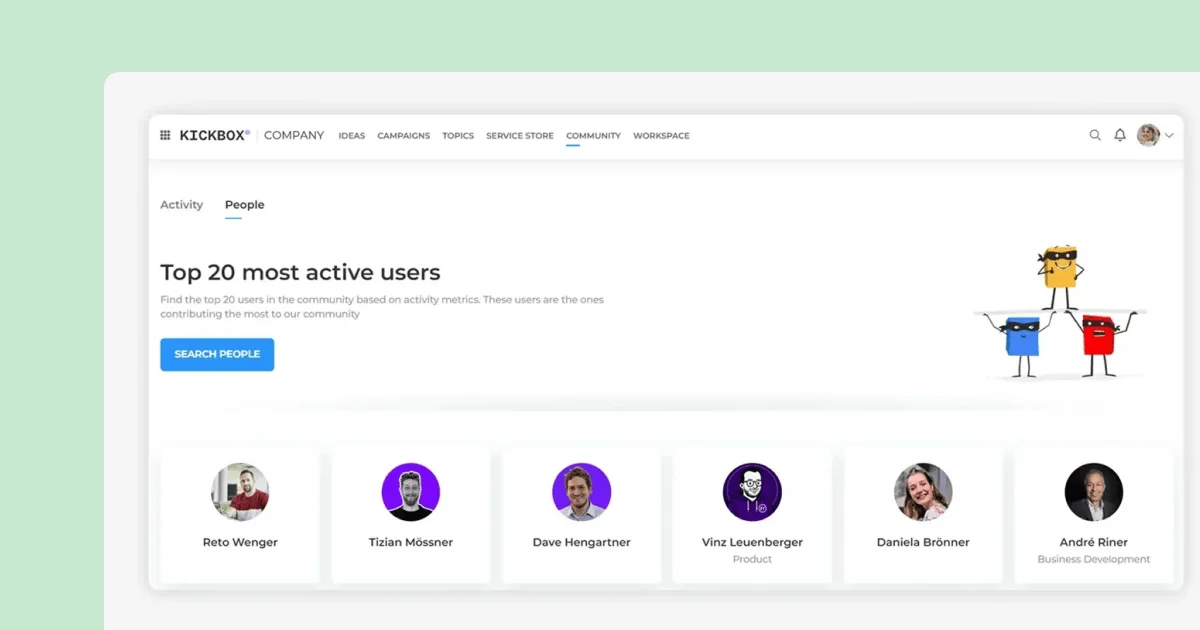
In rready's Community section, you’ll find a leaderboard spotlighting the top 20 most active contributors across your organization.
But this isn’t about who hit the biggest targets or closed the most deals. It’s about who’s showing up. It’s about those who share ideas, spark discussions, and collaborate to move projects forward.
By making engagement visible, rready helps you celebrate the people who keep progress in motion—exactly the kind of effort needed for creating a growth mindset culture.
8. Treat growth like a team sport
In a fixed-mindset culture, success is a zero-sum game.
Someone else’s wins feel like your loss. Teams get territorial, people hoard information, and comparison quietly replaces collaboration.
A growth mindset flips that script.
When people believe there’s enough success to go around, they share knowledge, celebrate each other’s wins, and learn from different perspectives.
To make collaboration a growth multiplier, you should:
Celebrate team achievements as loudly as individual ones
Mix departments to solve challenges together
Discuss what worked when someone succeeds
The goal is for innovation to stop being a competition and become a collective effort.
Get rready for growth
Creating a growth mindset culture might start with belief, but it only lasts when backed by the right system.
And that’s where most companies get stuck. They want people to experiment but don’t give them the space, and they claim to value learning, but they don’t praise it when it shows.
With rready, you can turn those good intentions into measurable change.
With the Idea Management, companies can make collaboration and learning part of everyday operations. Intrapreneurs can share ideas, exchange feedback, and see their contributions recognized across teams, creating a culture where initiative and curiosity are celebrated, not siloed.
With the KICKBOX Intrapreneurship program, that culture scales.
The program gives every employee the tools and structure to explore, test, and grow their ideas, building the very skills a growth mindset depends on:
Ownership: Employees take charge of their own development and drive real outcomes.
Confidence: Structured experimentation removes fear and builds resilience.
Collaboration: Cross-functional teamwork replaces silos with shared purpose.
Continuous learning: Every step, successful or not, creates insights that feed future growth.
Inclusion: Everyone can contribute, regardless of role, experience, or background.
Creating a growth mindset culture isn’t a one-time initiative. It’s a movement, and rready helps you lead it.
Rready to get started? Book your free demo today and start your growth journey.
FAQ
How do you build a growth mindset culture?
You build a growth mindset culture by believing in your team’s potential, encouraging continuous learning, and rewarding progress as much as the results.
What is an example of a growth culture?
A growth culture is one where employees feel safe to experiment, learn from feedback, and collaborate across teams.
What stops a growth mindset?
A growth mindset stalls when fear of failure, rigid hierarchies, or blame takes over. Cultures that punish mistakes and reward perfection over progress quickly shut down curiosity and learning.

Read more

The Importance of Feedback in Corporate Innovation [2025]
Discover how giving effective feedback can fuel creativity and innovation. Learn key practices for empowering your team to thrive in corporate innovation.

How to Create an Innovation Culture
Creating a culture of innovation in organizations is no small feat. Learn more about how you can involve your employees and actively promote innovation.

Key Characteristics of Successful Entrepreneurs
Find out more about the unique characteristics of entrepreneurs and how their mindset can benefit corporate innovation efforts in your company.