How to choose the best digitally sovereign solution [Tools]
Explore the best digital sovereignty solutions and learn how you can keep control of your data, systems, and workflows while avoiding vendor lock-in.


Digitally sovereign solutions are tools and platforms designed to support core business processes without requiring you to hand over control of your data, infrastructure, or system behavior.
Although replacing core systems and untangling existing tool stacks takes time, effort, and commitment, moving toward digital sovereignty is quickly becoming non-negotiable.
With 92% of Western data stored in the United States, cyberattacks up by 150% in 2024, and European Union (EU) regulators classifying major non-EU cloud providers as critical dependencies, remaining as-is comes with growing risk.
To help you stay ahead of that risk, this guide explains how to choose the best solutions that are digitally sovereign and highlights eight leading EU-based tools for managing workflows while maintaining control over your data and systems.
Key takeaways
Digital sovereignty goes beyond labels
“EU-hosted” or “GDPR-compliant” sounds reassuring, but it doesn’t guarantee control. Real sovereignty comes from understanding how a system is built, who owns it, and how it behaves over time.Control starts with visibility into your current setup
Most risks are already embedded in your stack. Data leaving the EU, vendor-controlled systems, and hidden dependencies are where sovereignty breaks down first.Jurisdiction and data residency are non-negotiable
If ownership or infrastructure sits outside the EU, your data can still be exposed to foreign laws. Always verify where data is stored, where it’s processed, and who has legal access to it.Flexibility and interoperability protect you long term
Open architectures, self-hosting options, and seamless integrations help you avoid lock-in. Without them, you risk replacing one dependency with another.The right tool makes sovereignty practical, not theoretical
Solutions like sovara are built to meet these requirements end to end, combining EU-based hosting, flexible architecture, and full control over workflows and data. If sovereignty is a priority, starting with a platform designed for it from the ground up saves you from patching gaps later.
Choosing the best digitally sovereign solution: 10 steps to get it right
More and more solutions are claiming digital sovereignty, but labels like “EU-hosted” or “GDPR-compliant” alone aren’t enough.
If you actually want control, you need to look under the hood: how those solutions are built, how they integrate, how pricing evolves, and how much flexibility you really have over time.
These 10 steps help you cover the bases and choose a solution that holds up where it matters.
Step 1: Define your sovereignty requirements
Digital sovereignty starts with understanding where you’ve already lost control over data location, system behavior, or operational continuity.
Map that loss of control directly by identifying:
Where your data leaves the EU
Where vendors dictate system behavior
Where you depend on external infrastructure to operate
Then, set clear boundaries regarding which data must stay in the EU, which systems require full control, and which dependencies you’re willing to accept.
Step 2: Verify EU jurisdiction and ownership
Even when using European software, control can still sit outside the EU if the infrastructure layer is foreign-owned. And if the foundation sits outside the EU, everything built on top inherits the legal and geopolitical risks.
So, when choosing a digitally sovereign solution, you must check who actually owns and operates the platform.
You can do so by reviewing:
The vendor’s legal entity
Ownership structure (including the ultimate parent company)
Contract terms and stated jurisdiction
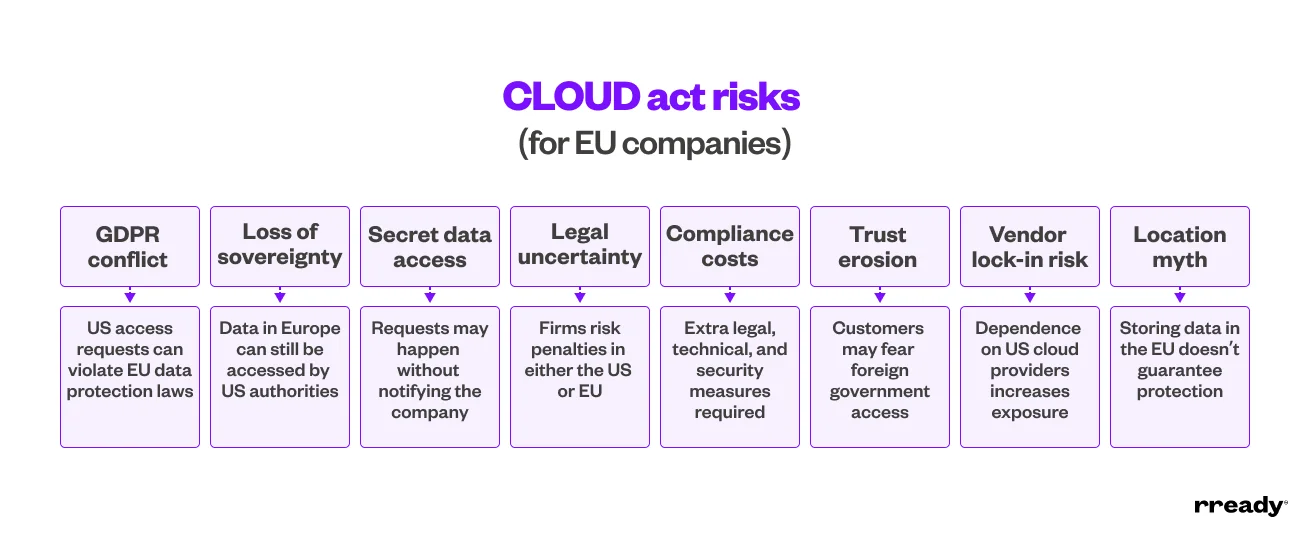
If the parent company is outside the EU, your data may still fall under foreign laws like the CLOUD Act, even if it’s stored in Europe.
Step 3: Confirm EU-only data residency
Many platforms offer limited transparency or flexibility around data residency, leaving organizations unsure where their data actually lives.
That’s why you shouldn’t assume that “EU-hosted” means full control. Data can still move across regions through backups, failover systems, or third-party services.
To verify where your data is stored, processed, and replicated, look for:
EU-only data centers (not “global infrastructure”)
The ability to restrict data to specific EU countries
Guarantees that backups and failover stay within the EU
You should also get this in writing because, without contractual guarantees, EU-only data residency is just a promise.
Step 4: Prioritize open or source-available models
When choosing a digitally sovereign solution, you shouldn’t focus solely on location. Digital sovereignty is also about avoiding vendor-defined system behavior and regaining control over how systems operate and evolve.
You can achieve this by favoring open or source-available models, which reduce dependency on a single vendor and make it easier to audit, adapt, and host systems on your terms.
The specific elements to look for include:
The ability to self-host within the EU
Access to source code for transparency and audits
Active ecosystems aligned with EU initiatives (e.g., “Public Money, Public Code”)
Step 5: Evaluate self-hosting within EU infrastructure
Sovereign architectures ensure that both infrastructure and operations remain within the same legal boundary.
The more control you have over infrastructure, the less you rely on external providers, which is why you should choose where your systems run.
Your options include:
On-premise deployment in the EU
EU-based cloud providers
Sovereign EU cloud platforms
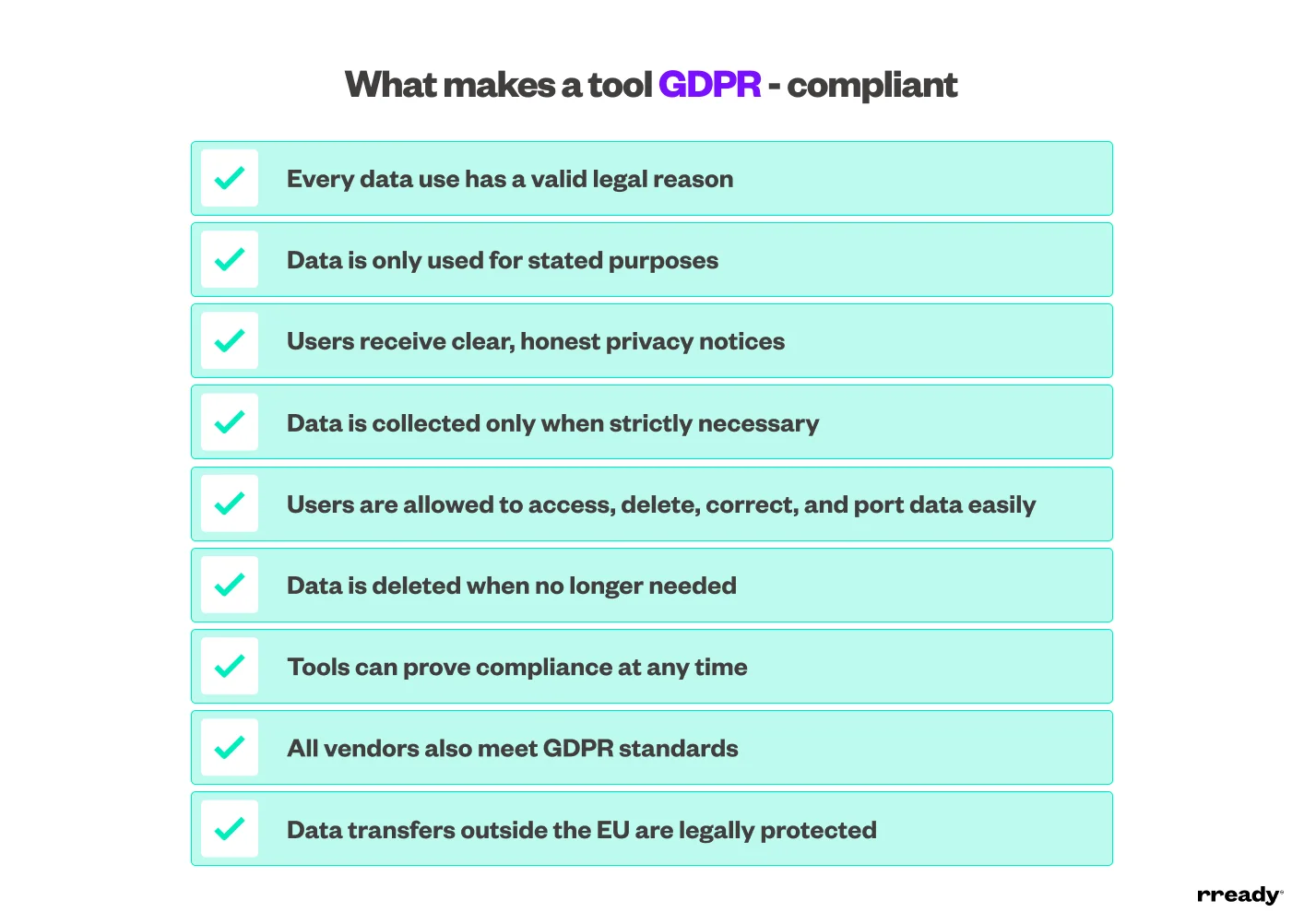
Step 6: Check GDPR alignment beyond marketing claims
Compliance risk is one of the primary drivers of sovereignty, especially in regulated industries where data handling must remain auditable and jurisdictionally controlled.
That’s why you shouldn’t stop at “GDPR-compliant” labels, but verify how compliance is actually implemented.
To do so, review the following:
Data processing agreements (DPAs)
Subprocessors and their locations
Data retention and minimization controls
Audit logs and reporting capabilities
Step 7: Assess independence from non-EU subprocessors
Reliance on third-party tools, such as integrations, plugins, analytics services, or external support, can quietly shift control outside the EU and create hidden sovereignty risks.
To avoid this scenario, you should carefully review where these dependencies sit and who controls them. This means looking into:
Use of non-EU infrastructure or hyperscalers
Third-party tools and integrations
Location of support and admin teams
Step 8: Ensure interoperability with EU ecosystems
A sovereign solution must allow systems to evolve without fragmentation or rebuilds. Otherwise, you might lose control over time.
The tool should easily integrate into a broader EU-based stack, which comes down to factors like:
Open APIs and standard protocols
Compatibility with EU-based platforms and services
Seamless data exchange without proprietary barriers
In other words, you should avoid replacing one dependency with another.
Step 9: Evaluate transparency and governance
Lack of transparency is a key signal of lost control and long-term dependency. That’s why you should look at how the vendor operates, not just what they offer.
True transparency is achieved through factors like:
Clear pricing structures (no hidden cost drivers)
Visibility into product roadmaps and changes
Documentation of infrastructure and security practices
Alignment with EU initiatives or governance models
If you can’t see how the system is run, you’re not really in control of it.
Step 10: Plan for full data portability within the EU
Lock-in is rarely technical alone. Instead, it’s embedded in workflows, integrations, and user behavior, making portability a critical but often overlooked sovereignty requirement.
The final step in choosing digitally sovereign tooling should be ensuring you can move your data at any time, without friction and without it having to leave the EU.
Your new workflow tool should:
Make it easy to export data in standard formats
Avoid proprietary lock-in
Support smooth migration to other EU-based systems
8 best digitally sovereign solutions for workflow management
Choosing the best digitally sovereign solution can feel overwhelming. After all, the concept of digital sovereignty is still evolving, so it’s not always clear what “good” actually looks like in practice.
That’s exactly why we’ve curated a list of eight solutions that check off the most important criteria, from control and compliance to flexibility and long-term viability.
Software | Best known for | Provider maturity | Ideal for |
1. sovara | Being a European sovereign alternative to Jira and Confluence | Built by a team with over 10 years of experience in workflow software | Enterprises and public-sector organizations requiring high data control and compliance |
2. Easy8 | Enhancing Redmine with plugins, automation, and EU data residency | Developed on Redmine with over 15 years of ecosystem maturity | Project-driven organizations in regulated industries |
3. Taiga | Enabling Scrum and Kanban workflows in a fully open-source environment | Used globally since its launch in 2014 | Small to mid-sized agile development teams |
4. Planio | Providing an all-in-one Redmine solution with EU-hosted infrastructure | Operating as an independent platform since 2009 | Development teams combining project management and Git workflows |
5. OTRS | Handling support tickets with customizable service management workflows | Developed as an ITSM solution since 2001, with long-standing enterprise adoption | IT service teams in security-sensitive or regulated environments |
6. TOPdesk | Providing out-of-the-box ITSM with strong process standardization | Offering almost 30 years of experience in IT service management | Mid-to-large organizations running structured IT service management |
7. Zammad | Managing customer support tickets in a fully open-source environment | Actively maintained as an open-source platform since 2016 | Support teams seeking open-source, self-hosted helpdesk solutions |
8. GLPI | Combining IT asset tracking with helpdesk functionality | Maintained as an open-source project since 2003 with a large global install base | Teams prioritizing open-source IT asset and support management |
1. sovara
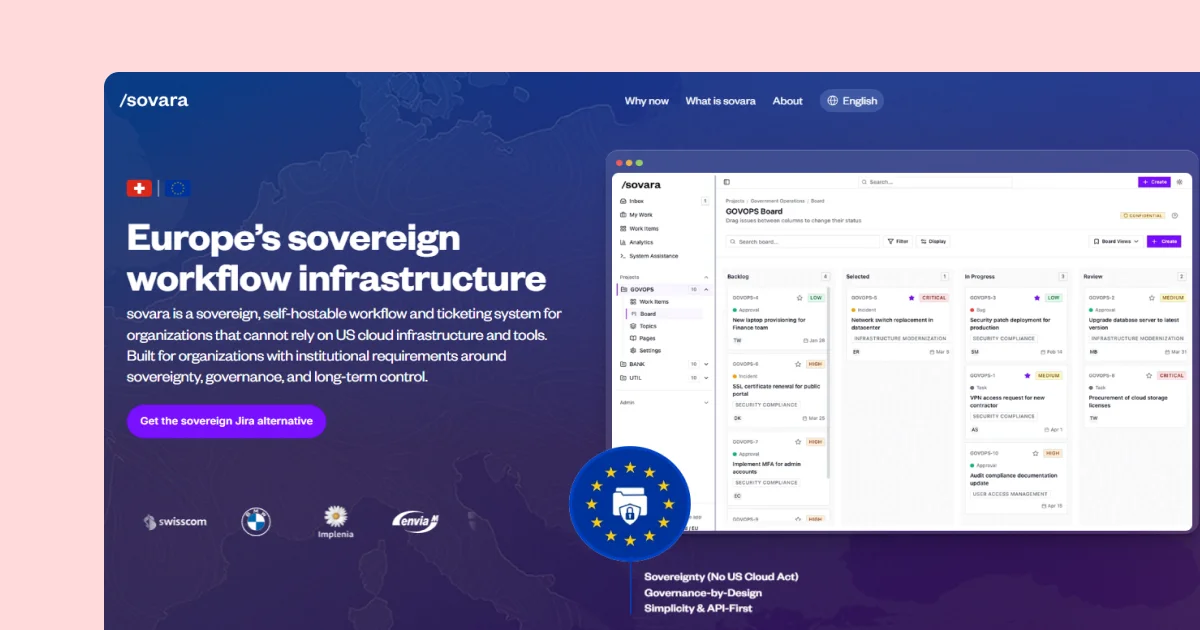
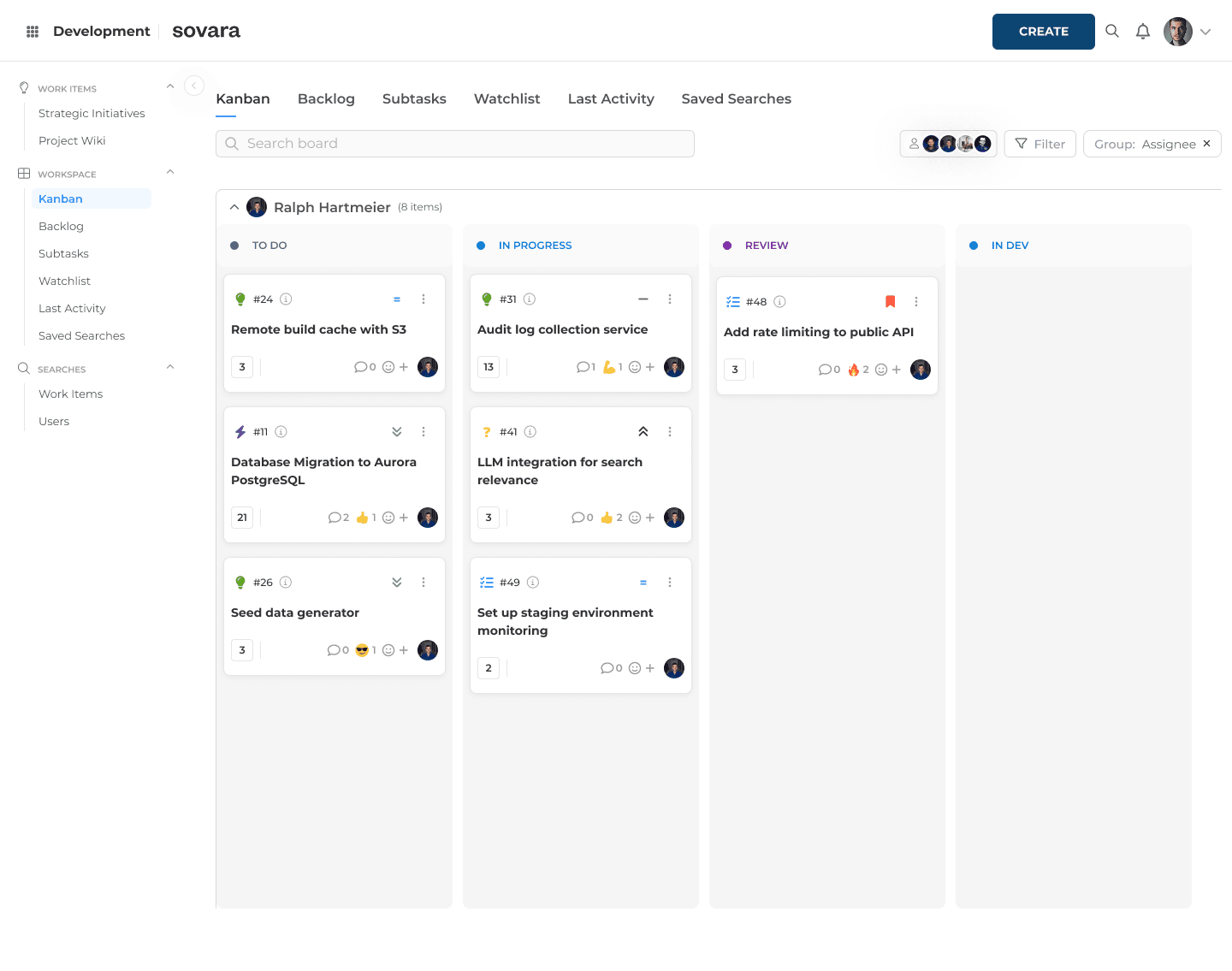
sovara is a sovereign workflow platform designed to help organizations manage work while staying in full control of their data, systems, and infrastructure.
It’s built as an alternative to tools like Jira, but with sovereignty at its core, not as an add-on.
What sets sovara apart is how closely it aligns with the most important criteria for choosing digitally sovereign solutions. The platform offers:
European sovereignty by design (Swiss/EU hosting, Swiss entity, CLOUD Act–free setup)
Transparent data residency and governance (clear data location, full audit logs)
Sovereign hosting options (EU cloud and on-prem deployment)
Enterprise-grade compliance and security (ISO/IEC 27001, GDPR, SSO)
Reduced dependency on non-EU providers (sovereign cloud and infrastructure)
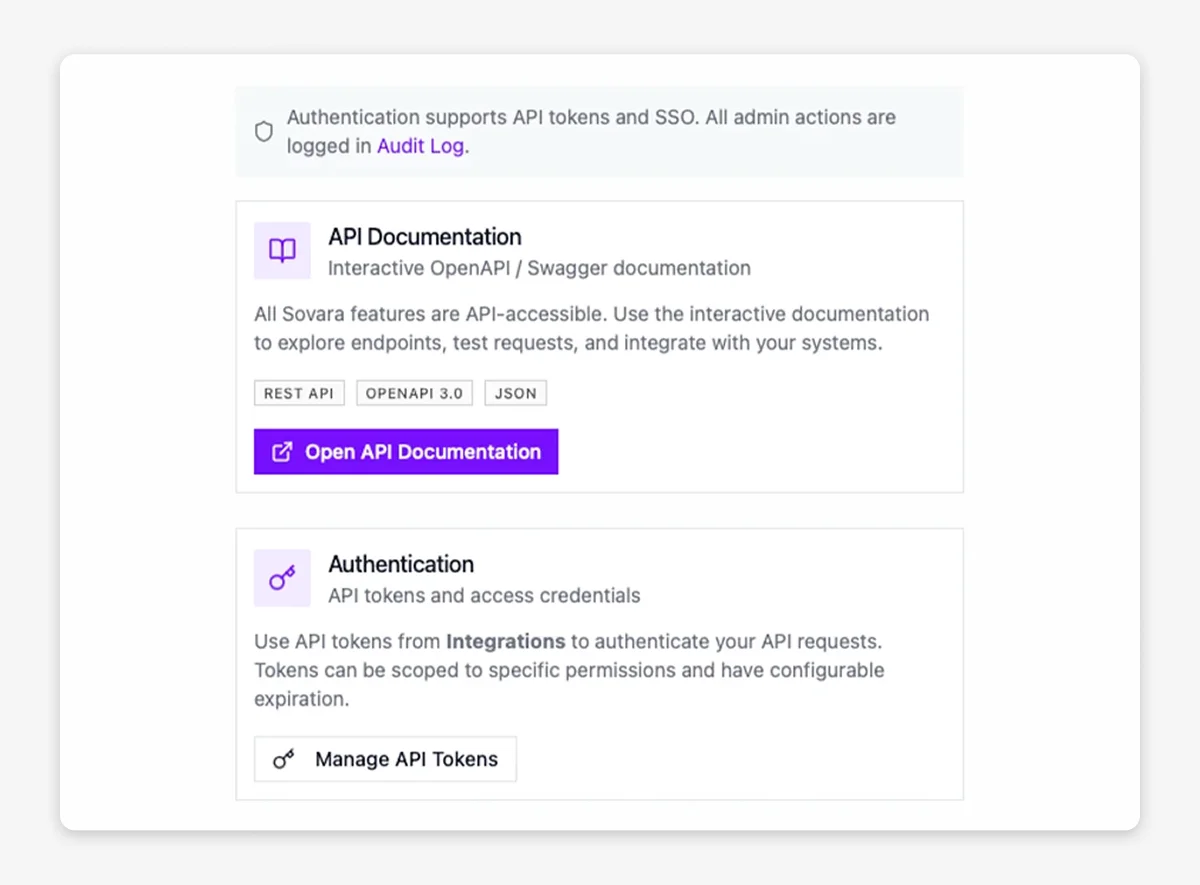
Seamless integration into existing systems (REST APIs, Kafka, event pipelines, BI tools)
Predictable, transparent pricing
API-first, modular architecture
In practice, sovara helps you:
Manage software development workflows, including sprints, dependencies, and releases
Structure and run project management with customizable workflows, roles, and permissions
Track and resolve issues across teams with full visibility and governance
Connect knowledge and execution through integrated documentation and knowledge bases
Define and control how work is executed, including AI-driven workflows and automation
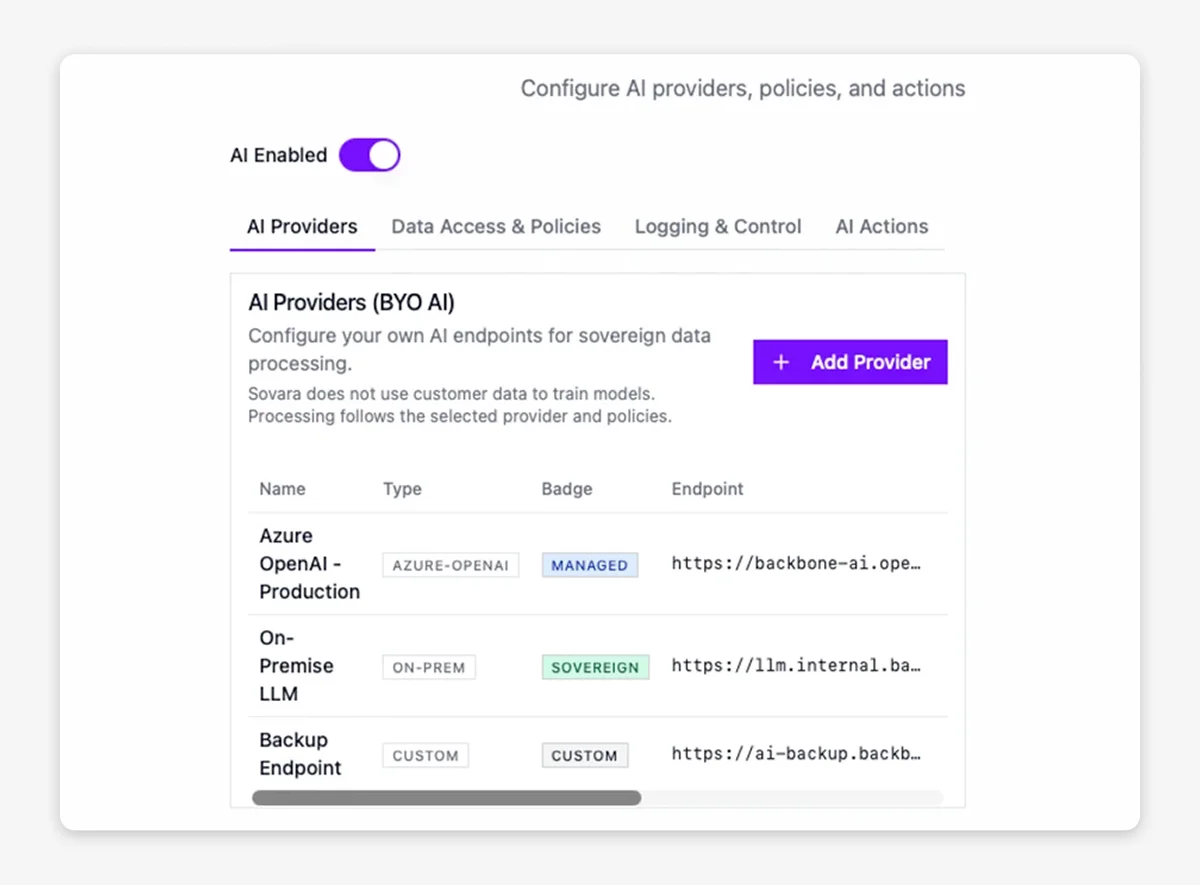
With sovara, you get the functionality of a modern workflow platform without giving up control where it counts.
2. Easy8
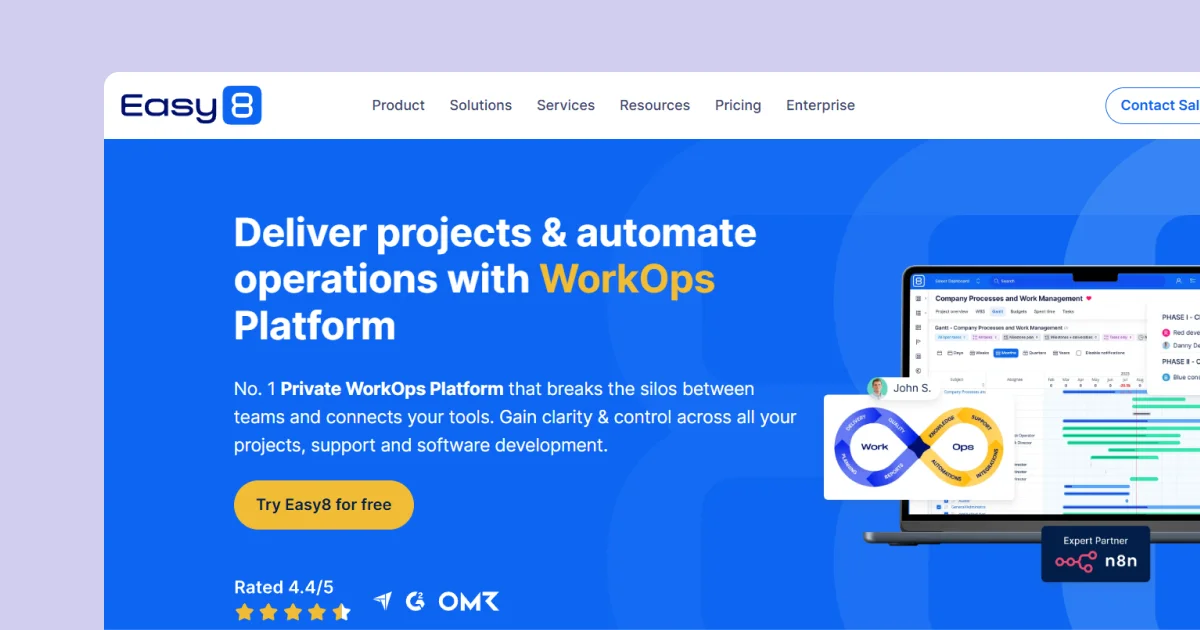
Easy8 (formerly Easy Redmine) is a project and work management platform built on Redmine, designed to unify projects, IT services, and software development.
It meets key sovereignty requirements through its EU Sovereign Cloud, ensuring data stays within the EU with no external replication.
Easy8 also offers on-premise deployment, ISO 27001-compliant infrastructure, and partnerships with EU providers such as OVHcloud, giving you control over data residency, security, and hosting.
3. Taiga
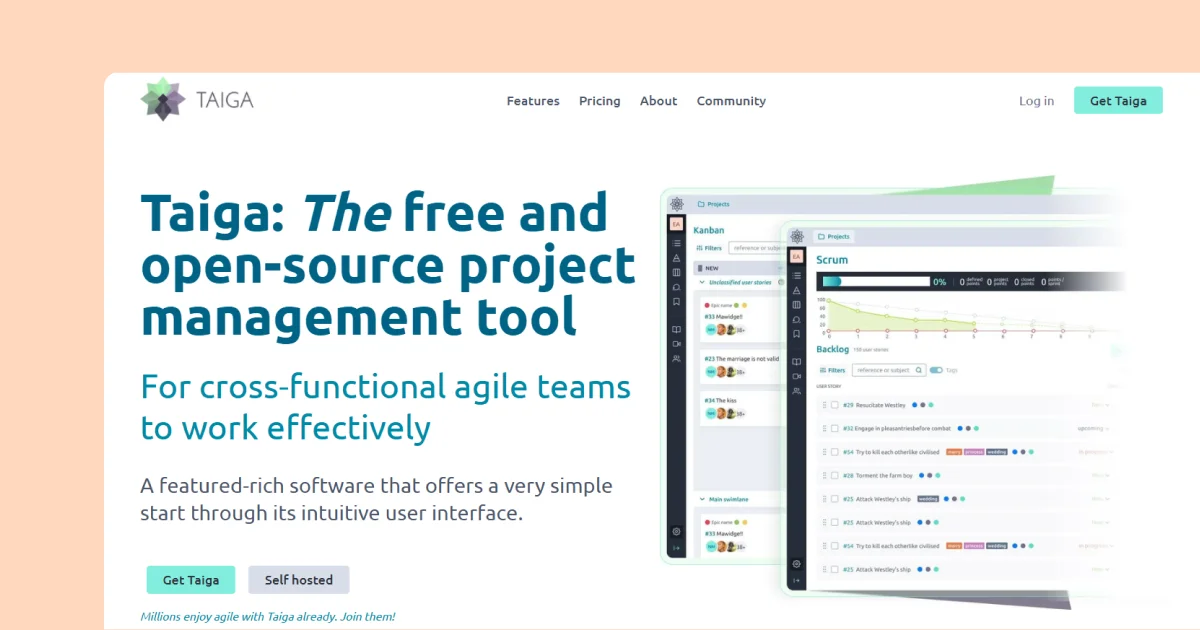
Taiga is an open-source project management tool built for agile teams, combining Scrum and Kanban in a clean, easy-to-use interface.
Its sovereignty strength comes from full self-hosting, giving you complete control over data and infrastructure.
The open-source model adds transparency, avoids vendor lock-in, and allows deep customization.
With European roots and flexible deployment options, it fits well into sovereignty-focused setups.
4. Planio
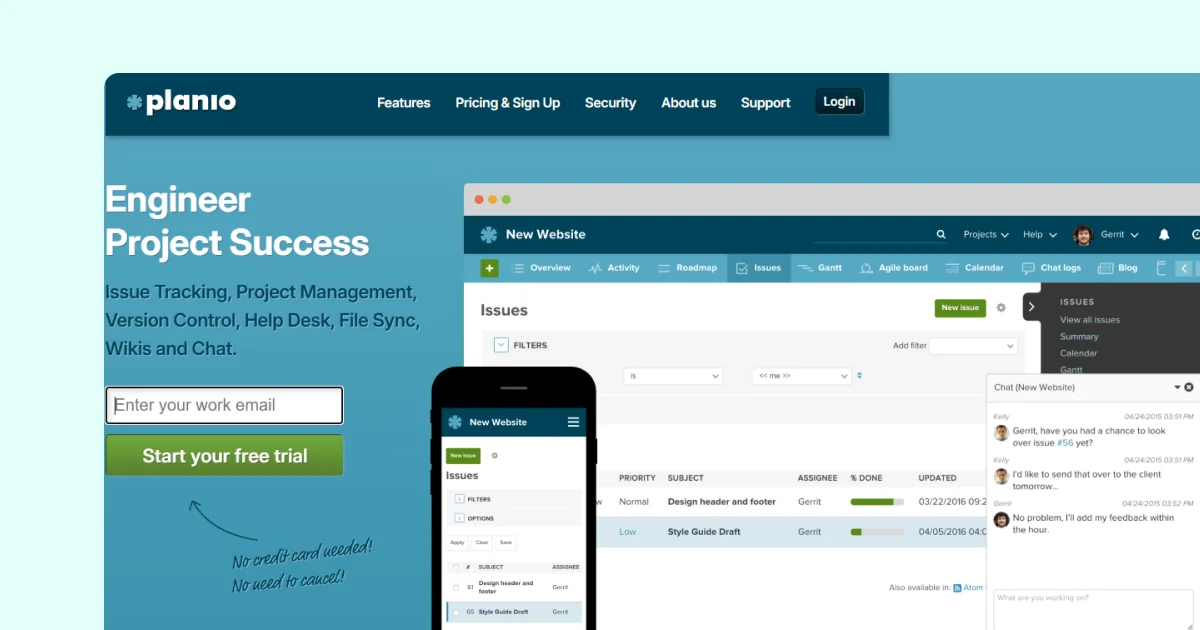
Planio is a Redmine-based platform that combines project management, issue tracking, Git hosting, help desk, and collaboration tools in one place.
Its sovereignty approach is straightforward: All data is hosted on certified infrastructure located exclusively in Germany, keeping it fully within EU jurisdiction and aligned with GDPR.
Built on open-source foundations, it reduces vendor lock-in, while its independent ownership avoids external control over infrastructure or data policies.
5. OTRS
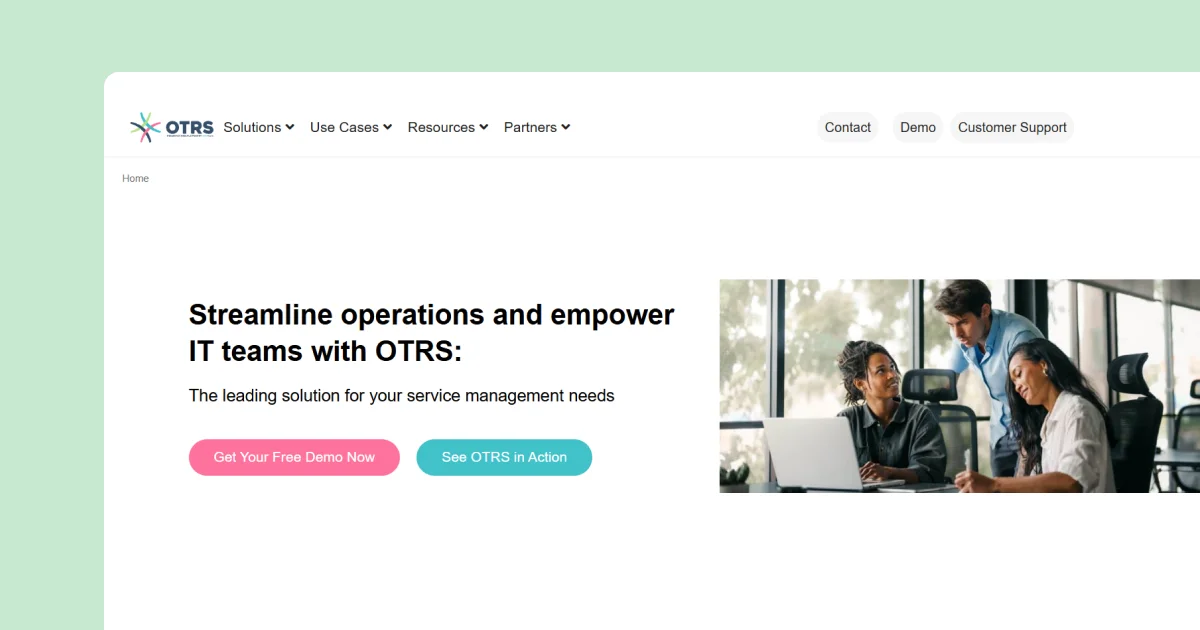
OTRS is a service management and helpdesk platform designed to handle support tickets, workflows, and internal service operations.
Now part of the EasyVista group, it maintains its German development roots and supports strict GDPR compliance with enterprise-grade security, including ISO 27001 alignment and mandatory 2FA.
It primarily supports digital sovereignty through on-premise deployment, allowing organizations to keep all data within their own infrastructure.
While a SaaS version exists, sovereignty is strongest when self-hosted.
6. TOPdesk
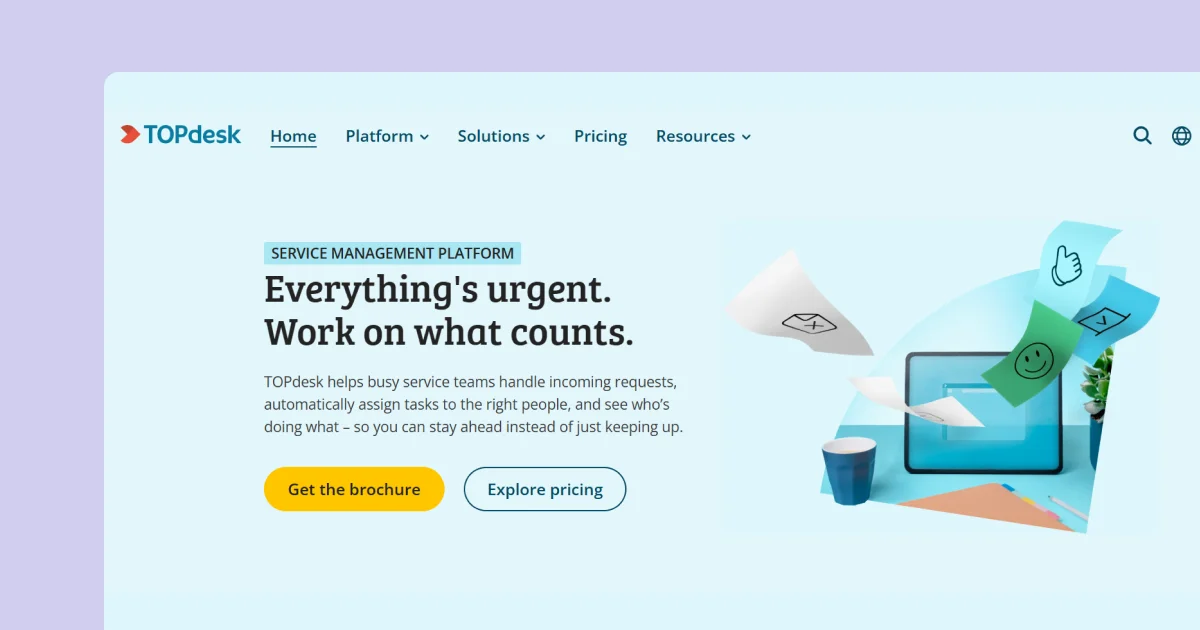
TOPdesk is an IT service management (ITSM) platform focused on support workflows, service desks, and asset management.
As a European solution headquartered in the Netherlands, it’s positioned as a strong regional alternative to US-based ITSM tools.
For SaaS delivery, TOPdesk ensures data residency by hosting in region-specific environments (such as Microsoft Azure’s Netherlands data centers), keeping data under EU legal jurisdiction and aligned with ISO 27001 and SOC 2 standards.
While the company is SaaS-first, it continues to support on-premise deployment for organizations that require total physical control over their infrastructure.
7. Zammad
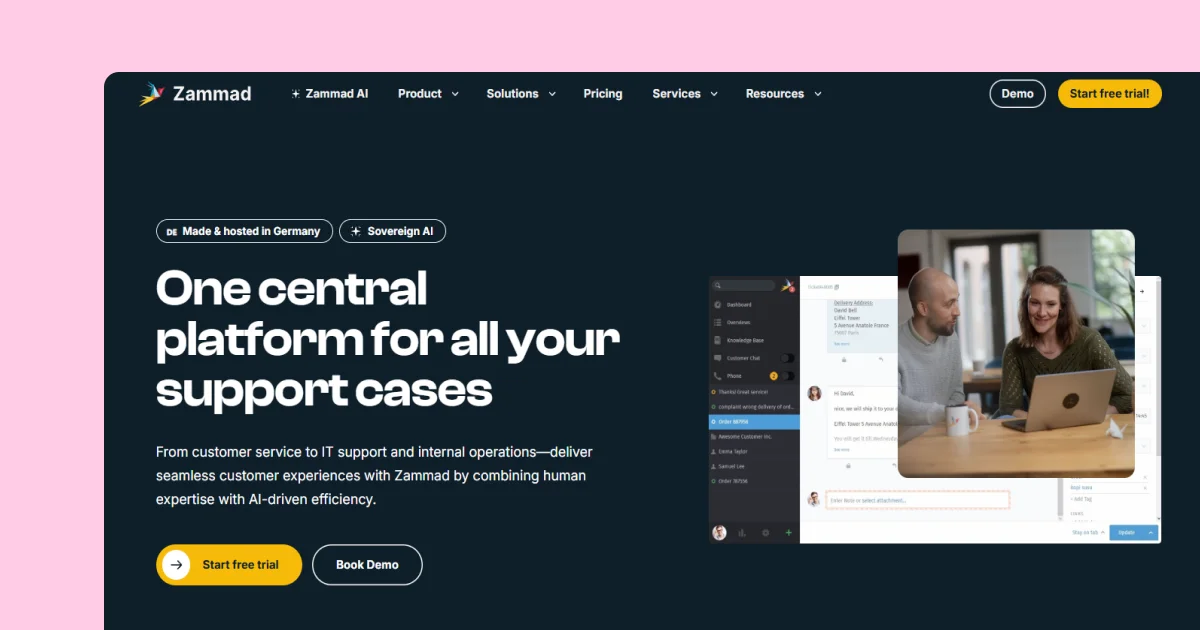
Zammad is an open-source helpdesk and customer support platform built to manage tickets, communication, and service workflows.
Developed in Germany, it aligns with GDPR requirements and avoids vendor lock-in. It also supports local AI integrations, allowing teams to use AI without sending data to external providers.
Its sovereignty advantage lies in full self-hosting and open-source transparency, giving organizations total control over support data and system behavior.
8. GLPI
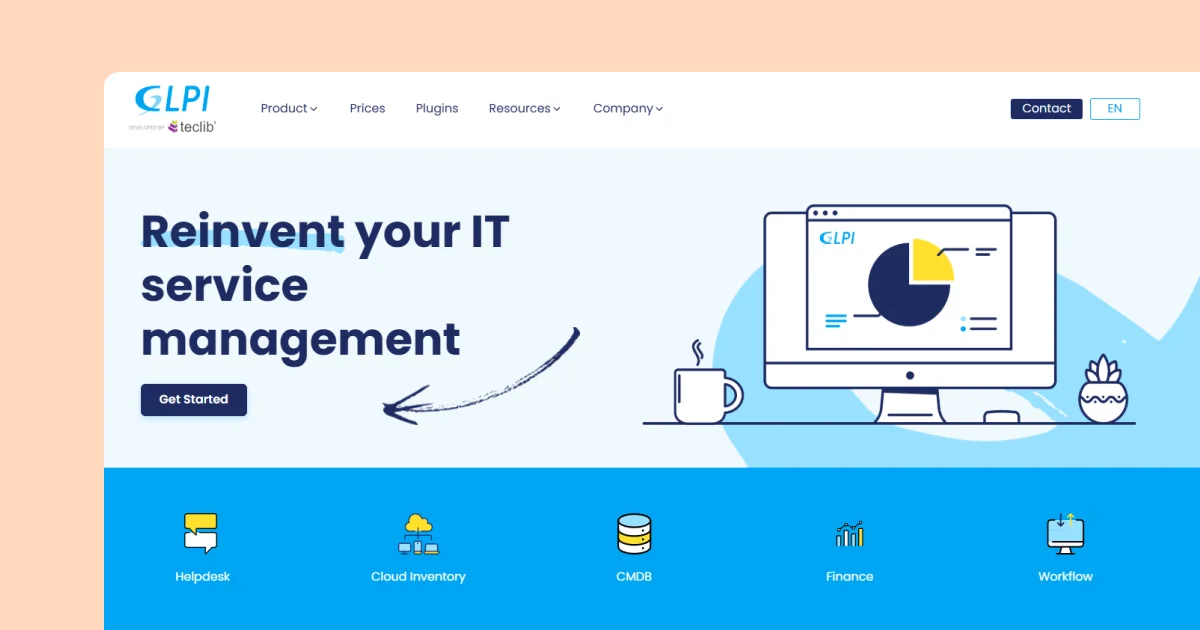
GLPI is an open-source IT asset management and service desk platform that tracks hardware, software, and support requests in one system.
With roots in France, GLPI adheres to European data protection standards and supports EU-based hosting setups.
Its sovereignty model is built on full self-hosting and open-source control, allowing organizations to manage data, infrastructure, and code independently.
Getting started with sovara
sovara offers a digitally sovereign solution for regulated enterprises, public sector organizations, and teams that need full control over their workflows, data, and systems.
If that sounds like you, the best next step is to see how sovara fits your setup.
You’ll get a walkthrough of the platform, a look at current and upcoming capabilities, and a practical discussion around your workflows, integrations, and AI use cases.
Book a demo to talk to a product expert and get started.
Read more

Atlassian Data Center End of Life: Migrate, stay or leave
Atlassian Data Center EOL lands March 28, 2029. See the verified timeline, what's in scope, the licensing math, and the three destinations now open to you.

European Jira & Confluence Alternatives (2026)
6 European alternatives to Jira and Confluence for 2026, ranked and compared on sovereignty, AI, migration tooling, and real pricing.

You didn’t adopt Jira. You built an Operating System.
Atlassian Data Center ends in 2029. But migration doesn’t start with a data export. It starts with understanding what you’ve built over the years.