A maturity model for high involvement innovation
John Bessant presents a maturity model showing how organizations can systematically build high-involvement innovation.
Author
Professor John Bessant

‘With every pair of hands you get a free brain’. That’s the promise of high involvement innovation (HII) - engaging everyone in the organisation in the innovation mission. And it’s got a lot to offer.
Take the case of Denny’s shipyard in Dumbarton, Scotland. They introduced a simple HII scheme to encourage anyone in their 350-strong workforce to make suggestions on how they could improve the company’s performance. Within their first year they’d managed to cut the time to build a warship from six months to four while also improving quality, adding new features and reducing waste.
Impressive stuff - but also a reminder that HII isn’t new. That story comes from 1871! Nor is theirs an isolated case; organized HII was happening at least a hundred years before that. The 8th Shogun of Japan, Yoshimuni Tokugawa, tried it out in 1721 with his “Meyasubako”, a box placed at the entrance of the Edo Castle for written suggestions from his subjects. And the British navy pioneered a similar scheme in 1770, asking its sailors and marines for their ideas — significantly reassuring them that such suggestions would not carry the risk of punishment!
From pioneering efforts like John Patterson’s attempt to harness what he called ‘the hundred headed brain’ in the National Cash Register company in 1892 (eagerly imitated by the Eastman Kodak company in 1896) through to Toyota’s famous kaizen commitment in the 1970s which mobilised over 50 million suggestions and helped put them at the forefront of productivity performance in the global car industry. The evidence is clear - HII works. Building on ideas from across the organization can contribute significant competitive advantage and deliver multi-million dollar savings. As companies as diverse as Conoco-Philips, Liberty Global, Fujitsu or Nokia continue to attest.
But it’s not a magic trick. These results only emerge from an organisational culture which makes contributing to innovation a key part of ‘the way we do things around here’.
It’s not a one-off initiative; it’s a pattern of behaviour which has become reinforced to the point that it’s a routine. Like professional dancers who have learned and rehearsed their intricate steps to the point where they don’t think about it; they just dance.
If we want the benefits that HII clearly has to offer we need to understand just what behaviours we are talking about and how they might move from being unfamiliar faltering new steps to become embedded routines.
Back in the mists of time (the late 1990s) we began a research programme trying to understand this question, working with a wide range of organizations, large and small, in manufacturing, services and not-for-profit. And a pattern gradually began to emerge; although what they all shared was a desire to embed HII in their organizations the real challenge was in changing the culture, introducing and then reinforcing new ways of behaving. It involved a journey where progress was measured not in terms of time or money invested but in how well the organization learned and mastered key behaviours.
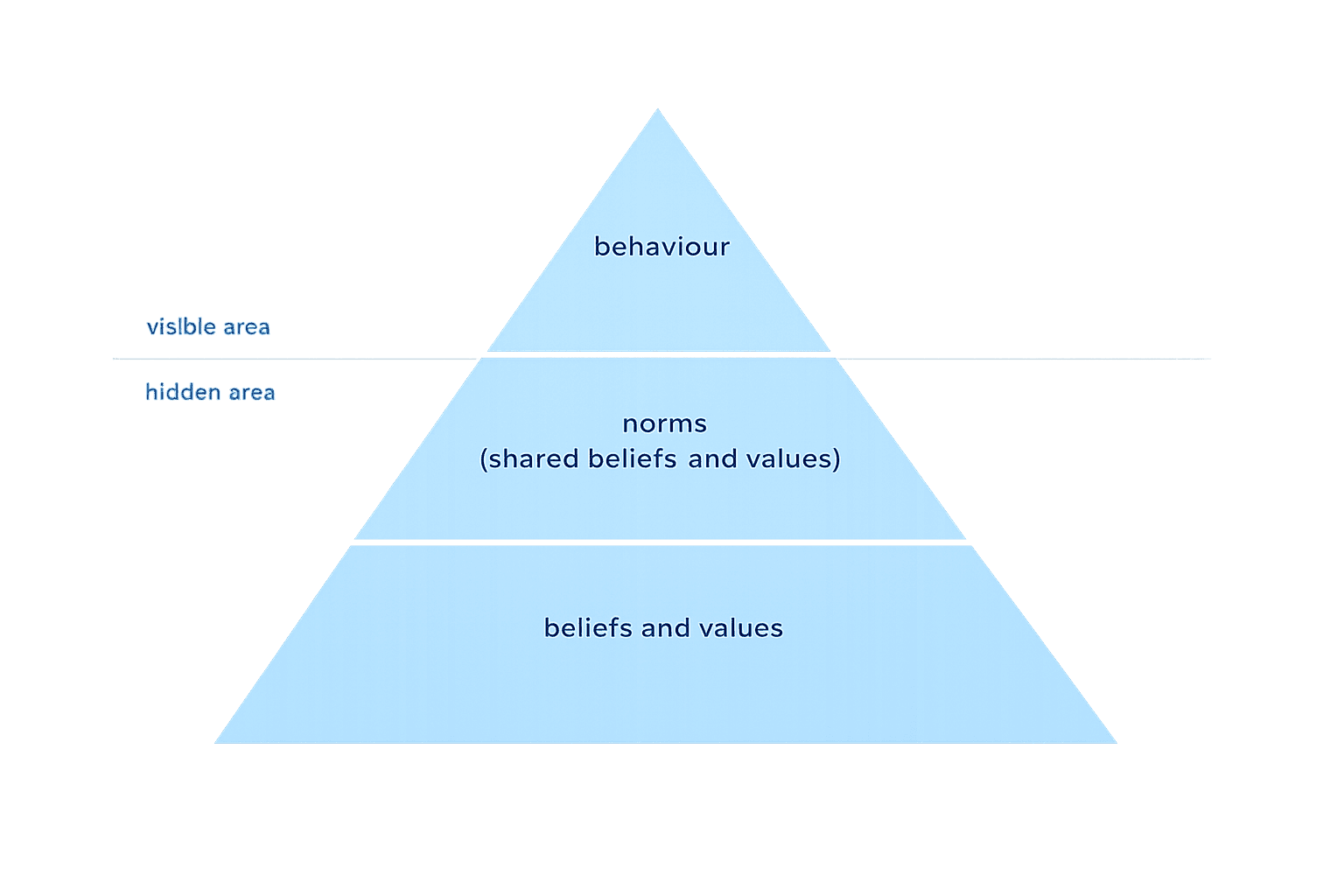
Cultures don't just happen – they’re built up in a hierarchical way. At the base we have individual values and beliefs – the things which matter to us and shape the way we think about the world. We share these with others and arrive at some common views – norms – which shape how we behave alongside each other in our organizations.
Over time these patterns of behaviour are rehearsed and repeated to the point where we no longer think consciously about them. Eventually they become ‘hard-wired’ into our organization’s processes and procedures, its rules and structures.
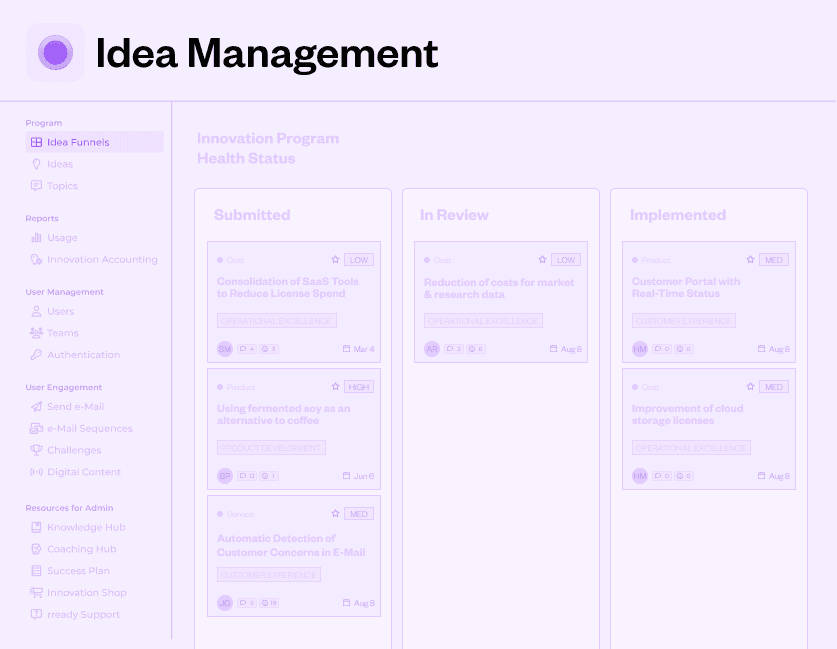
So what are the underlying values and beliefs we need to build? Our research identified ten key building blocks; in a high involvement culture we’d expect to find evidence that reflect the belief that:
Ideas from everyone matter – every person is capable of contributing ideas and, ultimately, drive innovation.
HII needs a core enabling process – it’s not about sudden flashes of inspiration but a systematic process for listening to, sharing and taking good ideas forward. And allowing time and space for it to operate
Ideas are not the problem – enabling them to create value is the key. We need an idea management system which gives recognition, feedback and ways to take them forward
People can learn how to innovate – innovators are made, not born. But they need support in the form of training and development, tools and techniques to help them become more effective innovators
Leadership matters – people who believe the HII story and enable the narrative, providing guidance, direction and support
Ideas have real impact when they are strategically directed, HII works when bottom up capability meets top down clear direction about where and why improvements matter
HII needs a supporting structure – facilitation, coaching, training, etc. And this structure needs continuous review and development, updating it to provide the scaffolding for the future
Knowledge lies at the heart of innovation and people are key carriers of it
Knowledge is distributed across the organization so HII needs to enable inclusiveness, openness and free flow of knowledge across boundaries
Motivation matters – people need an incentive to share their ideas. This is less about money than about recognition, feeling listened to, empowered, enabled to contribute
How are ideas captured, evaluated and prioritized in your organization?
Explore how a structured approach to idea management can generate a steady stream of relevant ideas.
Book a call
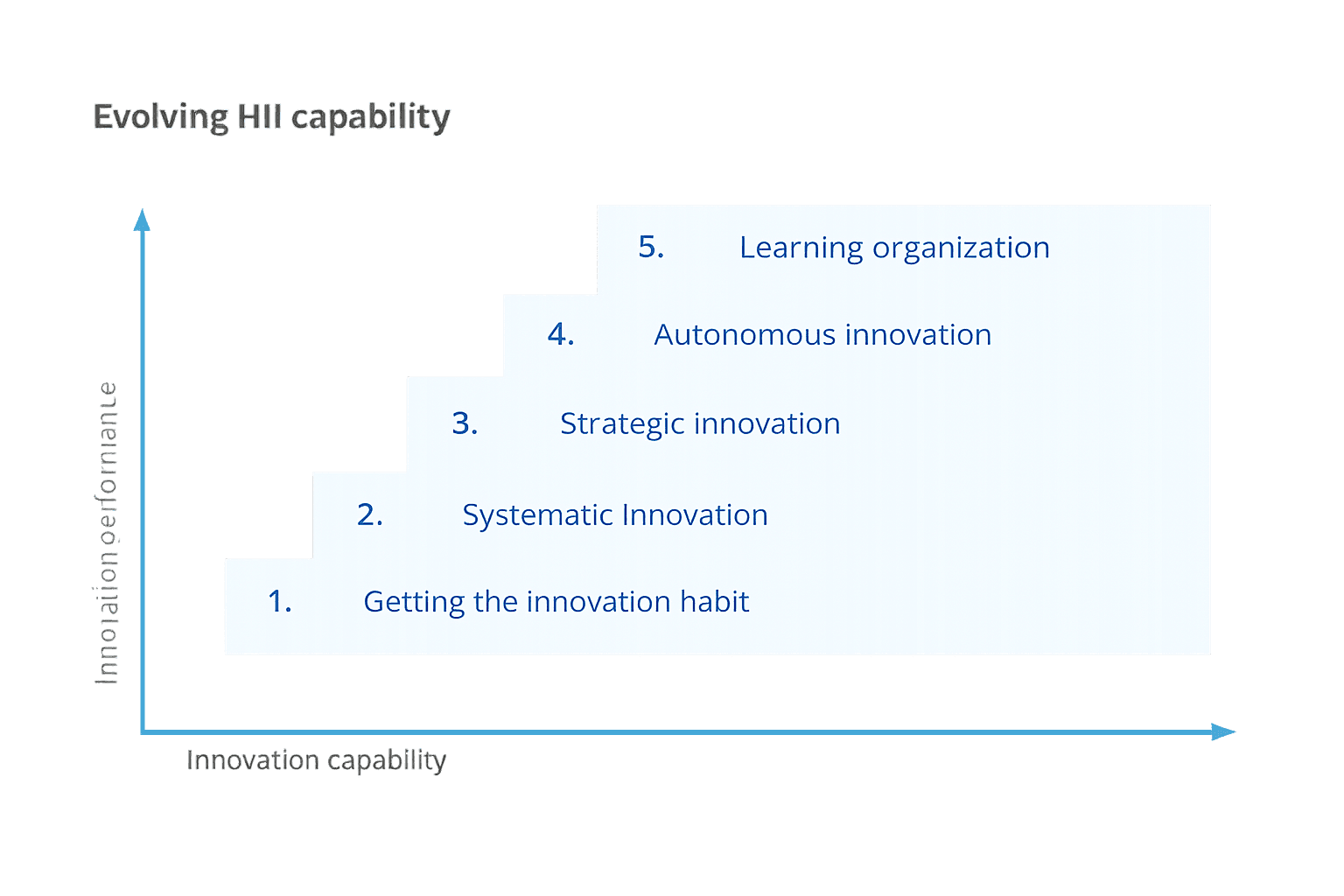
Building a high involvement innovation culture
No organization starts with a fully-developed version of this. It’s a learning journey, building and reinforcing capability. Climbing that staircase towards maturity involves confronting a host of challenges – for example:
How do you reach and engage a workforce in something they may not see as ‘their job’?
How do you do so at scale and across a workforce which may be widely distributed geographically?
How do you replicate across the organization the sense of shared goals and shared ideas which can be found in lean teams and problem-solving groups?
How do you handle large volumes of ideas and move them from ideas to implementation?
How do you ensure focus on improvement trajectories which make a difference?
How do you maintain momentum after the initial enthusiasm wears off?
The good news is that we now have some powerful new enabling technologies and a wealth of shared experience to draw upon to help us build such a culture.
So where do we start?
HII doesn’t happen by waving a magic wand and pronouncing the high involvement spell. The conclusions from our research are simple; organizations need to work on four things:
Articulate what we want to see people doing, and hear them saying as they go about their work? What stories do they tell about success – and failure – in innovation, and what behaviours underpin that?
Enable those behaviours. Put in place mechanisms to help people learn and practice these behaviours. This might involve training them in specific skills, such as problem finding and solving or using design thinking. It might include providing structures to support and guide the behaviours – the policies and procedures to follow. It may be creating an enabling platform – for example, using a collaboration platform to provide a way to share and build on ideas, collecting and deploying them.
Reinforce them – If these behaviours are to become ‘the way we do things around here’ then we need to reinforce them through feedback, rewards, and incentives. For instance, celebrate innovation achievements, recognize teams and individuals who make a contribution, and above all make sure that people who take risks or move outside the expected don't get punished or blamed if they fail!
Review, reflect and pivot. For a resilient HII culture, we also need the capacity to review and adapt. It’s a learning journey, a continuous process of adapting, adjusting and occasional major resetting.
About the author
John Bessant is Emeritus Professor of Innovation and Entrepreneurship at the University of Exeter. Author of over 40 books, he has advised national governments and international bodies including the United Nations, World Bank, OECD and a wide range of companies including Lego, Hella, Toyota, Lufthansa, UBS, Novo Nordisk and Coloplast.